lunes, 12 de noviembre de 2012

CAMBIO CLIMÁTICO: El Ártico, el nuevo El Dorado


Foto  de archivo del glaciar Humboldt, en Groenlandia. EFE/GREENPEACE/Nick Cobbing.

Madrid, 11 nov (EFE).- El Ártico es una gran masa de hielo rodeada de naciones, algunas las más grandes del mundo. Rusia, EE.UU, Canadá, Noruega y Dinamarca negocian sus límites fronterizos con esas aguas para realizar prospecciones, en las que se cree yace el 13 % del petróleo y el 30 % de las reservas de gas inexploradas.

Recientemente se ha confirmado lo que se venía venir desde hace años: un deshielo catastrófico en el Océano Ártico. El pasado mes de julio, científicos estadounidenses observaron que la superficie de Groenlandia afectada por el deshielo pasó de un 40 por ciento, cifra habitual, a más de un 90 por ciento, extensión récord en tan solo cuatro días.
Los últimos veranos el deshielo ha permitido ver por primera vez que dos míticos pasos nunca antes utilizables, el del Noroeste y el del Noreste, que permiten ir del Atlántico al Pacífico por el norte de Canadá y el norte de Siberia respectivamente, ya lo han sido.
Para el investigador microbiólogo, Carlos Pedrós Alió, del Instituto de Ciencias del Mar de Barcelona, perteneciente al Consejo Superior de Investigaciones Científicas (CSIC), "a medida que se calienta el Ártico cada vez hay menos hielo".
Y por esto, las zonas que están próximas a la costa empiezan a estar abiertas todos los veranos, es decir, que se puede navegar, y es ahí donde se encuentran las plataformas continentales, donde se cree que está la mayor parte de las reservas de petróleo.

LOS RIESGOS PARA ENCONTRAR PETRÓLEO

Pero el petróleo tiene en el mar un historial salpicado de sucesos dramáticos, cuyas consecuencias en muchos casos todavía permanecen alterando el medio ambiente. Así, como explicó el investigador, "el problema está en que siempre que se realiza una intervención de este tipo existen riesgos de que haya accidentes, como se ha comprobado".
Como dijo Pedrós Alió, las empresas hacen un cálculo para el caso que haya un accidente, y consideran los medios que habrá que utilizar para limpiar la zona.
El problema está en que el único interés de la empresa es obtener beneficios, no preservar el medio ambiente. Por tanto, es obligación de las administraciones asegurarse de que el plan de limpieza esté bien hecho.
El accidente de la plataforma del Golfo de México que se incendió en 2010, demostró a los científicos algo muy importante: que aunque "ésta es una zona cálida, accesible y situada en uno de los países más desarrollados del mundo, sin embargo ocasionó todos los problemas medioambientales".
Y, por ellos, "la empresa (BP) va a tener que pagar cerca de 40.000 millones de dólares, además de lo que van a tener que pagar los contribuyentes por lo que habrá que hacer en adelante", subrayó el investigador.
"En el Ártico estas situaciones se complican mucho -continuó Pedrós- porque no hay experiencia y las compañías no están preparadas para solucionar un accidente si se produce en medio de una tempestad o en la oscuridad que hay en uno o dos meses, o bien si llegan placas de hielo con capacidad de romper las plataformas o las conducciones de petróleo".
El investigador sostuvo que, aunque los efectos serían los mismos que en cualquier otro lugar, el problema es que "el petróleo tiene compuestos volátiles y compuestos que flotan que pueden matar todo lo que se encuentra debajo. A la fauna de la costa, aves o mamíferos, estos compuestos les hacen perder el aislamiento térmico y, además, a las aves les impide volar, por lo que en una zona tan fría mueren enseguida unos y otros. La economía de las poblaciones que viven cerca del mar también queda destrozada. Así pues, los efectos son tanto para las aguas como para los ecosistemas y las poblaciones humanas en general".

LAS LAGUNAS DE LA LEY

Consideró el científico español que "resulta lógico que países como Noruega o Rusia, que tienen acceso a una gran zona de la plataforma ártica con grandes posibilidades de petróleo quieran explotarlo. Lo que ocurre es que hay que encontrar un equilibrio entre ese deseo de riqueza y las consecuencias que pueda tener su extracción".
Los destrozos que pueda haber en esa zona tan sensible son enormes y pueden perdurar por mucho tiempo o, incluso, ser definitivos.
Por eso, dijo Pedrós Alió, "alguien tiene que vigilar que las empresas lo hagan bien y que los estados cumplan unos requisitos mínimos" y afirmó que Canadá lo ha hecho de una forma muy cuidadosa porque posee muchísima costa en el Ártico.
Es distinta la actitud de países como Noruega o Rusia que carecen de poblaciones en esa zona, por lo que, como señaló el investigador, "la economía prima más que el bienestar de las personas".
Pero la legislación en este terreno es pobre y confusa. El profesor de investigación en el departamento de Recursos Naturales del Instituto Mediterráneo de Estudios Avanzados, centro mixto del CSIC y la Universidad de Baleares, Carlos Duarte, explicó la situación en la que se encuentran los países en litigio.
Los países que reivindican territorialidad están, desde hace tiempo, ocupados en desarrollos mineros y de gas y petróleo. Lo sorprendente es que "algunos gobiernos estén reabriendo esas minas de carbón que tras décadas estaban cerradas, debido a los enormes impactos que la emisión de metales pesados asociada a estas explotaciones causaron sobre la fauna y las personas en el Ártico", afirmó.
Otros muchos países lejanos están también implicados en la explotación. Australia, casi en las antípodas de Groenlandia, ha pedido el 40 % de las 200 solicitudes.
En referencia a las leyes internacionales, que establecen las limitaciones territoriales, Duarte explicó que "las leyes internacionales, en particular UNCLOS (UN Law of the Sea) fija 200 millas desde la línea de costa como aguas económicas exclusivas".
Sin embargo, dijo Duarte, "existe una provisión por la que los países que aporten evidencias de que su plataforma costera se extiende más allá de estas 200 millas pueden solicitar una ampliación del límite".
Todos los países con territorio en el Ártico están actualmente implicados en estas solicitudes, de forma que "las aguas internacionales del Océano Glaciar Ártico podrían, de aceptarse estas reclamaciones, quedarse en menos del 10% de la superficie de este océano", concluyó Duarte.
EFE
Guillermo Gonzalo Sánchez Achutegui
ayabaca@gmail.com
ayabaca@hotmail.com
ayabaca@yahoo.com

ESA - Technology - Get ready for a total solar eclipse!


Solar eclipse corona
Download:
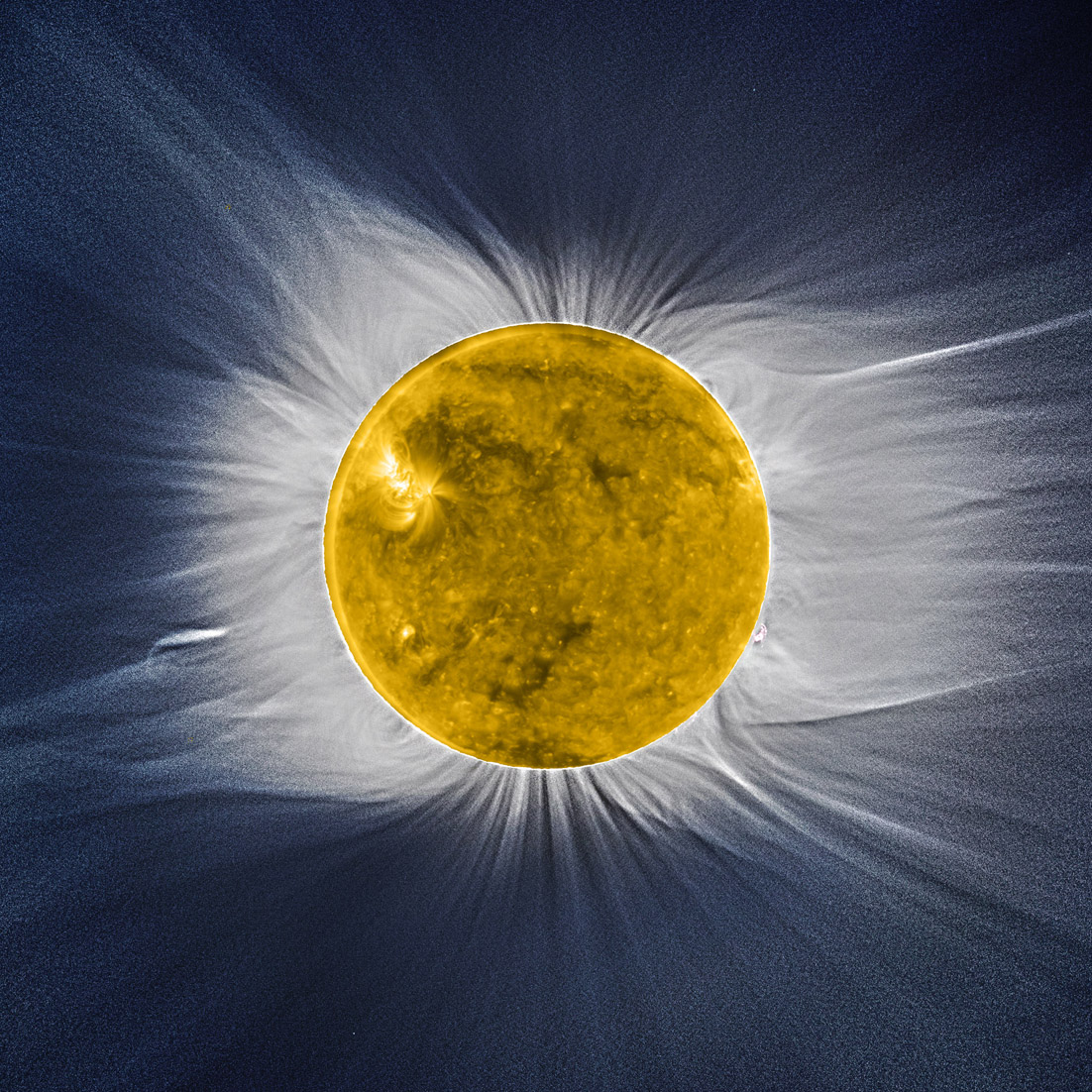
Composite image from Proba-2’s SWAP imager (with 174Å filter) showing the Sun’s disc, with a reconstructed white-light image of the extended corona taken at exactly the same time from the ground, during the total solar eclipse observed in July 2010 in Atoll Hao, French Polynesia. 
Credits: ESA/Proba-2 consortium/SWAP team/Institut d’Astrophysique de Paris (CNRS & UPMC), S. Koutchmy/J. Mouette

Tomorrow’s total solar eclipse will only be visible in its entirety to ground-based observers watching from northern Australia, but ESA’s Sun-watching Proba-2 satellite will have a ringside seat from its orbit around Earth.

During a total solar eclipse the Moon moves in front of the Sun as seen from Earth, their separation and alignment such that the Moon appears large enough to temporarily block out the Sun’s light.
An eerie light is cast over ground observers as the imposing black disc of the Moon briefly replaces the Sun’s bright face.
Totality – when the Sun is completely obscured – occurs tomorrow at 22:11:48 GMT over the South Pacific for four minutes and two seconds.
Observers along the east coast of Queensland, Australia, will be the lucky few to see the total eclipse, enjoying totality for about two minutes as the Sun rises 14 degrees above the horizon.
During totality the Sun appears to have a white halo – a rare glimpse of the Sun’s million-degree plasma atmosphere, or corona, which is too washed out by the Sun’s brightness to be observed normally. 
Flying in a 720 km orbit, Proba-2 is the second in ESA's Project for Onboard Autonomy series, capable of flying itself with minimal support from the ground. Its purpose is flight-test new technologies and it carries a total of 17 technology payloads. It also carries four scientific instruments focused on the Sun and space weather.

In the image presented above, a Proba-2 image of the solar disc taken during the total eclipse of July 2010 is combined with ground-based images taken at the same time to reveal the exquisite details of the solar corona.
A snapshot of the ever-changing environment of the Sun’s magnetic field is momentarily exposed with plasma streaming out into space, alongside looping prominences seen much closer to the edge of the solar disc.
During tomorrow’s event Proba-2 will pass through the Moon’s shadow several times, catching three partial solar eclipses as it orbits around Earth. At the time of the total eclipse seen from Australia, however, Proba-2 will see the full solar disc, providing an ideal opportunity to compare the solar corona from the ground with observations of the Sun from space.
The satellite’s SWAP instrument will monitor the Sun in extreme ultraviolet light, while LYRA will measure solar output, which will become less intense as more of the Sun is obscured.
Please take care if you are lucky enough to be observing this event: observing the Sun with the naked eye is extremely dangerous and will cause permanent blindness. Please use certified equipment such as solar eclipse glasses, or a solar telescope under professional guidance. 
ESA
Guillermo Gonzalo Sánchez Achutegui
ayabaca@gmail.com
ayabaca@hotmail.com
ayabaca@yahoo.com 
domingo, 4 de noviembre de 2012

De la muerte negra a... la muerte verde


Madrid, 30 oct (EFEverde).- El concepto de muerte en las sociedades occidentales ha tenido tradicionalmente una connotación oscura o negra, sin embargo los cambios sociales han hecho que la conciencia ecológica llegue también a la industria funeraria, donde "pasar al otro lado" adquiere cada vez un color más verde.

Urnas de sal marina, de tierra, o féretros elaborados con almendras, cartón y resinas naturales, son algunas de las alternativas de entierro o incineración ecológica que se vienen adoptando desde hace cinco años, tiempo en el que la conciencia ambiental se ha introducido en el sector funerario.
Ecofunerales
De esta conciencia, nace el concepto de "Ecofuneral", etiqueta que se acuñó el año pasado para referirse a los entierros que pretenden reducir el impacto ambiental, ha indicado a Efeverde el director general del grupo funerario Mémora, Eduard Vidal.
Porque "morirse contamina", ha apuntado Vidal, y lo hace desde el propio cadáver, que desprende "lixiviados" o líquidos, hasta los métodos funerarios que se emplean, como la cremación, que lanza gases dañinos para la atmósfera.
Según datos de la Asociación Nacional de Servicios Funerarios (PANASEF), las cremaciones superan a la inhumaciones y se estima que en España alrededor de un 32 % de fallecidos son reducidos a cenizas.
Para evitar esta emisión de gases, los féretros ecológicos están fabricados con madera reciclada, no llevan ningún tipo de herraje metálico y el barniz que cubre la madera es en base agua, y no en base disolvente, que es lo que contamina al arder.
Filtros especiales
Además, una ley de 2002 obliga a la evaluación del impacto ambiental de los hornos crematorios, que cada vez son más sofisticados y disponen de filtros especiales que consiguen generar "una emisión limpia", sostiene Vidal.
Y a la hora de guardar las cenizas, otros artículos optan por "reconciliarse con la naturaleza", comenta la responsable comercial de la empresa fabricante de urnas biodegradables Limbo, Tania Inzunza, porque la urna hecha en base a sal marina está pensada para arrojarla al mar y la de tierra para enterrarla e introducir una semilla que dé lugar al crecimiento de un árbol.
Coches fúnebres eléctricos
La oferta verde también llega a la movilidad y muchas empresas funerarias como Mémora ya utilizan coches fúnebres eléctricos.
Otras novedades del sector funerario van encaminadas a dar a los cementerios un aspecto alegre, colorido y con jardines frente al tono oscuro y tétrico que siempre caracteriza estos lugares.
"Ahora se tiende a crear espacios para pasear y rendir homenaje a los difuntos", ha apuntado Jesús Pozo, director de la revista 'Adiós', que edita Funespaña.
Es el caso del cementerio Sur de Madrid, donde se está llevando a cabo la construcción de un edificio crematorio y un espacio verde destinado a columbarios para crear un moderno "jardín del recuerdo".
En lo económico, un funeral respetuoso con el medio ambiente es "un pelín más caro que uno tradicional", apenas un 5 o 10 % más caro, ha apuntado Tania Inzunza.
Sin embargo, lo económico no es un freno porque cada vez "hay más gente que demanda este tipo de funerales", según apunta el consejero de Funespaña, Alberto Ortiz.
El peso de la tradición
Bien es cierto que "la tradición pesa" y el proceso de cambio de mentalidad es aún lento, sin embargo "la tendencia es cada vez más positiva", afirma Pozo.
 Según fuentes del Instituto Nacional de Estadística (INE), en 2011 fallecieron en España 389.182 personas, lo que supone un incremento de 8.761 fallecidos con respecto al año 2010.
Los cambios sociales, como la dispersión geográfica de las familias, han influido en el modo de afrontar la vida. Ahora sabemos que hay otra forma de afrontar la muerte. EFEverde
EFE
Guillermo Gonzalo Sánchez Achutegui
ayabaca@hotmail.com
ayabaca@gmail.com
ayabaca@yahoo.com

ESA: Nereidum Montes helps unlock Mars’ glacial past


Download
Download the Original size of this photo
Sizes
    1. Square 75 (75 x 75)
    2. Square 150 (150 x 150)
    3. Thumbnail (100 x 51)
    1. Small 240 (240 x 122)
    2. Small 320 (320 x 163)
    1. Medium 500 (500 x 255)
    2. Medium 640 (640 x 326)
    3. Medium 800 (800 x 408)
    1. Large 1024 (1024 x 522)
    2. Large 1600 (1600 x 816)
    1. Original (1920 x 979)

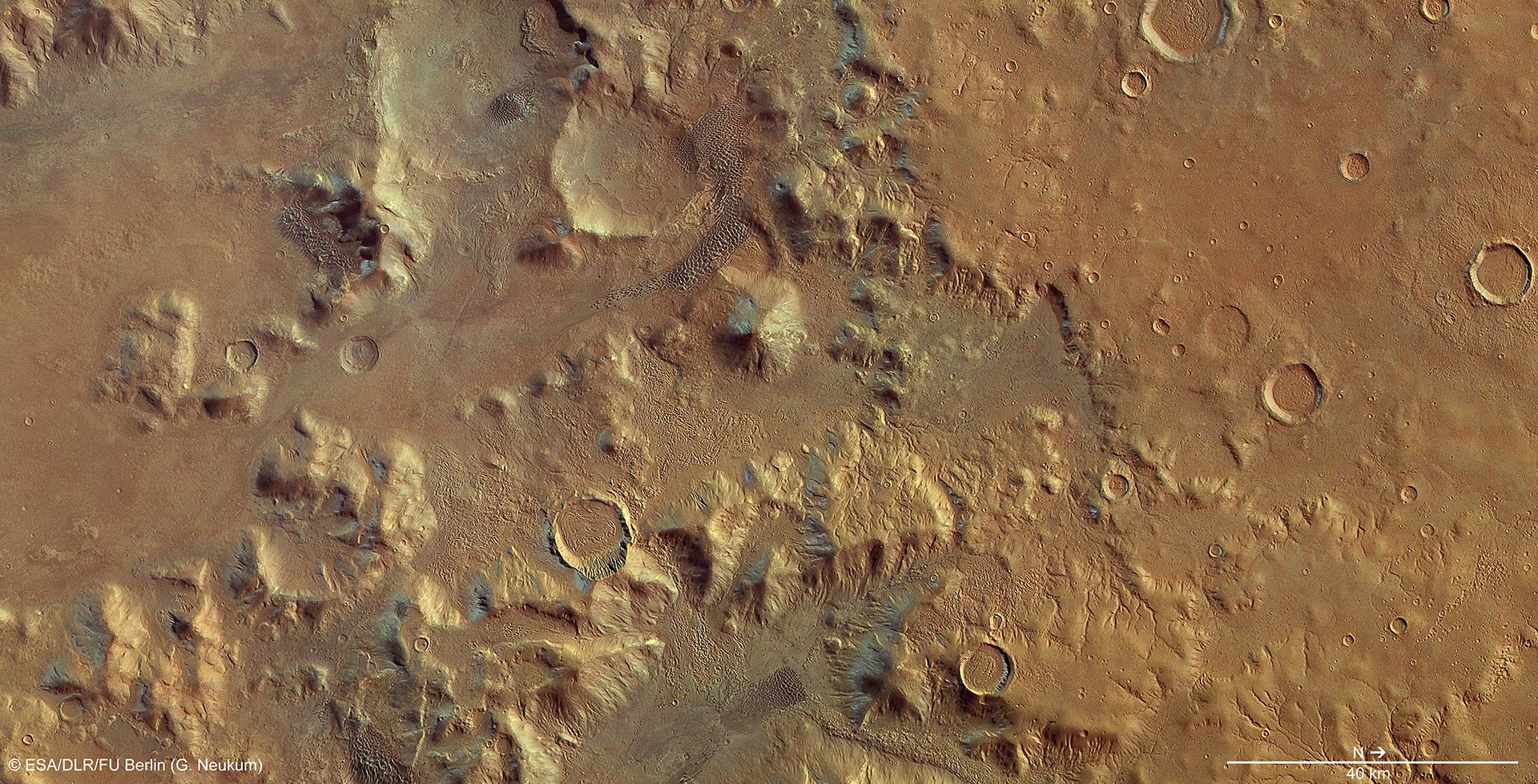
Nereidum Montes helps unlock Mars’ glacial past

High-Resolution Stereo Camera (HRSC) nadir and colour channel data taken during revolution 10736 on 6 June 2012 by ESA’s Mars Express have been combined to form a natural-colour view of Nereidum Montes. Centred at around 40°S and 310°E, the image has a ground resolution of about 23 m per pixel. It shows a portion of the extensive region, with concentric crater fill in many of the craters towards the east (lower part of the image). Undulations in crater floors are commonly seen in mid-latitude regions on Mars and are believed to be a result of glacial movement.
Credits: ESA/DLR/FU Berlin (G. Neukum)
ESA
Guillermo Gonzalo Sánchez Achutegui
ayabaca@hotmail.com
ayabaca@gmail.com
ayabaca@yahoo.com

ESA - Envisat - Earth from Space: Aphrodite’s island


Download:
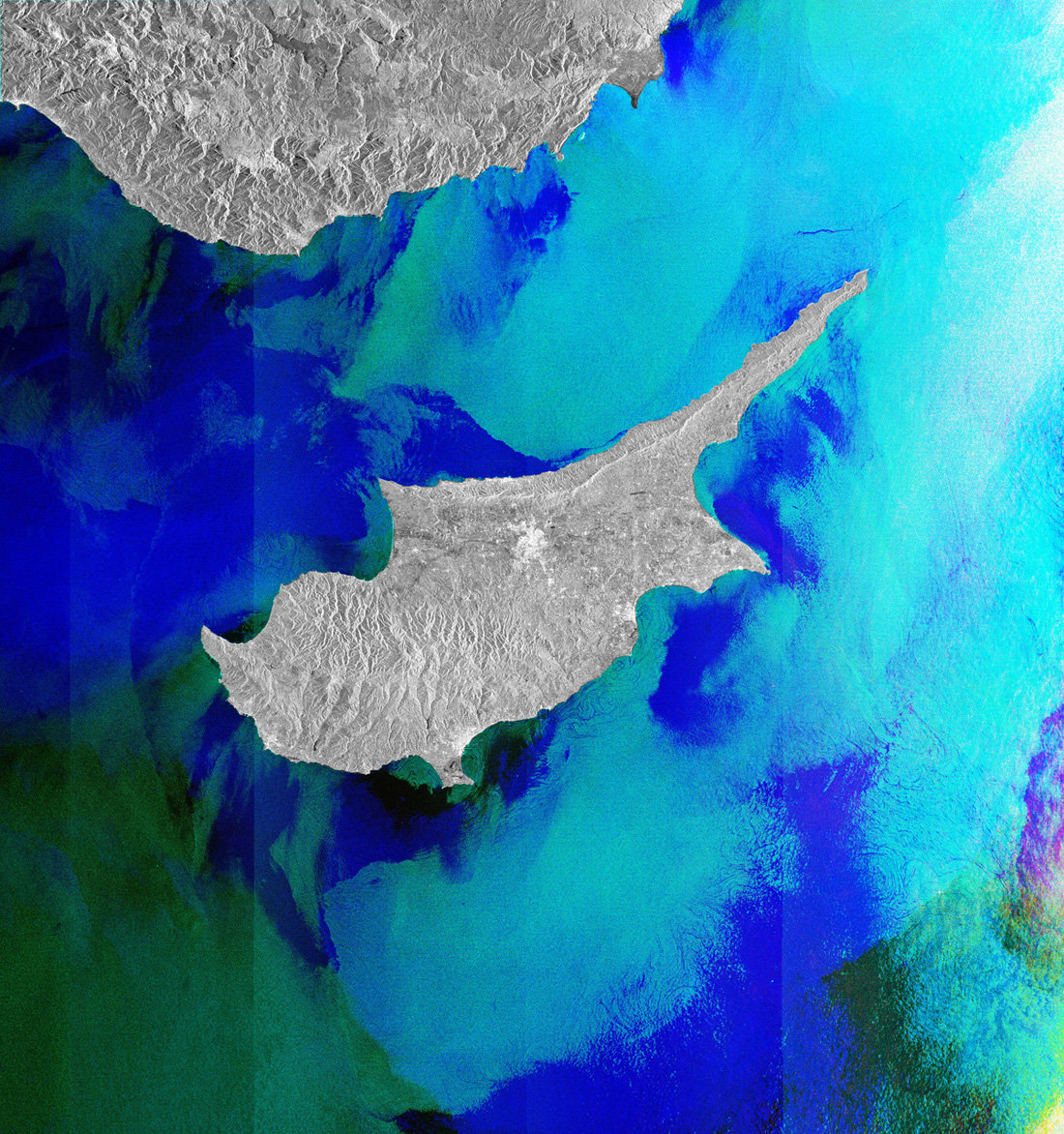
Covering part of the Eastern Mediterranean this Envisat image is dominated by the island of Cyprus. The capital and largest city, Nicosia, is located near the centre of the image. Around Nicosia we see a concentration of white specks. This is the typical appearance of built-up areas in radar images, since the radar beam is reflected by buildings and other constructions. Similar concentrations are seen south east of Nicosia, where the seafront city of Larnaca lies, and further west along the coast to Limassol, the island’s second largest city.
This image is a compilation of three images from Envisat’s radar, acquired on 27 September, 27 October and 26 November 2011. 
Credits: ESA

Covering part of the Eastern Mediterranean this Envisat image is dominated by the island of Cyprus, a former British colony that became independent in 1960.

The island was shaped from the collision of the African and European tectonic plates. It is located on the Anatolian plate and therefore belongs geologically to Asia.
It is also the legendary birthplace of Aphrodite, the goddess of love and beauty.
The Troodos mountains dominate the centre of the island and include Mount Olympus, the country’s highest mountain at 1952 m.
The smaller Kyrenia Range extend along the northern coast.
Since 1974 the island has been split between the Greek Cypriot and Turkish Cypriot populations. The line of the separation runs through the capital and largest city, Nicosia, which is located near the centre of the image.
Around Nicosia we see a concentration of white specks. This is the typical appearance of built-up areas in radar images, since the radar beam is reflected by buildings and other constructions.
Similar concentrations are seen south east of Nicosia, where the seafront city of Larnaca lies, and further west along the coast to Limassol.
Limassol is the island’s second largest city and sits on the Akrotiri Bay. It is the largest Cypriot port in Mediterranean transit trade.
This image is a compilation of three images from Envisat’s radar, acquired on 27 September, 27 October and 26 November 2011.  

The Image of the Week is featured on ESA Web-TV, broadcast online every Friday at 10:00 CET. 
ESA
Guillermo Gonzalo Sánchez Achutegui
ayabaca@gmail.com
ayabaca@hotmail.com
ayabaca@yahoo.com

jueves, 1 de noviembre de 2012

National Science Foundation - Science on the Graveyard Shift


http://www.nsf.gov/news/mmg/media/images/DSC001193.JPG
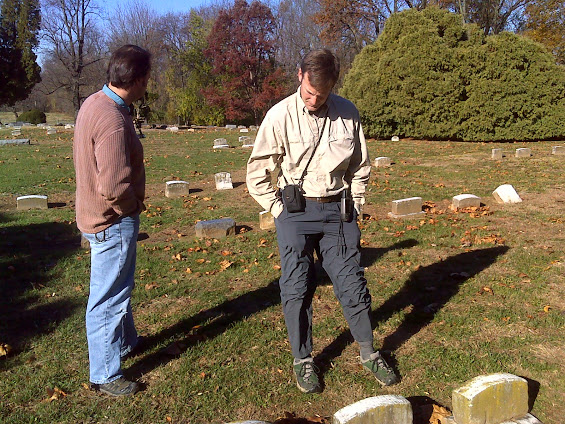
Graveyards are excellent research sites; their soil lies undisturbed.
Credit: Kyungsoo Yoo
Download the high-resolution JPG version of the image. (97 KB)http://www.nsf.gov/news/mmg/media/images/DSC001103.JPG
Anthony Aufdenkampe and Rolf Aalto, to right of tree, inspect an ancient oak in a cemetery in London Grove, Pa.
Credit: Kyungsoo Yoo
Download the high-resolution JPG version of the image. (101 KB)http://www.nsf.gov/news/mmg/media/images/IMG_3763%203%20oak%20plate3.jpg
This "Penn Oak," or white oak, was standing when William Penn arrived in Pennsylvania in 1682.
Credit: Beth Wenell
Download the high-resolution JPG version of the image. (115 KB)http://www.nsf.gov/news/mmg/media/images/DSC001143.JPG
Anthony Aufdenkampe (right), and Rolf Aalto, shown at London Grove Friends Meeting cemetery.
Credit: Kyungsoo Yoo
Download the high-resolution JPG version of the image. (154 KB)http://www.nsf.gov/news/mmg/media/images/christinabasin_basemap3.png
Map of the Christina River Basin, site of one of six NSF Critical Zone Observatories (CZOs).
Credit: Wikimedia Commons
Download the high-resolution PNG version of the image. (180 KB)http://www.nsf.gov/news/mmg/media/images/800px-Christina_River3.jpg
The Christina River flows through three states: Pennsylvania, Maryland and Delaware.
Credit: Wikimedia Commons
Download the high-resolution JPG version of the image. (184 KB)
The following is part three in a series on the National Science Foundation's Critical Zone Observatories (CZOs). Part one describes the work of the Susquehanna Shale Hills CZO. Part two focuses on the Southern Sierra CZO.
Into the graveyard
By dark of night in an old graveyard, things rustle. At least if that cemetery is at London Grove Friends Meeting in Kennett Square, Pa.
Look between the oldest markers, or under a gnarled oak tree that's been guarding the graveyard since the time of William Penn in 1682. You'll find not a ghost, but a scientist, probing the dirt for the secrets it might reveal.
"These soils have been undisturbed for centuries, if at all, and they hold the key to understanding how humans have altered the landscape," says geoscientist Anthony Aufdenkampe of the National Science Foundation's (NSF) Christina River Basin Critical Zone Observatory (CZO) on the border of Delaware and Pennsylvania.
To discover answers, Aufdenkampe, who is also affiliated with Pennsylvania's Stroud Water Research Center, is in graveyards taking samples at noon and at midnight. "We do a lot of storm-chasing to follow erosion," says Aufdenkampe, "so we're often out at the 'witching hour.'"
The Christina River Basin CZO is one of six NSF CZOs in watersheds across the nation.
In addition to the Christina River Basin site, CZOs are located in the Southern Sierra Nevada, Boulder Creek in the Colorado Rockies, Susquehanna Shale Hills in Pennsylvania, Luquillo riparian zone in Puerto Rico, and the Jemez River and Santa Catalina Mountains in New Mexico and Arizona.
They're providing us with a new understanding of the critical zone--the region between the top of the forest canopy and the base of unweathered rock: our living environment--and its response to climate and land use changes.
Marked by rotting soil
It all starts with bedrock and with rotting soil.
To scientists, this putrid rock, as the Greeks called it, is known as saprolite. It's the first stage of the continuous transformation of rock to fertile soils, says Aufdenkampe, and needs thousands to millions of years of mixing by water, plants, microbes, worms and other organisms.
But its journey doesn't end there.
For centuries, researchers thought that these building blocks of life stayed close to home--that the molecules in a falling leaf didn't travel far before meeting their ultimate fates. They returned to the atmosphere as greenhouse gas, or became incorporated into the soil.
Now scientists at the Christina River Basin CZO believe otherwise.
They're testing the idea that erosion and mixing of soil minerals with carbon in fresh plant remains--and subsequent burial downslope or downstream--is the key to what happens to the carbon, and to the greenhouse gases it forms.
Aufdenkampe and colleagues published results of a study comparing carbon transport in watersheds such as the Christina River Basin and others around the world in the February 2011, issue of the journal Frontiers in Ecology and the Environment.
"Society has long recognized the importance of water, soil, vegetation and land forms to human welfare, but only recently have we begun to holistically probe the workings of these coupled systems in projects like the CZOs," says Wendy Harrison, director of NSF's Division of Earth Sciences, which funds the CZO network.
"This new way of doing science will allow us to predict how an entire watershed will respond to land use and climate change."
Scientists once believed that they could understand whether a forest or a field was storing greenhouse gases by studying small research plots alone.
"Now we know that we need to look carefully at all the forms of carbon that leave a plot and flow downhill and downstream," says Aufdenkampe. "We need to follow the carbon and the soil from saprolite to the sea."
Twists and turns of the Christina River
Sippunk, Tasswaijres, Minquess Kill. The Christina River has been known by these names and many others.
It's a tributary of the Delaware River; its 35 miles flow through southeastern Pennsylvania, northeastern Maryland, and into Delaware. From Franklin Township in Pennsylvania to Wilmington, Delaware, the Christina River and its tributaries drain an area of 565 square miles.
Its streams supply 100 million gallons of water each day for more than half a million people in three states.
The first European settlements in Delaware sprang up near the confluence of the Christina and Delaware rivers. Trees lining the banks of the rivers, and across the land, were felled. In their place came farms and factories.
How has the region's human history affected rivers and streams that now course through forests and farms, suburbs and cities? And how has this centuries-old legacy changed the carbon cycle in the Christina River Basin watershed?
To find out, Aufdenkampe picks up a shovel. As he digs through fallen leaves and several feet of dirt on a streambank flanked by gravestones, stripes of soil begin to emerge.
In their center is something dark and moist. Perfectly preserved, it's a part of the bank buried hundreds of years ago by erosion caused by colonial forefathers.
Scientists at the Christina River CZO hope to discover how this sediment--and that above and below it--was deposited, and where waterways may carry it next, if anywhere.
"How are humans affecting the carbon cycle in a watershed like the Christina River Basin?" asks Aufdenkampe. "How far afield does what happens here go? Does it reach the Delaware, the Atlantic or beyond?"
Research at the CZO takes a "whole watershed" approach to discovering where carbon and other elements end up.
"They usually have one of three fates," Aufdenkampe says, "a return to the skies as a greenhouse gas, incorporation into the tissues of a living organism, or burial in soils and sediments."
From dust to dust
Where do scientists look for clues to those ultimate fates? They dig into soils and scour waterways, with a stop along the way near a local cemetery or two.
"Soils under ancient trees and in old cemeteries provide a geochemical reference that we can use to estimate human-caused erosion elsewhere on the landscape," says Aufdenkampe.
People inevitably leave their mark on the land, he says. But will the carbon buried by 400 years of human activities give up the ghost and move on, or will it rest in peace?
"In the future," Aufdenkampe asks, "will what's in the soil return to haunt us all?"
--  Cheryl Dybas, NSF (703) 292-7734 cdybas@nsf.gov
Related Websites
NSF Critical Zone Observatories: Where Rock Meets Life: http://www.criticalzone.org/
NSF Christina River Basin Critical Zone Observatory: http://www.udel.edu/czo/
NSF Discovery Article: A Tree Stands in the Sierra Nevada: http://www.nsf.gov/discoveries/disc_summ.jsp?cntn_id=125091&org=NSF
NSF Discovery Article: Can Marcellus Shale Gas Development and Healthy Waterways Sustainably Coexist?: http://www.nsf.gov/discoveries/disc_summ.jsp?cntn_id=122543&org=NSF
NSF News Release: NSF Awards Grants for Three Critical Zone Observatories: http://www.nsf.gov/news/news_summ.jsp?cntn_id=110586
NSF Science, Engineering and Education for Sustainability Investment: http://www.nsf.gov/sees/
The National Science Foundation (NSF)
Guillermo GOnzalo Sánchez Achutegui
ayabaca@gmail.com
ayabaca@hotmail.com
ayabaca@yahoo.com

ESA Portal - Meet ESA, the space agency for Europe


 ESA now has 20 Member States
Download:

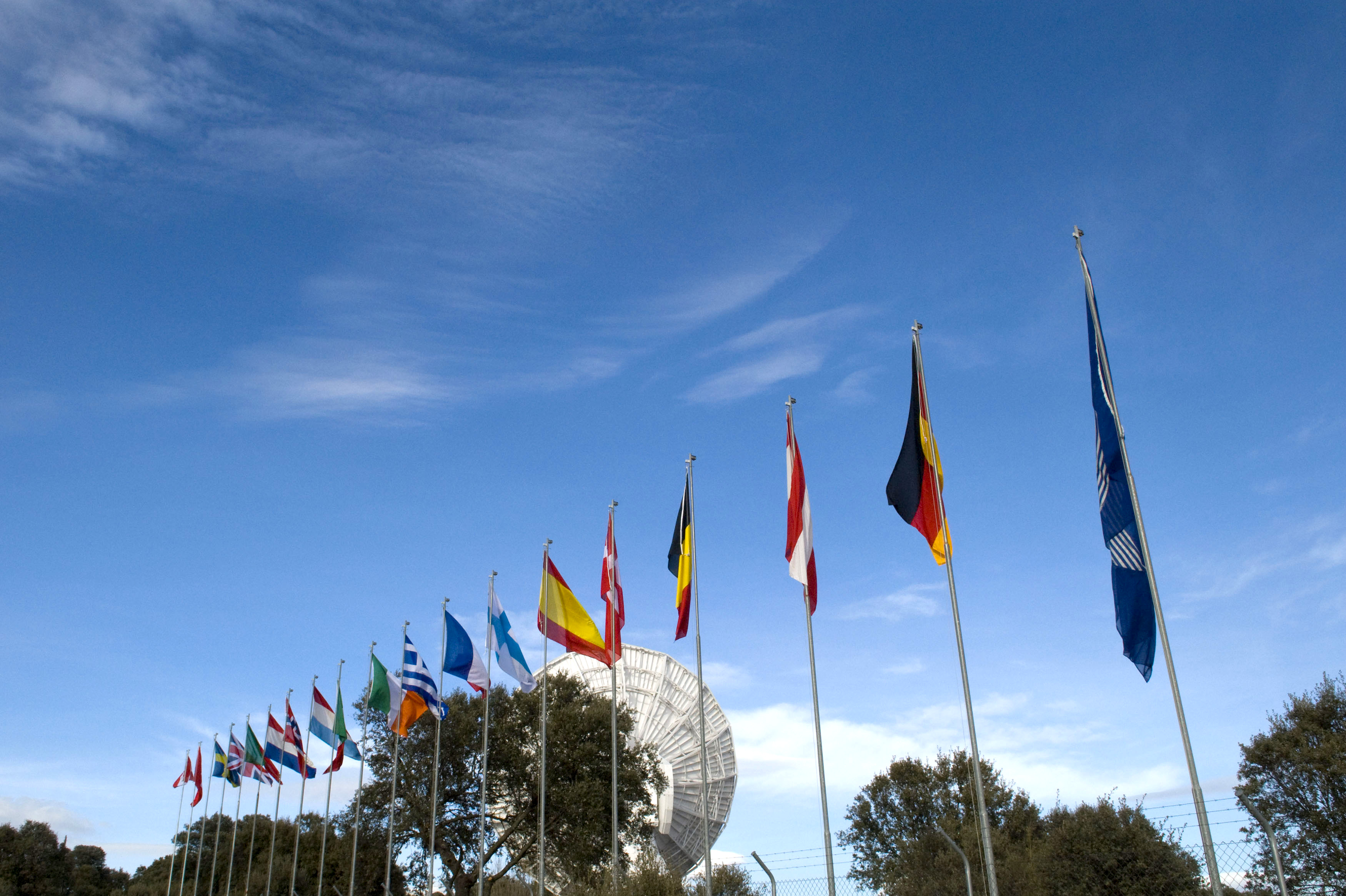
ESA's Villafranca VIL-2 15m S-band antenna with flags of ESA member states. Its 15m diameter dish antenna performs reception and transmission in S-band including an auto track capability, a ranging system, a frecuency and timing system, a monitoring and control system, and a communications system. 
Credits: ESA - S. Corvaja

You, together with your 500 million fellow citizens from ESA’s 20 European member nations, are the collective owners of one of the world’s leading space agencies.
The European Space Agency is an intergovernmental organisation, a cooperative coming together of its Member States in their national interest and common good. With Europe’s space ministers meeting on 20-21 November to decide the Agency’s future course, this new video offers a quick introduction: Europe, meet ESA. 
ESA does a lot with little, its budget several times lower than its international counterparts.
For an investment equivalent to a cinema ticket for each of us per year, the European Space Agency is one of the few organisations in the world active in all areas of space: exploring space and safeguarding the terrestrial environment while also boosting our continent’s technical knowhow and economic competitiveness.
“We can do more, together” was the credo that led 10 European states to found ESA back in 1975. Today, the success of this approach is clear. ESA technical leadership and the permanent support of its Member States have built a competitive European space industry in the global front rank.
Ariane-5 ECA launch
Download:
 HI-RES JPEG (Size: 1179 kb)
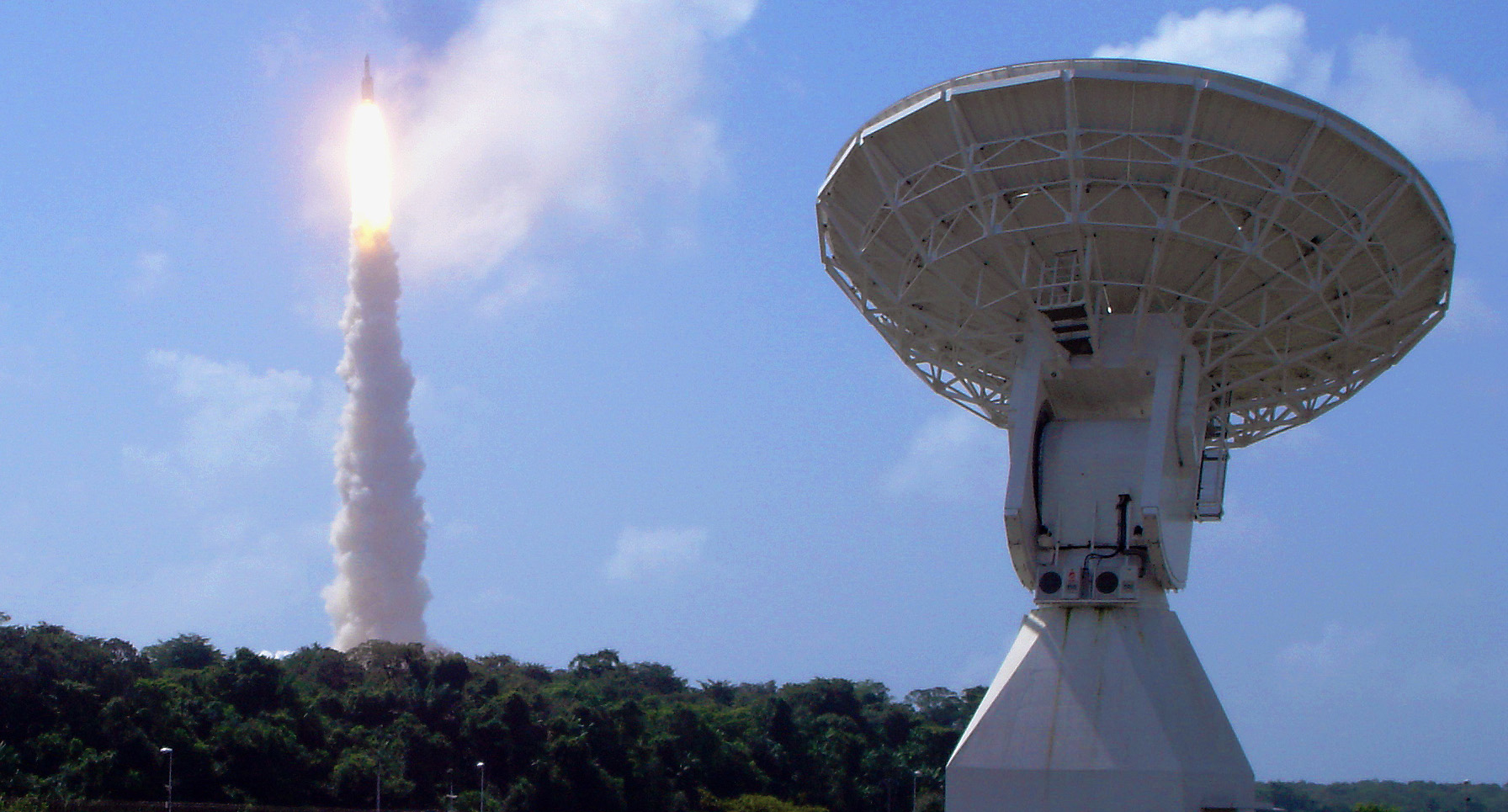
Ariane-5 ECA launch of Herschel and Planck in May 2009 from Europe's Spaceport in French Guiana. Credits: ESA/CNES/Arianespace-Service Optique CSG

From weather satellites to space-based telecommunications, navigation and environmental monitoring, the systems ESA has put in place have helped to strengthen Europe’s strategic independence and its place in the world, along with our quality of life and prosperity. ESA activities have given rise to new jobs, businesses and entire high-value industries.
“We can do more together” turned out to be an accurate prediction. Almost four decades on, this space agency for Europe has 20 member states, collectively achieving results that no single nation could match.
ESA has forged a culture of diversity, collaboration and excellence. Good work tends to have an impact, and ESA’s long-term record of cooperative success has in turn inspired a new ethos of cooperation among global space powers.
To learn more about ESA and its many and varied impacts on Europe and the world, watch the short video above.


This image shows molecular clouds in the Pegasus region as seen through the glow of carbon monoxide (CO) with Planck (blue).

Molecular clouds, the dense and compact regions throughout the Milky Way where gas and dust clump together, represent one of the sources of foreground emission seen by Planck. The vast majority of gas in these clouds consists of molecular hydrogen (H2), and it is in these cold regions that stars are born. Since cold H2 does not easily radiate, astronomers trace these cosmic cribs across the sky by targeting other molecules, which are present there in very low abundance but radiate quite efficiently. The most important of these tracers is carbon monoxide (CO), which emits a number of rotational emission lines in the frequency range probed by Planck's High Frequency Instrument (HFI).

Emission lines affect a very limited range of frequencies compared to the broad range to which each of Planck’s detectors is sensitive, and are usually observed using spectrometers. But some CO lines are so bright that they actually dominate the total amount of light collected by certain detectors on Planck when they are pointed towards a molecular cloud like those in the Pegasus region.

The all-sky CO map compiled with Planck data shows concentrations of molecular gas in portions of the sky that had never before been surveyed. For example, many regions at high galactic latitude, such as the Pegasus region, had not been covered by previous CO surveys. Planck's high sensitivity to CO also means that even very low-density clouds can be detected, as in the case of the Pegasus clouds.

Follow-up observations and further studies of this and other stellar nurseries will allow a detailed investigation of the physical and chemical conditions that lead to the formation of molecular clouds, shedding new light on the very early phases of star formation.

Credits: ESA/Planck Collaboration
ESA

Guillermo Gonzalo Sánchez Achutegui
ayabaca@gmail.com
ayabaca@hotmail.com
ayabaca@yahoo.com