Mostrando entradas con la etiqueta the National Science Foundation(NSF). Mostrar todas las entradas

sábado, 11 de mayo de 2013

nsf.gov - National Science Foundation - Life on a Coral Reef: Insult Is (Sometimes) Added to Injury

Hola amigos: AL VUELO DE UN QUINDE EL BLOG., hemos recibido  información del National Science Foundation NSF, sobre la vida en un pequeño arrecife de Coral y como las esponjas de coral son sometidas a un predator que es  un pes llamado: the "yuk factor." en la Pequeña Isla Caymán.
Les invito a lEer la versión original en inglés del National Science Foundation NSF

Giant barrel sponges off Little Cayman Island in the Caribbean next to a researcher.
Giant barrel sponges off Little Cayman Island in the Caribbean dwarf researchers.
Credit: Joe Pawlik, UNCW
Download the high-resolution JPG version of the image. (4.5 MB)


Scientists research chemical defenses in tube sponges off Little Cayman Island.
Credit: Joe Pawlik, UNCW
Download the high-resolution JPG version of the image. (4.1 MB)

Close up of an orange sponge
Predatory fish prevent orange sponges from smothering corals.
Credit: Joe Pawlik, UNCW
Download the high-resolution JPG version of the image. (2.9 MB)
Sponge growth experiment underway on Conch Reef, Key Largo, Florida.
Credit: Joe Pawlik, UNCW
Download the high-resolution JPG version of the image. (6.1 MB)

Diver surveys a gray tube sponge with "bite marks" from angelfish
Gray tube sponge with "bite marks" from angelfish off Grand Cayman Island.
Credit: Joe Pawlik, UNCW
Download the high-resolution JPG version of the image. (3.8 MB)


Reef-building corals overgrown by orange sponges on an overfished reef off Martinique.
Credit: Joe Pawlik, UNCW
Download the high-resolution JPG version of the image. (5.5 MB)

When is insult added to injury for a Caribbean coral reef?
When overfishing removes predatory fish that feed on sponges, according to results reported this week in the journal PLOS ONE.
Using the undersea habitat Aquarius--moored on Conch Reef off Key Largo, Florida--marine scientist Joseph Pawlik of the University of North Carolina Wilmington (UNCW) and colleagues found that these predator-fish are the same brightly colored angelfish and parrotfish that attract scuba divers and glass-bottom boat tourists.
Pawlik is first author of the PLOS ONE paper; co-authors, all from UNCW, are Tse-Lynn Loh, Steven McMurray and Christopher Finelli.
Chemical warfare beneath the waves
The fish prey on sponges without chemical defenses--sponges missing what might be called the "yuk factor."
"Sponges that manufacture metabolites that are distasteful to fish are largely left alone," says Pawlik.
"That being said, when overfishing by humans removes these predatory fish, reefs shift toward faster-growing sponges that can out-compete reef corals for space.
"That further hinders corals' chances of recovery."
Coral cover on Caribbean reefs is at historic lows due to disease, heat stress from warming waters and waves from storms.
Undersea garden of sponges
"Coral reefs, especially in the Caribbean, have undergone many changes in the past few decades," says David Garrison, program director in the National Science Foundation's (NSF) Division of Ocean Sciences, which funded the research.
"With the decline of reef-building corals, sponges are becoming the main organisms on many reefs. These findings provide important information about interactions between sponges and predatory fish in coral reef communities."
Previous research showed that Caribbean sponge communities were primarily structured by the availability of plankton, or tiny floating plants and animals, rather than by predators.
But sponge growth experiments performed by Pawlik and colleagues--research that used cages to exclude predators--show the opposite.
"Overfished reefs that lack spongivores [sponge-eating fish] soon become dominated by faster-growing, chemically undefended sponge species, which better compete for space with reef-building corals," says Pawlik.
Endangered corals: threatened by 'new game in town'?
That has implications for fisheries management throughout the Caribbean.
"Some coral species are listed as critically endangered on the IUCN [International Union for Conservation of Nature] Red List, with four reef-building corals on the top ten list for risk of extinction."
Sponges are already overrunning certain coral reefs.
"As the effects of climate change and ocean acidification disrupt marine communities," says Pawlik, "it's likely that reef-building corals will suffer greater harm than sponges, which don't form at-risk limestone skeletons [as corals do]."
Hence, he believes, Caribbean reefs of the future are likely to be made up increasingly of sponges.
Scuba divers and glass-bottom boat tourists may visit not to view coral reefs, but to see the new game in town: the sponges.
--  Cheryl Dybas, NSF (703) 292-7734 cdybas@nsf.gov
Related Websites
NSF Discovery Article: Trouble in Paradise: Ocean Acidification This Way Comes: http://www.nsf.gov/discoveries/disc_summ.jsp?cntn_id=122642&org=NSF
 
Guillermo Gonzalo Sánchez Achutegui
ayabaca@gmail.com
ayabaca@hotmail.com
ayabaca@yahoo.com 

martes, 15 de enero de 2013

nsf.gov - National Science Foundation - Exploring the Brain's Relationship to Habits

Research may impact development of treatments for movement disorders such as Parkinson's and Huntington's diseases, as well as conditions such as autism
photo of Ann Graybiel
Researcher Ann Graybiel studies how the human brain adapts to habits.
Credit: Bachrach Studios
Download the high-resolution JPG version of the image. (92 KB)
photo of a section from a human brain
Photomicrograph of section from human brain, stained for acetylcholinesterase, an enzyme that degrades neurotransmitter acetylcholine. This staining procedure revealed pockets of low enzyme activity, which appear dark in this light-dark reversed image. These are the histochemically identified striosomes.
Credit: Ann Graybiel
Download the high-resolution JPG version of the image. (445 KB)

The basal ganglia, structures deep in the forebrain already known to control voluntary movements, also may play a critical role in how people form habits, both bad and good, and in influencing mood and feelings.
"This system is not just a motor system," says Ann Graybiel."We think it also strongly affects the emotional part of the brain."
Graybiel, an investigator at the McGovern Institute of the Massachusetts Institute of Technology and professor in MIT's department of brain and cognitive sciences, believes that a core function of the basal ganglia is to help humans develop habits that eventually become automatic, including habits of thought and emotion.
"Many everyday movements become habitual through repetition, but we also develop habits of thought and emotion," she says."If cognitive and emotional habits are also controlled by the basal ganglia, this may explain why damage to these structures can lead not only to movement disorders, but also to repetitive and intrusive thoughts, emotions and desires."           
Graybiel's research focuses on the brain's relationship to habits--how we make or break them--and the neurobiology of the habit system. She and her team have identified and traced neural loops that run from the outer layer of the brain--"the thinking cap," as she calls it--to a region called the striatum, which is part of the basal ganglia, and back again. These loops, in fact, connect sensory signals to habitual behaviors.
Her work ultimately could have an impact not just on such classic movement disorders as Parkinson's and Huntington's diseases, but in other conditions where repetitive movements commonly occur, such as Tourette Syndrome, autism, or obsessive-compulsive disorder, the latter when sufferers experience unwanted and repeated thoughts, feelings, ideas, sensations or behaviors that make them feel driven to do something, for example, repeatedly washing their hands.
Moreover, the research could have an immediate value for trying to understand "what happens in the brain as addiction occurs, as bad habits form, not just good habits," she says. "There are many psychiatric and neurologic conditions in which these same brain regions are disordered.
"These conditions may in part be influenced by the very system we are working on," Graybiel adds. "We are working with models of anxiety and depression, stress and some of these movement disorders."
It turns out that the emotional circuits of the brain have strong ties to the striatum, she says. Graybiel's research suggests that activity in the striatum strongly affects the emotional decisions that people make: whether to accept a good outcome or a potentially bad one, for example, and that there are circuits favoring good outcomes, and, surprisingly, other circuits that favor bad ones.
"This work ties into new research suggesting that there are  brain systems for ‘good' and brain systems for ‘bad,'" she says. "What is intriguing is that we may have  identified the circuits that decide between the two."
Recently, Graybiel, an early National Science Foundation grantee, won the prestigious Kavli Prize in neuroscience (along with Cornelia Isabella Bargmann of Rockefeller University and Winfried Denk of the Max Planck Institute for Medical Research) for their groundbreaking research "elucidating basic neuronal mechanisms underlying perception and decision." 
These prizes recognize scientists for their seminal advances in astrophysics, nanoscience and neuroscience, and include a cash award of $1 million in each field.
Graybiel's lab was the first to discover more than three decades ago that neurotransmitters in the striatum had a precise and unique organization--compartments similar to layers--a finding that surprised most scientists at the time. 
"We couldn't see this organization in regular old anatomy, but we found this with chemical markers, by using stains," she says.  "Imagine if you look at a desert and everything looks plain and uniform, just all sand. Then you put on special glasses, and all of a sudden, you could see the chemical composition of the sands. The whole landscape looks totally different, and that's what happened when we did this stain.
"We now know that all over the brain, these molecules are highly ordered," she adds. "They are communication lines, and connections from a to b and b to c, and these connections all work because of these chemical communication molecules. We happened to find that the deep brain, which looked so primitive, wasn't as primitive as people thought. We found that if we looked at the chemicals and then at the inputs and the outputs, everything was organized with respect to these chemical compartments."
She and her team also determined that communication molecules known to be related to human disorders, such as dopamine, a key neurotransmitter, were prominently organized in this way.  Dopamine dysfunction is associated with the development of Parkinson's disease.
"As we looked more and more, we found that we could trace connections from the neocortex to the striatum," she says. "They were all organized in compartments either in the compartments we called striosomes or in the compartments that surrounded them.''
The striosomes are one of two complementary chemical compartments within the striatum. The second compartment is known as the matrix.
Following upon this, "the next thing we found was that the whole thing looked like a learning machine because of the way it all was organized," she says. "We decided to study learning. In order to do that, we had to learn to record the neural activity. It turns out that the system is tremendously active as we learn habits. That's how we began."
Graybiel uses electrical recordings, behavioral tests and gene-based approaches to study these issues, and has seen remarkable changes in neural activity within the striatum as animals learned new habits.
"The activity in this part of the brain changed as the animals learned, and they were highly correlated with the learning," she says. "We take the animals to ‘school' every day, and give them practice. They do learn habits-to run to the right, or do something when a click occurs, until it's habitual. As they learn, there are all these changes in the neural activity."
She and her lab also found that these changes are coordinated with activity patterns in the hippocampus, a brain structure involved with memory of facts and events.  Currently, she and her lab are studying new methods to influence the activity in the striatum, and genes found in the brain region thought to be involved in the brain's response to abusive drugs, as well as to therapeutic drugs, such as those to treat Parkinson's.
Their work suggests a new view of how the core brain structures involved in Parkinson's disease are affected by dopamine depletion, and how this key neurotransmitter might influence the ability to maintain movement and thought.
"Hopefully, our basic science work can lead to new therapeutic approaches to these disorders, not only in drug treatments but also other novel treatments that affect the on-going activity of neurons in the basal ganglia," she says. "There is nothing I would rather do than to help in the search for new therapies to treat the range of disorders related to the system we study, from Parkinson's disease to OCD to addiction, and maybe, just maybe, to help the rest of us unlearn bad habits."
--  Marlene Cimons, National Science Foundation
Investigators Ann Graybiel
Related Institutions/Organizations Massachusetts Institute of Technology

The National Science Foundation(NSF)
Guillermo Gonzalo Sánchez Achutegui
ayabaca@gmail.com
ayabaca@hotmail.com
ayabaca@yahoo.com

martes, 18 de diciembre de 2012

nsf.gov - National Science Foundation:Climate Warming Unlikely to Cause Near-Term Extinction of Amazon Tree Species


Climate Warming Unlikely to Cause Near-Term Extinction of Amazon Tree Species
New genetic analyses of common Amazon trees show that many have survived past warming
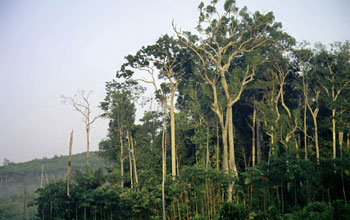
Fragment of mature Amazon forest within an agricultural area near Manaus, Brazil.
Credit and Larger Version
December 13, 2012
New genetic analyses show that some common Amazon tree species are more than 8 million years old.
The analysis also reveals that these surprisingly old species have endured past periods of significant climate warming. It therefore appears unlikely that human-caused temperature increases alone will cause mass extinctions of the trees in the coming century.
Results of a study by evolutionary biologist Christopher Dick of the University of Michigan and colleagues show that some trees in the Amazon rainforest have survived warm periods similar to the global warming scenarios forecast for the year 2100.
"In the absence of other major environmental changes, near-term high-temperature-induced mass species extinction is unlikely" in the Amazon forest, Dick and colleagues conclude in a paper published online today in the journal Ecology and Evolution.
"The rapidly changing climate of our planet has the potential to put great stresses on plants and animals," said Sam Scheiner, program director in the National Science Foundation's (NSF) Division of Environmental Biology, which funded the research.
"To prepare for these changes, we need to know how species have adapted to past climate change," Scheiner said. "Much more is left to be learned about the effects of climate change."
The new results are at odds with earlier findings based on ecological niche-modeling scenarios that predict tree species extinctions in response to relatively small increases in global average air temperatures.
Dick used a molecular clock approach to determine the ages of 12 widespread Amazon tree species.
Then he and other scientists looked at climate events that have occurred since those tree species emerged. In general, the older the tree species, the warmer the climate it has previously survived.
The researchers determined that nine of the tree species have been around for at least 2.6 million years, seven have been present for at least 5.6 million years and three have existed in the Amazon for more than eight million years.
"These are surprisingly old ages," Dick said. "Previous studies have suggested that a majority of Amazon tree species may have originated during the Quaternary Period, from 2.6 million years ago to the present."
"The most lasting finding of our study may be the discovery of ancient geographic variation within widespread species, indicating that many rainforest tree species were widely distributed before the major uplift of the northern Andes," said paper co-author Eldredge Bermingham of the Smithsonian Tropical Research Institute.
Air temperatures across Amazonia in the early Pliocene Epoch--3.6 million to 5 million years ago--were similar to Intergovernmental Panel on Climate Change (IPCC) projections for the region in 2100 using moderate carbon-emission scenarios.
Air temperatures 5.3 to 11.5 million years ago in the late Miocene Epoch were about the same as IPCC projections for the region in 2100 using the highest carbon-emission scenarios.
"Our results provide evidence that common Neotropical tree species endured climates warmer than the present, implying they can tolerate near-term future warming under climate change," said Dick.
Paper co-author Simon Lewis of University College London and the University of Leeds cautioned that the good news for Amazon trees is not a panacea.
"The past cannot be compared directly with the future," he said.
"While tree species seem likely to tolerate higher air temperatures than today, the Amazon forest is being converted for agriculture and mining, and what remains is being fragmented by roads and fields.
"Species will not move as freely in the Amazon as they did in previous warm periods, when there was no human influence. Today's climate change is extremely fast, making comparisons with the past difficult."
The 12 tree species used in the study are broadly representative of the Amazon tree flora.
Primary forest collection sites were in central Panama, western Ecuador and Amazonian Ecuador. Additional collections were in Brazil, Peru, French Guiana and Bolivia.
Other plant samples were obtained from herbarium specimens.
To determine the age of each tree species, the researchers extracted and sequenced DNA from plant samples, then looked at the number of genetic mutations contained in those sequences.
Using a molecular clock approach and population genetic models, they estimated how long it would take for each of the tree populations to accumulate the observed number of mutations, which provided a minimum age for each species.
Tropical rainforests have existed in South America for at least 55 million years.
The future of the contemporary Amazon forest is uncertain, however, as the region is entering conditions with no past analog, combining rapidly increasing air temperatures, high atmospheric carbon dioxide concentrations, possible extreme droughts and extensive removal and modification of the forest by humans.
The findings imply that droughts, direct human effects and their interactions "may be more immediate threats to the integrity of Amazon rainforests, and should remain a focus of conservation policy," the authors conclude.
"An important caveat is that because we've been in a cold period over the past 2 million years--basically the whole Quaternary Period--some of the trees' adaptations to warmth tolerance may have been lost," Dick said.
In addition to Dick, Bermingham and Lewis, Mark Maslin of University College London is a co-author of the paper.
Additional support for the research was provided by the Smithsonian Tropical Research Institute, the University of Michigan and the Royal Society.
-NSF-
Media Contacts Cheryl Dybas, NSF (703) 292-7734 cdybas@nsf.gov
Jim Erickson, University of Michigan (734) 647-1842 ericksn@umich.edu
The National Science Foundation (NSF) is an independent federal agency that supports fundamental research and education across all fields of science and engineering. In fiscal year (FY) 2012, its budget is $7.0 billion. NSF funds reach all 50 states through grants to nearly 2,000 colleges, universities and other institutions. Each year, NSF receives over 50,000 competitive requests for funding, and makes about 11,000 new funding awards. NSF also awards nearly $420 million in professional and service contracts yearly.
Useful NSF Web Sites:
NSF Home Page: http://www.nsf.gov
NSF News: http://www.nsf.gov/news/
For the News Media: http://www.nsf.gov/news/newsroom.jsp
Science and Engineering Statistics: http://www.nsf.gov/statistics/
Awards Searches: http://www.nsf.gov/awardsearch/

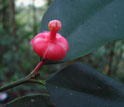
  Close up of scarlet flower of Symphonia globulifera in the Amazon.
The scarlet flowers of Symphonia globulifera trees have existed in the Amazon for 15 million years.
Credit and Larger Version
Amazon rainforest tree in a pasture at sunset.
Isolated Amazon rainforest tree in a pasture at sunset.
Credit and Larger Version
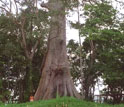
Giant kapok tree near the Amazon River.
Giant kapok tree near the Amazon River; this species was the youngest in the study.
Credit and Larger Version
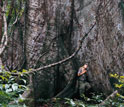
Close-up of a kapok tree in the Amazon.
Close-up of a kapok tree; in the Amazon, the species is less than one million years old.
Credit and Larger Version
Mahogany tree that fallen down in the Amazon forest.
The felling of a mahogany tree is indicative of the challenges facing Amazon forests.
Credit and Larger Version

the National Science Foundation's (NSF)

Guillermo Gonzalo Sánchez Achutegui
ayabaca@gmail.com
ayabaca@hotmail.com
ayabaca@yahoo.com

domingo, 2 de diciembre de 2012

nsf.gov - News - Emerging Vector-Borne Diseases Create New Public Health Challenge

Land-use change, globalization of trade and travel, and social upheaval drive emergence of diseases.-
http://www.nsf.gov/news/mmg/media/images/vector-borne%20disease%20CDC3.jpg
Vector-borne diseases are transmitted by ticks, mosquitoes and fleas.
Credit: CDC
Download the high-resolution JPG version of the image. (50 KB)http://www.nsf.gov/news/mmg/media/images/west_nile4_h4.jpg
In a decade, West Nile virus spread across the United States from coast to coast.
Credit: Marm Kilpatrick
Download the high-resolution JPG version of the image. (123 KB)http://www.nsf.gov/news/mmg/media/images/west_nile1_h5.jpg
American robins play a key role in the spread of West Nile virus.
Credit: U.S. Fish & Wildlife Service
Download the high-resolution JPG version of the image. (55 KB)http://www.nsf.gov/news/mmg/media/images/west_nile2_h14.jpg
Gray catbird caught in a research mist net near a museum in Washington, D.C.
Credit: Marm Kilpatrick
Download the high-resolution JPG version of the image. (804 KB)http://www.nsf.gov/news/mmg/media/images/west_nile3_h14.jpg
Scientist Marm Kilpatrick taking a blood sample from a downy woodpecker.
Credit: UCSC
Download the high-resolution JPG version of the image. (755 KB)

Human activities are advancing the spread of vector-borne, zoonotic diseases such as West Nile virus, Lyme disease and dengue fever, report scientists publishing a series of papers today in the journal The Lancet.
Vector-borne zoonotic diseases result from disease-causing agents or pathogens that naturally infect wildlife, and are transmitted to humans by carriers such as mosquitoes and ticks. In short, they're diseases transmitted between animals and humans.
Widespread land-use change, globalization of trade and travel, and social upheaval are driving the emergence of zoonotic diseases around the world, said biologist Marm Kilpatrick, who studies the ecology of infectious diseases at the University of California, Santa Cruz.
Kilpatrick co-authored one of several papers in The Lancet, along with Sarah Randolph of the University of Oxford. The Lancet papers are part of a special series in the journal focused on emerging zoonotic diseases.
"Increasing human population, and the urbanization and agricultural intensification of landscapes, put strong selective pressure on vector-borne pathogens to infect humans--and to be transmitted by vectors and hosts that live around humans," Kilpatrick said.
"Humans are altering the environment and moving ourselves and other organisms around the globe at an ever-increasing pace," said Sam Scheiner, a program director for the Ecology and Evolution of Infectious Diseases (EEID) program at the National Science Foundation. "Our fast-track has led to a growing disease threat."
EEID is a joint effort with NSF and the National Institutes of Health. At NSF, the Directorate for Biological Sciences and Directorate for Geosciences fund the program.
EEID funded much of the research discussed in The Lancet papers. "These papers show how and why zoonotic diseases are emerging, and what we need to know to ease the disease burden," said Scheiner.
The papers "offer a bridge between ecologists and clinicians whose combined efforts are needed to address the ongoing challenges of emerging zoonotic diseases," said Kilpatrick.
Added scientist Peter Daszak, president of the EcoHealth Alliance in New York City and author of a paper in the series, "Pandemic zoonoses such as SARS, Ebola and HIV/AIDS are devastating when they emerge. What this series shows is that we have new ways of predicting their origins, of discovering them even before they reach our population--truly a brave new world for pandemic prevention."
There are roughly two types of emerging infectious diseases: introduced and locally emerging.
Introduced diseases arise from the spread of a pathogen to a new location, as when West Nile virus arrived in New York in 1999 and subsequently spread across North America.
Locally emerging diseases increase in importance in areas where they are endemic, as with Lyme disease in the United States during the past three decades.
These two types of emerging diseases can differ markedly with respect to infection dynamics or the number of cases over time, Kilpatrick said.
"Introduced diseases often cause a big spike in infections, and then decrease substantially. Locally emerging diseases often show a steady, sustained rise."
The movement of pathogens by global trade and travel results in the emergence of diseases in new regions.
Once established, introduced pathogens often evolve to take advantage of their new environments, including new hosts and vectors.
With much of the landscape shaped by human activities, pathogens may thrive by infecting hosts and vectors that do well in man-made environments.
Emergence of endemic vector-borne diseases can result from changes in land use, such as movement of people into new habitats, or environmental changes that affect wild animals that serve as natural hosts--and the insect vectors that spread the disease to humans.
Although vector-borne diseases are sensitive to climate, climate change does not appear to be a major driving force behind emerging diseases.
"So far, climate change has been a relatively minor player compared to land use and socioeconomic factors in the emergence of vector-borne disease," Kilpatrick said.
Social and economic changes, ranging from economic downturns to displacement of populations by armed conflict, frequently precipitate disease outbreaks through their effects on public health systems, sanitation systems, behavioral patterns and uses of natural environmental resources.
The incidence of any vector-borne disease involves a complex interplay of multiple factors affecting animal hosts, vectors and people.
Kilpatrick and Randolph emphasize that control of these diseases requires combined efforts by clinicians and public health officials to treat patients; promote behavior likely to minimize the risk of infection; and advise on efforts to reverse the ecological drivers of transmission through vector control, urban planning and ecological restoration.
The Lancet papers are published ahead of a special 20th anniversary symposium to be held on Dec. 11 and 12, 2012, in Washington, D.C.
The symposium is hosted by the National Academies' Institute of Medicine's Forum on Microbial Threats. The symposium will take a retrospective look at the Institute of Medicine's 1992 report on Emerging Infections and its 2003 report on Microbial Threats to Health, as well as its creation of the forum in 1996.
-NSF-
Media Contacts Cheryl Dybas, NSF (703) 292-7734 cdybas@nsf.gov
Tim Stephens, UCSC (831) 459-2495 stephens@ucsc.edu
Anthony Ramos, EcoHealth Alliance (212) 380-4469 ramos@ecohealthalliance.org
Related WebsitesNSF-NIH Special Report: Ecology and Evolution of Infectious Diseases: http://www.nsf.gov/news/special_reports/ecoinf/index.jsp
West Nile Virus Transmission Linked with Land-Use Patterns and "Super-spreaders": http://www.nsf.gov/news/news_summ.jsp?cntn_id=122007
Social Bats Pay a Price: Fungal Disease, White-Nose Syndrome ... Extinction?: http://www.nsf.gov/news/news_summ.jsp?cntn_id=124679
Controlling the Spread of Diseases Among Humans, Other Animals and the Environment: http://www.nsf.gov/news/news_summ.jsp?cntn_id=125496
Snails in the Waters, Disease in the Villages: http://www.nsf.gov/discoveries/disc_summ.jsp?cntn_id=126031
The National Science Foundation (NSF) is an independent federal agency that supports fundamental research and education across all fields of science and engineering. In fiscal year (FY) 2012, its budget is $7.0 billion. NSF funds reach all 50 states through grants to nearly 2,000 colleges, universities and other institutions. Each year, NSF receives over 50,000 competitive requests for funding, and makes about 11,000 new funding awards. NSF also awards nearly $420 million in professional and service contracts yearly.
Useful NSF Web Sites:
NSF Home Page: http://www.nsf.gov
NSF News: http://www.nsf.gov/news/
For the News Media: http://www.nsf.gov/news/newsroom.jsp
Science and Engineering Statistics: http://www.nsf.gov/statistics/
Awards Searches: http://www.nsf.gov/awardsearch/
 The National Science Foundation (NSF)

Guillermo Gonzalo Sánchez Achutegui
ayabaca@gmail.com
ayabaca@hotmail.com
ayabaca@yahoo.com 

sábado, 1 de diciembre de 2012

nsf.gov - Discovery - Studying Evolution in Action

Researchers apply biological and digital approaches to better understand underlying factors:

http://www.nsf.gov/news/mmg/media/images/terrestrial-robots-lowres3.jpeg
One type of research done at BEACON includes the design of robots that cooperate to achieve a common goal and get rewarded or punished based on their interaction.
Credit: Philip McKinley, Michigan State University
Download the high-resolution JPEG version of the image. (165 KB)
http://www.nsf.gov/news/mmg/media/images/BEACON_Hyenas_and_Lion3.jpeg
Biologists study mammalian behavior, including hyenas using computational theory. One example is studying how cooperative behavior evolves among competing predators. In this picture, hyenas and lion feed on carcass in Masai Mara National Reserve, Kenya.
Credit: Laura Smale, Michigan State University
Download the high-resolution JPEG version of the image. (77 KB)
http://www.nsf.gov/news/mmg/media/images/webots-environment-final3.jpeg
3D image of intelligent vehicle systems experiments conducted in the webots simulation environment. The scenario in particular shows two simulated vehicle controllers capable of adaptive cruise control and lane keeping. Evolutionary computation was used to introduce uncertainty at the sensory level and thereby explore how controllers were affected.
Credit: Michigan State University
Download the high-resolution JPEG version of the image. (88 KB)


Evolution is not just something from the past. It also happens in real time. Bacteria mutate and resist antibiotics. Viruses reinvent themselves and elude new medications. Animals adapt their behavior in response to a changing planet.
Traditionally, researchers have studied evolution by looking back, often using fossils and other relics to understand how organisms have changed over time in order to survive. It is an established and valuable approach.
But it is not the only one. Thanks to new sophisticated computational technology, scientists now can combine field observations with digital evolution systems, enabling them to answer important biological questions, as well as solve non-biological problems using evolutionary methods.
"It's not that what we're doing won't shed light on evolution over millions of years, but we also are able to study things we can actually observe with our eyes," says Erik Goodman, director of the BEACON Center for the Study of Evolution in Action, which is conducting much of this work. "We are looking at evolution in the real world."
Computer software allows the researchers to create digital organisms, similar in some ways to real bacteria and viruses, for example, that can copy themselves, make mistakes and cause mutations, essentially behaving like their real life counterparts. The difference, however, is that the digital creatures can do it in a fraction of the time.
"For example, if we find some phenomenon going on in the lab that we can't explain, we can take it into the digital world and get an explanation of how it might work," Goodman says. "Then we can take it back to the lab to see if that explanation holds in the real world."
Engineers also can use engineering simulation software to create an environment where new product designs can "evolve." With each generation, the computer makes random mutations in existing designs in order to produce new ones; the simulation software then evaluates each new line and allows the better ones to survive, much like evolution in nature. Computers also can "evolve" new robot programs, making use of natural selection and enabling the machines to respond to human or animal interaction.
"How, for example, would you design robots that could cooperate with each other to work together toward a unified goal, to reward them when they cooperate and punish them when they cheat?" says evolutionary biologist Richard Lenski, professor of microbiology and molecular genetics at Michigan State. "Evolution solves some of these difficult problems, and this is a way of allowing computer programs themselves to engage in their own form of evolution and natural selection."
Evolution is not just something from the past. It also happens in real time. Bacteria mutate and resist antibiotics. Viruses reinvent themselves and elude new medications. Animals adapt their behavior in response to a changing planet.
Traditionally, researchers have studied evolution by looking back, often using fossils and other relics to understand how organisms have changed over time in order to survive. It is an established and valuable approach.
But it is not the only one. Thanks to new sophisticated computational technology, scientists now can combine field observations with digital evolution systems, enabling them to answer important biological questions, as well as solve non-biological problems using evolutionary methods.
"It's not that what we're doing won't shed light on evolution over millions of years, but we also are able to study things we can actually observe with our eyes," says Erik Goodman, director of the BEACON Center for the Study of Evolution in Action, which is conducting much of this work. "We are looking at evolution in the real world."
Computer software allows the researchers to create digital organisms, similar in some ways to real bacteria and viruses, for example, that can copy themselves, make mistakes and cause mutations, essentially behaving like their real life counterparts. The difference, however, is that the digital creatures can do it in a fraction of the time.
"For example, if we find some phenomenon going on in the lab that we can't explain, we can take it into the digital world and get an explanation of how it might work," Goodman says. "Then we can take it back to the lab to see if that explanation holds in the real world."
Engineers also can use engineering simulation software to create an environment where new product designs can "evolve." With each generation, the computer makes random mutations in existing designs in order to produce new ones; the simulation software then evaluates each new line and allows the better ones to survive, much like evolution in nature. Computers also can "evolve" new robot programs, making use of natural selection and enabling the machines to respond to human or animal interaction.
"How, for example, would you design robots that could cooperate with each other to work together toward a unified goal, to reward them when they cooperate and punish them when they cheat?" says evolutionary biologist Richard Lenski, professor of microbiology and molecular genetics at Michigan State. "Evolution solves some of these difficult problems, and this is a way of allowing computer programs themselves to engage in their own form of evolution and natural selection."
The National Science Foundation is supporting the center with $25 million over five years, with the potential for a one-time renewal after the first cycle. The center, launched last year, is located at Michigan State University with partners at North Carolina A&T State University, the University of Idaho, the University of Texas at Austin and the University of Washington.
BEACON researchers include biologists, engineers, and computer scientists who collaborate on biological and digital evolution, and evolutionary approaches to engineering. The center also has an artist-in-residence who examines evolution through an artistic lens.
Ultimately, their work not only will provide a better understanding of evolution, but also potentially could prompt medical innovations, such as new vaccines to target elusive viruses, and improved product designs.
"We aren't doing medical research, but trying to understand underlying mechanisms," Goodman says. "If we knew more about how certain viruses evolve, for example, we could target the weak points to develop better vaccines. In the area of product design, for example, we have designed new parts for automobiles using computer programs based on evolution. The computer programs can generate a bunch of designs at random, and the better ones become the 'parents' of the next generation. It works like natural selection, it mimics the evolutionary process."
Kay E. Holekamp, professor of zoology at Michigan State, studies mammalian behavior, focusing on hyenas, and is collaborating with BEACON engineers to develop robotic hyenas that someday will interact with real ones. The goal is to help answer long-standing questions about how the animals communicate with one another. The scientists still are in the planning stages, but Holekamp hopes to be using these robots in her research within several years.
"Hyenas ‘talk' to each other using different modalities," she says. "They engage in posturing, they position their tails and their ears in a certain way. They vocalize. They emit multiple signals. I can't ask the hyenas to stop, while I work with one of them, but I could program the robots. If I can manipulate the robots from my car, and monitor the hyenas' responses, I can understand what they are communicating. I couldn't possibly do that in the real environment."
Together with her BEACON collaborators, she also is developing a computational theory of how cooperative behavior evolves among competing predators, again, focusing on hyenas. She plans to simulate cooperative hyena behavior, specifically how they collaborate to steal food from lions, and how they compete among themselves for the food when they get it.
"Our research team will first videotape the events in nature, and then model them with computational simulations in order to study their evolutionary origins, including the conditions under which each behavior is effective," she says. "The result will be a computational theory of how and why competing predators cooperate, as well as computational methods for evolving complex cooperation among intelligent agents in virtual environments."
She adds: "Hyenas are disastrously difficult to study in terms of evolution because they reproduce so slowly. They also appear to violate a lot of the rules of mammalian biology. For example, the roles of male and females are completely reversed. In most mammals, the males are bigger and stronger and more aggressive. In hyenas, it's the females.
"Also, these animals live at the top of the food chain, but their societies are nothing like those of other carnivores," she continues. "They violate the rules of density. Most The National Science Foundationat the top are relatively rare, but hyenas are plentiful, living in big groups that can contain as many as 90 individuals. I think these particular animals are among the most interesting on Earth."
In another way of looking at evolution, BEACON artist-in-residence Adam Brown is creating a robotic art project made up of about 150 three-dimensional sculptural robots mounted on walls and capable of communicating with each other, and will use computational evolution programs to discover the kinds of behaviors that will inspire interaction with humans.
Brown explains: "Let's say you want to evolve robots who want to be touched by humans--what kinds of behaviors must the robots engage in to encourage this? Flashing lights? Sounds? We use the tools of evolution--evolutionary algorithms--to solve the problem. Over a five-minute span you can have more than 10,000 generations for a specific task, something you can do with computational technology that you can't do in the real world."
In another piece connecting evolution to art, Brown and Robert Root-Bernstein, professor of physiology at Michigan State, built an art installation recreating the classic 1952 Miller-Urey experiment on the origins of life, simulating what is thought to be Earth's original atmosphere by combining hydrogen, ammonia and methane in a glass chamber, with zapping electricity as "lightning" to form amino acids, which are critical to life.
The piece, called "Origins of Life Experiment #1.2," reinterprets the work of physicist Harold Urey, who proposed that it might be possible to recreate the atmosphere of the primordial Earth in a closed container and synthesize organic molecules by adding an energy source such as lightning to the mix. Stanley Miller, a graduate student, conducted the experiment producing, within days, several amino acids. The Miller-Urey experiment quickly became a scientific and public icon of origins of life experimentation.
"This experiment was inspirational to me," says Brown, associate professor of electronic art and intermedia in Michigan State's department of art and art history. "I wanted to take this science experiment and put it into the context of art."
In addition to the research and art, BEACON center scientists have established summer programs for high school students and undergraduates, and are working with graduate students to expose them to new cross-disciplinary concepts of evolutionary and computational biology.
"By having both of these systems available, the students learn a different way of formulating their hypotheses, and asking their questions," Goodman says. "Then, when they start working with digital organisms, they also can get results the next day and the next week - rather than having to work for years in the lab."
--  Marlene Cimons, National Science Foundation
Investigators Xiaobo Tan
Erik Goodman
Kay Holekamp
Kim Scribner
Charles Ofria
Jeffrey French
Richard Lenski
Robert Pennock
Philip McKinley
Janette Boughman
Stephen Glickman
Related Institutions/Organizations Michigan State University
 is supporting the center with $25 million over five years, with the potential for a one-time renewal after the first cycle. The center, launched last year, is located at Michigan State University with partners at North Carolina A&T State University, the University of Idaho, the University of Texas at Austin and the University of Washington.
BEACON researchers include biologists, engineers, and computer scientists who collaborate on biological and digital evolution, and evolutionary approaches to engineering. The center also has an artist-in-residence who examines evolution through an artistic lens.
Ultimately, their work not only will provide a better understanding of evolution, but also potentially could prompt medical innovations, such as new vaccines to target elusive viruses, and improved product designs.
"We aren't doing medical research, but trying to understand underlying mechanisms," Goodman says. "If we knew more about how certain viruses evolve, for example, we could target the weak points to develop better vaccines. In the area of product design, for example, we have designed new parts for automobiles using computer programs based on evolution. The computer programs can generate a bunch of designs at random, and the better ones become the 'parents' of the next generation. It works like natural selection, it mimics the evolutionary process."
Kay E. Holekamp, professor of zoology at Michigan State, studies mammalian behavior, focusing on hyenas, and is collaborating with BEACON engineers to develop robotic hyenas that someday will interact with real ones. The goal is to help answer long-standing questions about how the animals communicate with one another. The scientists still are in the planning stages, but Holekamp hopes to be using these robots in her research within several years.
"Hyenas ‘talk' to each other using different modalities," she says. "They engage in posturing, they position their tails and their ears in a certain way. They vocalize. They emit multiple signals. I can't ask the hyenas to stop, while I work with one of them, but I could program the robots. If I can manipulate the robots from my car, and monitor the hyenas' responses, I can understand what they are communicating. I couldn't possibly do that in the real environment."
Together with her BEACON collaborators, she also is developing a computational theory of how cooperative behavior evolves among competing predators, again, focusing on hyenas. She plans to simulate cooperative hyena behavior, specifically how they collaborate to steal food from lions, and how they compete among themselves for the food when they get it.
"Our research team will first videotape the events in nature, and then model them with computational simulations in order to study their evolutionary origins, including the conditions under which each behavior is effective," she says. "The result will be a computational theory of how and why competing predators cooperate, as well as computational methods for evolving complex cooperation among intelligent agents in virtual environments."
She adds: "Hyenas are disastrously difficult to study in terms of evolution because they reproduce so slowly. They also appear to violate a lot of the rules of mammalian biology. For example, the roles of male and females are completely reversed. In most mammals, the males are bigger and stronger and more aggressive. In hyenas, it's the females.
"Also, these animals live at the top of the food chain, but their societies are nothing like those of other carnivores," she continues. "They violate the rules of density. Most mammals at the top are relatively rare, but hyenas are plentiful, living in big groups that can contain as many as 90 individuals. I think these particular animals are among the most interesting on Earth."
In another way of looking at evolution, BEACON artist-in-residence Adam Brown is creating a robotic art project made up of about 150 three-dimensional sculptural robots mounted on walls and capable of communicating with each other, and will use computational evolution programs to discover the kinds of behaviors that will inspire interaction with humans.
Brown explains: "Let's say you want to evolve robots who want to be touched by humans--what kinds of behaviors must the robots engage in to encourage this? Flashing lights? Sounds? We use the tools of evolution--evolutionary algorithms--to solve the problem. Over a five-minute span you can have more than 10,000 generations for a specific task, something you can do with computational technology that you can't do in the real world."
In another piece connecting evolution to art, Brown and Robert Root-Bernstein, professor of physiology at Michigan State, built an art installation recreating the classic 1952 Miller-Urey experiment on the origins of life, simulating what is thought to be Earth's original atmosphere by combining hydrogen, ammonia and methane in a glass chamber, with zapping electricity as "lightning" to form amino acids, which are critical to life.
The piece, called "Origins of Life Experiment #1.2," reinterprets the work of physicist Harold Urey, who proposed that it might be possible to recreate the atmosphere of the primordial Earth in a closed container and synthesize organic molecules by adding an energy source such as lightning to the mix. Stanley Miller, a graduate student, conducted the experiment producing, within days, several amino acids. The Miller-Urey experiment quickly became a scientific and public icon of origins of life experimentation.
"This experiment was inspirational to me," says Brown, associate professor of electronic art and intermedia in Michigan State's department of art and art history. "I wanted to take this science experiment and put it into the context of art."
In addition to the research and art, BEACON center scientists have established summer programs for high school students and undergraduates, and are working with graduate students to expose them to new cross-disciplinary concepts of evolutionary and computational biology.
"By having both of these systems available, the students learn a different way of formulating their hypotheses, and asking their questions," Goodman says. "Then, when they start working with digital organisms, they also can get results the next day and the next week - rather than having to work for years in the lab."
--  Marlene Cimons, National Science Foundation
Investigators Xiaobo Tan
Erik Goodman
Kay Holekamp
Kim Scribner
Charles Ofria
Jeffrey French
Richard Lenski
Robert Pennock
Philip McKinley
Janette Boughman
Stephen Glickman
Related Institutions/Organizations Michigan State University
 Evolution is not just something from the past. It also happens in real time. Bacteria mutate and resist antibiotics. Viruses reinvent themselves and elude new medications. Animals adapt their behavior in response to a changing planet.
Traditionally, researchers have studied evolution by looking back, often using fossils and other relics to understand how organisms have changed over time in order to survive. It is an established and valuable approach.
But it is not the only one. Thanks to new sophisticated computational technology, scientists now can combine field observations with digital evolution systems, enabling them to answer important biological questions, as well as solve non-biological problems using evolutionary methods.
"It's not that what we're doing won't shed light on evolution over millions of years, but we also are able to study things we can actually observe with our eyes," says Erik Goodman, director of the BEACON Center for the Study of Evolution in Action, which is conducting much of this work. "We are looking at evolution in the real world."
Computer software allows the researchers to create digital organisms, similar in some ways to real bacteria and viruses, for example, that can copy themselves, make mistakes and cause mutations, essentially behaving like their real life counterparts. The difference, however, is that the digital creatures can do it in a fraction of the time.
"For example, if we find some phenomenon going on in the lab that we can't explain, we can take it into the digital world and get an explanation of how it might work," Goodman says. "Then we can take it back to the lab to see if that explanation holds in the real world."
Engineers also can use engineering simulation software to create an environment where new product designs can "evolve." With each generation, the computer makes random mutations in existing designs in order to produce new ones; the simulation software then evaluates each new line and allows the better ones to survive, much like evolution in nature. Computers also can "evolve" new robot programs, making use of natural selection and enabling the machines to respond to human or animal interaction.
"How, for example, would you design robots that could cooperate with each other to work together toward a unified goal, to reward them when they cooperate and punish them when they cheat?" says evolutionary biologist Richard Lenski, professor of microbiology and molecular genetics at Michigan State. "Evolution solves some of these difficult problems, and this is a way of allowing computer programs themselves to engage in their own form of evolution and natural selection."
The National Science Foundation is supporting the center with $25 million over five years, with the potential for a one-time renewal after the first cycle. The center, launched last year, is located at Michigan State University with partners at North Carolina A&T State University, the University of Idaho, the University of Texas at Austin and the University of Washington.
BEACON researchers include biologists, engineers, and computer scientists who collaborate on biological and digital evolution, and evolutionary approaches to engineering. The center also has an artist-in-residence who examines evolution through an artistic lens.
Ultimately, their work not only will provide a better understanding of evolution, but also potentially could prompt medical innovations, such as new vaccines to target elusive viruses, and improved product designs.
"We aren't doing medical research, but trying to understand underlying mechanisms," Goodman says. "If we knew more about how certain viruses evolve, for example, we could target the weak points to develop better vaccines. In the area of product design, for example, we have designed new parts for automobiles using computer programs based on evolution. The computer programs can generate a bunch of designs at random, and the better ones become the 'parents' of the next generation. It works like natural selection, it mimics the evolutionary process."
Kay E. Holekamp, professor of zoology at Michigan State, studies mammalian behavior, focusing on hyenas, and is collaborating with BEACON engineers to develop robotic hyenas that someday will interact with real ones. The goal is to help answer long-standing questions about how the animals communicate with one another. The scientists still are in the planning stages, but Holekamp hopes to be using these robots in her research within several years.
"Hyenas ‘talk' to each other using different modalities," she says. "They engage in posturing, they position their tails and their ears in a certain way. They vocalize. They emit multiple signals. I can't ask the hyenas to stop, while I work with one of them, but I could program the robots. If I can manipulate the robots from my car, and monitor the hyenas' responses, I can understand what they are communicating. I couldn't possibly do that in the real environment."
Together with her BEACON collaborators, she also is developing a computational theory of how cooperative behavior evolves among competing predators, again, focusing on hyenas. She plans to simulate cooperative hyena behavior, specifically how they collaborate to steal food from lions, and how they compete among themselves for the food when they get it.
"Our research team will first videotape the events in nature, and then model them with computational simulations in order to study their evolutionary origins, including the conditions under which each behavior is effective," she says. "The result will be a computational theory of how and why competing predators cooperate, as well as computational methods for evolving complex cooperation among intelligent agents in virtual environments."
She adds: "Hyenas are disastrously difficult to study in terms of evolution because they reproduce so slowly. They also appear to violate a lot of the rules of mammalian biology. For example, the roles of male and females are completely reversed. In most mammals, the males are bigger and stronger and more aggressive. In hyenas, it's the females.
"Also, these animals live at the top of the food chain, but their societies are nothing like those of other carnivores," she continues. "They violate the rules of density. Most mammals at the top are relatively rare, but hyenas are plentiful, living in big groups that can contain as many as 90 individuals. I think these particular animals are among the most interesting on Earth."
In another way of looking at evolution, BEACON artist-in-residence Adam Brown is creating a robotic art project made up of about 150 three-dimensional sculptural robots mounted on walls and capable of communicating with each other, and will use computational evolution programs to discover the kinds of behaviors that will inspire interaction with humans.
Brown explains: "Let's say you want to evolve robots who want to be touched by humans--what kinds of behaviors must the robots engage in to encourage this? Flashing lights? Sounds? We use the tools of evolution--evolutionary algorithms--to solve the problem. Over a five-minute span you can have more than 10,000 generations for a specific task, something you can do with computational technology that you can't do in the real world."
In another piece connecting evolution to art, Brown and Robert Root-Bernstein, professor of physiology at Michigan State, built an art installation recreating the classic 1952 Miller-Urey experiment on the origins of life, simulating what is thought to be Earth's original atmosphere by combining hydrogen, ammonia and methane in a glass chamber, with zapping electricity as "lightning" to form amino acids, which are critical to life.
The piece, called "Origins of Life Experiment #1.2," reinterprets the work of physicist Harold Urey, who proposed that it might be possible to recreate the atmosphere of the primordial Earth in a closed container and synthesize organic molecules by adding an energy source such as lightning to the mix. Stanley Miller, a graduate student, conducted the experiment producing, within days, several amino acids. The Miller-Urey experiment quickly became a scientific and public icon of origins of life experimentation.
"This experiment was inspirational to me," says Brown, associate professor of electronic art and intermedia in Michigan State's department of art and art history. "I wanted to take this science experiment and put it into the context of art."
In addition to the research and art, BEACON center scientists have established summer programs for high school students and undergraduates, and are working with graduate students to expose them to new cross-disciplinary concepts of evolutionary and computational biology.
"By having both of these systems available, the students learn a different way of formulating their hypotheses, and asking their questions," Goodman says. "Then, when they start working with digital organisms, they also can get results the next day and the next week - rather than having to work for years in the lab."
--  Marlene Cimons, National Science Foundation
Investigators Xiaobo Tan
Erik Goodman
Kay Holekamp
Kim Scribner
Charles Ofria
Jeffrey French
Richard Lenski
Robert Pennock
Philip McKinley
Janette Boughman
Stephen Glickman

Related Institutions/Organizations Michigan State University

Related Awards #0939454 BEACON: An NSF Center for the Study of Evolution in Action
#0819437 LTREB: Fitness Consequences of Pleiotropic Androgen Effects in Free-Living Mammals
#1059373 II-EN: Evolution Park - An Evolutionary Robotics Habitat for the Study of Crawling, Swimming and Flying Creatures
 
The National Science Foundation
Guillermo Gonzalo Sánchez Achutegui
ayabaca@gmail.com
ayabaca@hotmail.com
ayabaca@yahoo.com

jueves, 15 de noviembre de 2012

nsf.gov - News - Climate Change Threatens Giant Pandas’ Bamboo Buffet--and Survival

China’s endangered wild pandas may need new dinner reservations--and quickly, based on models that indicate climate change may kill off swaths of bamboo that pandas need to survive
This panda is one of about 275 wild Qinling pandas that live in the study region. Their isolation has resulted in genetic variation from other giant pandas. Some of these pandas, like the one shown here, are brownish.
Credit: Yange Yong
Download the high-resolution JPG version of the image. (1.6 MB)
Because bamboo is very low in nutrients, wild pandas eat as much as 84 pounds of bamboo daily, and spend at least 12 hours per day eating bamboo. A wild panda may also occasionally eat other grasses and small rodents or musk deer fawns.
Credit: Andrés Viña, Michigan State University Center for Systems Integration and Sustainability
Download the high-resolution JPG version of the image. (526 KB)
A bamboo trove in western China.
Credit: Andrés Viña, Michigan State University Center for Systems Integration and Sustainability
Download the high-resolution JPG version of the image. (1.8 MB)

In this week's Nature Climate Change, an international journal, scientists from Michigan State University (MSU) and the Chinese Academy of Sciences provide comprehensive forecasts of how changing climate may affect the most common species of bamboo that carpet the forest floors of prime panda habitat in northwestern China. Even the most optimistic scenarios show that bamboo die-offs would effectively cause prime panda habitat to become inhospitable by the end of the 21st century.
The scientists studied possible scenarios of climate change in the Qinling Mountains in Shaanxi Province. At the northern boundary of China's panda distributional range, the Qinling Mountains are home to about 275 wild pandas, which account for about 17 percent of the remaining wild population. The Qinling pandas, which have been isolated because of thousands of years of human habitation around the mountain range, vary genetically from other giant pandas. The geographic isolation of these pandas makes them particularly valuable for conservation, but vulnerable to climate change.
"Understanding impacts of climate change is an important way for science to assist in making good decisions," said Jianguo "Jack" Liu, director of MSU's Center for Systems Integration and Sustainability (CSIS) and a study co-author. "Looking at the climate impact on the bamboo can help us prepare for the challenges that the panda will likely face in the future."
Bamboo is a vital part of forest ecosystems, being not only the sole menu item for giant pandas, but also providing essential food and shelter for other wildlife, including other endangered species like the ploughshare tortoise and purple-winged ground-dove.
Bamboo can be a risky crop to stake survival on because it has an unusual reproductive cycle. The studied species only flower and reproduce every 30 to 35 years, which limits the plants' ability to adapt to changing climate and can spell disaster for a food supply.
Mao-Ning Tuanmu, who recently finished his Ph.D. studies at CSIS, and his colleagues constructed unique models, using field data on bamboo locality, multiple climate projections and historic data of precipitation, temperature ranges and greenhouse gas emission scenarios to evaluate how three dominant bamboo species would fare in the Qinling Mountains of China.
Not many scientists to date have studied understory bamboo, Tuanmu said. But evidence found in fossil and pollen records does indicate that bamboo distribution has followed the benefits--and devastation--of climate change over time.
The fate of pandas will not only be determined by nature, but by humans as well. If, as the study's models predict, large swaths of bamboo become unavailable because of human-caused land use changes, pandas will be deprived of clear, accessible paths between meal sources.
"The giant panda population also is threatened by other human disturbances," Tuanmu said. "Climate change is only one challenge for the giant pandas. But on the other hand, the giant panda is a special species. People put a lot of conservation resources into them compared to other species. We want to provide data to guide that wisely."
The models can point the way for proactive planning to protect areas where the climate increases their potential for providing adequate food sources or to begin creating natural "bridges" to allow pandas an escape hatch from bamboo famine.
"We will need proactive actions to protect the current giant panda habitats," Tuanmu said. "We need time to look at areas that might become panda habitat in the future, and to think now about maintaining connectivity of areas of good panda habitat and habitat for other species. What will be needed is speed."
In addition to Tuanmu, who now is a postdoctoral researcher at the Department of Ecology and Evolutionary Biology at Yale University, the paper, "Climate change impacts on understory bamboo species and giant pandas in China's Qinling Mountains" was authored by Andrés Viña, assistant professor of fisheries and wildlife and a CSIS member; Julie Winkler, MSU geography professor; Yu Li, a research assistant and CSIS alumnus, and Zhiyun Ouyang and Weihua Xu, director and associate professor of the State Key Laboratory of Urban and Regional Ecology, Research Center for Eco-Environmental Sciences, Chinese Academy of Sciences.
The research was funded by the National Science Foundation and NASA as well as supported by MSU AgBioResearch.
-NSF-
Media Contacts Whiteman Lily, National Science Foundation (703) 292-8310 lwhitema@nsf.gov
Sue Nichols, Michigan State University (517) 432-0206 nichols@msu.edu
The National Science Foundation (NSF) is an independent federal agency that supports fundamental research and education across all fields of science and engineering. In fiscal year (FY) 2012, its budget is $7.0 billion. NSF funds reach all 50 states through grants to nearly 2,000 colleges, universities and other institutions. Each year, NSF receives over 50,000 competitive requests for funding, and makes about 11,000 new funding awards. NSF also awards nearly $420 million in professional and service contracts yearly.
Useful NSF Web Sites:
NSF Home Page: http://www.nsf.gov
NSF News: http://www.nsf.gov/news/
For the News Media: http://www.nsf.gov/news/newsroom.jsp
Science and Engineering Statistics: http://www.nsf.gov/statistics/
Awards Searches: http://www.nsf.gov/awardsearch/
The National Science Foundation (NSF) .
Guillermo Gonzalo Sánchez Achutegui
ayabaca@gmail.com
ayabaca@hotmail.com
ayabaca@yahoo.com

jueves, 1 de noviembre de 2012

National Science Foundation - Science on the Graveyard Shift


http://www.nsf.gov/news/mmg/media/images/DSC001193.JPG
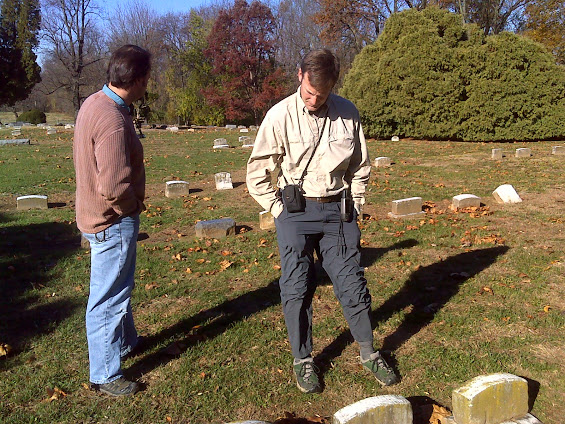
Graveyards are excellent research sites; their soil lies undisturbed.
Credit: Kyungsoo Yoo
Download the high-resolution JPG version of the image. (97 KB)http://www.nsf.gov/news/mmg/media/images/DSC001103.JPG
Anthony Aufdenkampe and Rolf Aalto, to right of tree, inspect an ancient oak in a cemetery in London Grove, Pa.
Credit: Kyungsoo Yoo
Download the high-resolution JPG version of the image. (101 KB)http://www.nsf.gov/news/mmg/media/images/IMG_3763%203%20oak%20plate3.jpg
This "Penn Oak," or white oak, was standing when William Penn arrived in Pennsylvania in 1682.
Credit: Beth Wenell
Download the high-resolution JPG version of the image. (115 KB)http://www.nsf.gov/news/mmg/media/images/DSC001143.JPG
Anthony Aufdenkampe (right), and Rolf Aalto, shown at London Grove Friends Meeting cemetery.
Credit: Kyungsoo Yoo
Download the high-resolution JPG version of the image. (154 KB)http://www.nsf.gov/news/mmg/media/images/christinabasin_basemap3.png
Map of the Christina River Basin, site of one of six NSF Critical Zone Observatories (CZOs).
Credit: Wikimedia Commons
Download the high-resolution PNG version of the image. (180 KB)http://www.nsf.gov/news/mmg/media/images/800px-Christina_River3.jpg
The Christina River flows through three states: Pennsylvania, Maryland and Delaware.
Credit: Wikimedia Commons
Download the high-resolution JPG version of the image. (184 KB)
The following is part three in a series on the National Science Foundation's Critical Zone Observatories (CZOs). Part one describes the work of the Susquehanna Shale Hills CZO. Part two focuses on the Southern Sierra CZO.
Into the graveyard
By dark of night in an old graveyard, things rustle. At least if that cemetery is at London Grove Friends Meeting in Kennett Square, Pa.
Look between the oldest markers, or under a gnarled oak tree that's been guarding the graveyard since the time of William Penn in 1682. You'll find not a ghost, but a scientist, probing the dirt for the secrets it might reveal.
"These soils have been undisturbed for centuries, if at all, and they hold the key to understanding how humans have altered the landscape," says geoscientist Anthony Aufdenkampe of the National Science Foundation's (NSF) Christina River Basin Critical Zone Observatory (CZO) on the border of Delaware and Pennsylvania.
To discover answers, Aufdenkampe, who is also affiliated with Pennsylvania's Stroud Water Research Center, is in graveyards taking samples at noon and at midnight. "We do a lot of storm-chasing to follow erosion," says Aufdenkampe, "so we're often out at the 'witching hour.'"
The Christina River Basin CZO is one of six NSF CZOs in watersheds across the nation.
In addition to the Christina River Basin site, CZOs are located in the Southern Sierra Nevada, Boulder Creek in the Colorado Rockies, Susquehanna Shale Hills in Pennsylvania, Luquillo riparian zone in Puerto Rico, and the Jemez River and Santa Catalina Mountains in New Mexico and Arizona.
They're providing us with a new understanding of the critical zone--the region between the top of the forest canopy and the base of unweathered rock: our living environment--and its response to climate and land use changes.
Marked by rotting soil
It all starts with bedrock and with rotting soil.
To scientists, this putrid rock, as the Greeks called it, is known as saprolite. It's the first stage of the continuous transformation of rock to fertile soils, says Aufdenkampe, and needs thousands to millions of years of mixing by water, plants, microbes, worms and other organisms.
But its journey doesn't end there.
For centuries, researchers thought that these building blocks of life stayed close to home--that the molecules in a falling leaf didn't travel far before meeting their ultimate fates. They returned to the atmosphere as greenhouse gas, or became incorporated into the soil.
Now scientists at the Christina River Basin CZO believe otherwise.
They're testing the idea that erosion and mixing of soil minerals with carbon in fresh plant remains--and subsequent burial downslope or downstream--is the key to what happens to the carbon, and to the greenhouse gases it forms.
Aufdenkampe and colleagues published results of a study comparing carbon transport in watersheds such as the Christina River Basin and others around the world in the February 2011, issue of the journal Frontiers in Ecology and the Environment.
"Society has long recognized the importance of water, soil, vegetation and land forms to human welfare, but only recently have we begun to holistically probe the workings of these coupled systems in projects like the CZOs," says Wendy Harrison, director of NSF's Division of Earth Sciences, which funds the CZO network.
"This new way of doing science will allow us to predict how an entire watershed will respond to land use and climate change."
Scientists once believed that they could understand whether a forest or a field was storing greenhouse gases by studying small research plots alone.
"Now we know that we need to look carefully at all the forms of carbon that leave a plot and flow downhill and downstream," says Aufdenkampe. "We need to follow the carbon and the soil from saprolite to the sea."
Twists and turns of the Christina River
Sippunk, Tasswaijres, Minquess Kill. The Christina River has been known by these names and many others.
It's a tributary of the Delaware River; its 35 miles flow through southeastern Pennsylvania, northeastern Maryland, and into Delaware. From Franklin Township in Pennsylvania to Wilmington, Delaware, the Christina River and its tributaries drain an area of 565 square miles.
Its streams supply 100 million gallons of water each day for more than half a million people in three states.
The first European settlements in Delaware sprang up near the confluence of the Christina and Delaware rivers. Trees lining the banks of the rivers, and across the land, were felled. In their place came farms and factories.
How has the region's human history affected rivers and streams that now course through forests and farms, suburbs and cities? And how has this centuries-old legacy changed the carbon cycle in the Christina River Basin watershed?
To find out, Aufdenkampe picks up a shovel. As he digs through fallen leaves and several feet of dirt on a streambank flanked by gravestones, stripes of soil begin to emerge.
In their center is something dark and moist. Perfectly preserved, it's a part of the bank buried hundreds of years ago by erosion caused by colonial forefathers.
Scientists at the Christina River CZO hope to discover how this sediment--and that above and below it--was deposited, and where waterways may carry it next, if anywhere.
"How are humans affecting the carbon cycle in a watershed like the Christina River Basin?" asks Aufdenkampe. "How far afield does what happens here go? Does it reach the Delaware, the Atlantic or beyond?"
Research at the CZO takes a "whole watershed" approach to discovering where carbon and other elements end up.
"They usually have one of three fates," Aufdenkampe says, "a return to the skies as a greenhouse gas, incorporation into the tissues of a living organism, or burial in soils and sediments."
From dust to dust
Where do scientists look for clues to those ultimate fates? They dig into soils and scour waterways, with a stop along the way near a local cemetery or two.
"Soils under ancient trees and in old cemeteries provide a geochemical reference that we can use to estimate human-caused erosion elsewhere on the landscape," says Aufdenkampe.
People inevitably leave their mark on the land, he says. But will the carbon buried by 400 years of human activities give up the ghost and move on, or will it rest in peace?
"In the future," Aufdenkampe asks, "will what's in the soil return to haunt us all?"
--  Cheryl Dybas, NSF (703) 292-7734 cdybas@nsf.gov
Related Websites
NSF Critical Zone Observatories: Where Rock Meets Life: http://www.criticalzone.org/
NSF Christina River Basin Critical Zone Observatory: http://www.udel.edu/czo/
NSF Discovery Article: A Tree Stands in the Sierra Nevada: http://www.nsf.gov/discoveries/disc_summ.jsp?cntn_id=125091&org=NSF
NSF Discovery Article: Can Marcellus Shale Gas Development and Healthy Waterways Sustainably Coexist?: http://www.nsf.gov/discoveries/disc_summ.jsp?cntn_id=122543&org=NSF
NSF News Release: NSF Awards Grants for Three Critical Zone Observatories: http://www.nsf.gov/news/news_summ.jsp?cntn_id=110586
NSF Science, Engineering and Education for Sustainability Investment: http://www.nsf.gov/sees/
The National Science Foundation (NSF)
Guillermo GOnzalo Sánchez Achutegui
ayabaca@gmail.com
ayabaca@hotmail.com
ayabaca@yahoo.com