domingo, 17 de febrero de 2013

ESA - Ocean link


15 February 2013  
 Central Panama and its 80 km-long ship canal that connects the Atlantic – via the Caribbean Sea – and Pacific Oceans are pictured in this Envisat image. On either end of the canal, ships that are entering, exiting and waiting to cross the waterway appear as dots of red, green and blue. We can even see them in the channel and in the large Lake Gatun. Also near either end of the canal, high radar reflections appear as clusters of white dots at Panama City on the southern shore and Colon on the northern shore. This image is a compilation of three images from Envisat’s radar acquired on 24 December 2011, 23 January 2012 and 22 February 2012.
Central Panama and its 80 km-long ship canal that connects the Atlantic – via the Caribbean Sea – and Pacific Oceans are pictured in this Envisat image.
Completed in 1914, the Panama Canal is one of the greatest engineering projects of the last century. ‘Locks’ at either end of the waterway are used to lift entering ships up to the canal’s level of 26 m, and lower them to sea level as they exit.
The canal sees 12 000–15 000 vessels pass every year. It takes an average of 8–10 hours for a ship to transit.
On either end of the canal, ships that are entering, exiting and waiting to cross the waterway appear as dots of red, green and blue. We can even see them in the channel and in the large Lake Gatun.
The artificial Lake Gatun was created between 1904 and 1914 as part of the water system for the Panama Canal. Because Panama has a winter dry season, the surplus water stored in the Lake helps keep the locks operating.
Also near either end of the canal, high radar reflections appear as clusters of white dots at Panama City on the southern shore and Colon on the northern shore.
The Central American nation is about the size of the Czech Republic. It enjoys a tropical climate, and is an attractive tourist destination for its beaches, mountains and rainforests.
In the 1940s, nearly 70% of Panama was covered by forests. Today, forests cover less than half of the country, mainly due to logging operations, infrastructure development and cattle ranching.
Forests play a crucial role in Earth’s carbon cycle by absorbing carbon from the atmosphere and the reduction of forest cover can have major negative effects on our climate.
This image is a compilation of three images from Envisat’s radar acquired on 24 December 2011, 23 January 2012 and 22 February 2012.
This image is featured on the Earth from Space video programme.
ESA
Guillermo Gonzalo Sánchez Achutegui
ayabaca@gmail.com
ayabaca@hotmail.com
ayabaca@yahoo.com

ESA - CryoSat reveals major loss of Arctic sea ice


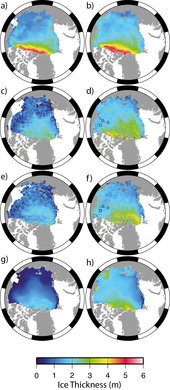
13 February 2013 An international team of scientists using new measurements from ESA’s ice mission has discovered that the volume of Arctic sea ice has declined by 36% during autumn and 9% during winter between 2003 and 2012.
Satellite records show a constant downward trend in the area covered by Arctic sea ice during all seasons, but in particular in summer. The past six years have seen the lowest summer ice extent in three decades, reaching the lowest last September at about 3.61 million sq km.
A team of scientists led by University College London has now generated estimates of the sea-ice volume for the 2010–11 and 2011–12 winters over the Arctic basin using data from ESA’s CryoSat satellite.
This study has confirmed, for the first time, that the decline in sea ice coverage in the polar region has been accompanied by a substantial decline in ice volume.
The new CryoSat dataset shows the volume’s continuing decline observed from 2003 to 2008 by NASA’s ICESat satellite.
Sea ice thickness


Since 2008, the Arctic has lost about 4300 cubic km of ice during the autumn period and about 1500 cubic km in winter.
The team confirmed CryoSat estimates using independent ground and airborne measurements carried out by ESA and international scientists during the last two years in the polar region, as well as by comparing measurements from 

“The data reveal that thick sea ice has disappeared from a region to the north of Greenland, the Canadian Archipelago and to the northeast of Svalbard,”  said Katharine Giles, co-author of the study ‘CryoSat-2 estimates of Arctic sea ice thickness and volume’, recently published online in Geophysical Research Letters.
“Other satellites have already shown drops in the area covered by Arctic sea ice as the climate has warmed, but CryoSat allows scientists to estimate the volume of sea ice – a much more accurate indicator of the changes taking place in the Arctic,” added Tommaso Parrinello, CryoSat Mission Manager.
To do this, CryoSat’s high-resolution radar altimeter sends pulses of microwave energy down towards the ice.
The energy bounces off both the top sections of ice and the water in the cracks between. The difference in height between these two surfaces allows scientists to calculate the ‘freeboard’ – the height of ice above the water – and, as a result, volume of the ice cover.
While the researchers say two years of CryoSat data aren’t indicative of a long-term change, they speculate that the lower ice thickness and volume in the winter of 2012, compared to the winter of 2011, may have contributed to the record minimum ice extent during the 2012 autumn.

ESA's ice mission
ESA’s Earth Explorer CryoSat mission is dedicated to precise monitoring of changes in the thickness of marine ice floating in the polar oceans and variations in the thickness of the vast ice sheets that blanket Greenland and Antarctica.

The findings are the result of an international collaboration between teams from University College London (UCL), ESA, the Jet Propulsion Laboratory, the University of Washington, York University, Alfred Wegener Institute for Polar and Marine Research, Woods Hole Oceanographic Institution, Morgan State University and the University of Maryland
The research was funded by the Natural Environment Research Council, ESA, the DLR German Aerospace Center, Alberta Ingenuity, the National Science Foundation, NASA and Office of Naval Research.
The lead author of this study was Professor Seymour Laxon, who passed away in early January.
Prof. Laxon was the Director of the Centre for Polar Observation and Modelling at UCL and a Principal Scientist for several ESA missions. He was part of the UCL team that proposed CryoSat to ESA in 1999, and was a key figure during the development and operational phases of the mission.
This was his first eagerly anticipated published work on CryoSat-derived sea ice record.
ESA
Guillermo Gonzalo Sánchez Achutegui
ayabaca@gmail.com
ayabaca@hotmail.com
ayabaca@yahoo.com

ESA - EGNOS plus Galileo will equal even safer skies


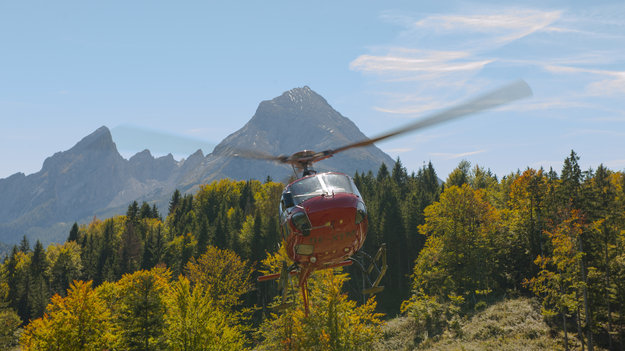
Test helicopter
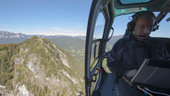
 A helicopter flew over the Galileo Test and Development Environment – GATE – in Berchtesgaden, Germany, to gather data on how Europe’s two satellite navigation systems – EGNOS and Galileo – will work together in future. The helicopter flew a variety of manoeuvres, from fast loops to mid-air hovering, to see how satnav signals were received in practice. Results from the 24-26 September testing have proved positive for a future dual-constellation evolution of the EGNOS system, incorporating both GPS and Galileo signals.
13 February 2013 Europe’s two satellite navigation systems could combine in future for heightened performance, an airborne test has confirmed. A helicopter flight took place above an Alpine valley, the one place on Earth where Galileo services are already routinely available.
Results of last autumn’s flight test show that adding Galileo signals to the European Geostationary Navigation Overlay Service – EGNOS – that currently augments the accuracy and reliability of US GPS signals over Europe should boost its accuracy significantly. EGNOS renders satnav usable for safety-critical applications such as aircraft guidance as well as more general precision uses.
Operational horizontal and vertical distance 'protection levels' for safety were cut by approximately half by combining use of GPS and Galileo within EGNOS.
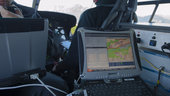
Test receiver
  (971.85 kB)

In addition, new integrity algorithms installed within the user receiver turned out to reliably detect and exclude reflected or otherwise faulty signals.
The first test of real Galileo navigation fixes is scheduled for later this year from the four satellites already in orbit, with more satellites set to join them by the end of the year.
As the constellation takes shape, satnav researchers and industrial developers can already try out Galileo services with prototype receivers at the giant outdoor laboratory that is the German Galileo Test and Development Environment, or GATE.
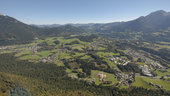
'Galileo valley'
  (2.28 MB
the town of Berchtesgaden in the Bavarian Alps has transmitters atop eight neighbouring mountain peaks to blanket 65 sq km of territory with satnav signals.
The result is the Galileo Test and Development Environment – GATE – a giant outdoor laboratory where prototype Galileo receivers can be used freely without any modifications.


GATE, in and around the town of Berchtesgaden in the Bavarian Alps, is Europe’s go-to place for Galileo testing: transmitters atop eight neighbouring mountains cover 65 sq km of territory with simulated Galileo signals.
ESA’s Global Navigation Satellite System Evolution programme carried out helicopter-based testing here on 24–26 September 2012. The results will help to guide the development of next-generation satnav systems.
The helicopter flew a variety of manoeuvres, from fast loops to mid-air hovering, to see how satnav signals were received in practice. 
Testing EGNOS with Galileo
  (1.66 MB)

The test relied on ESA’s SPEED platform – Support Platform for EGNOS Evolutions & Demonstrations, co-funded by French space agency CNES and operated by Thales Alenia Space France – which enabled the receiver to receive simultaneous realtime augmentation for both GPS and Galileo.
Europe’s next-generation EGNOS, planned for around 2020, is envisaged to operate in the same way, with augmentation of both constellations and dual-frequencies at the same time making the system much more robust.
ESA
Guillermo Gonzalo Sánchez Achutegui
ayabaca@gmail.com
ayabaca@hotmail.com
ayabaca@yahoo.com

ESA - At the mouth of the red valley


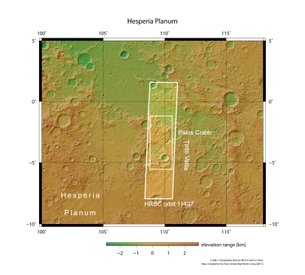
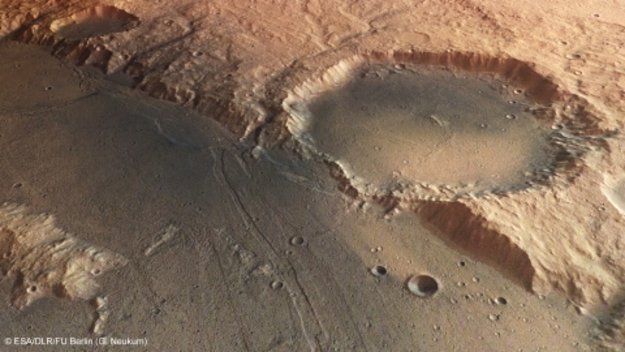
High-Resolution Stereo Camera nadir and colour channel data taken during revolution 11497 on 13 January 2013 by ESA’s Mars Express have been combined to form a natural-colour view of the region southeast of Amenthes Planum and north of Hesperia Planum. The region imaged, which lies to the west of Tinto Vallis and Palos crater, is centred at around 3°S and 109°E, and has a ground resolution of about 22 m per pixel.
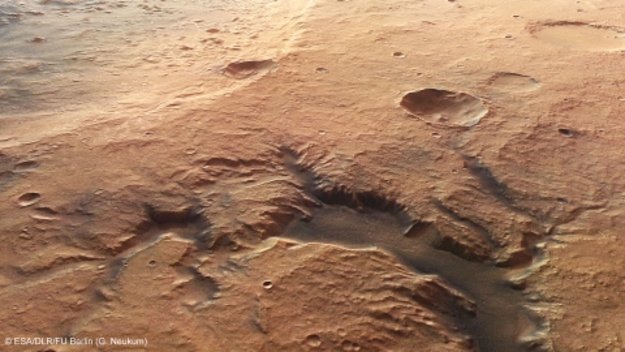
The image features craters, lava channels and a valley from which water may have once flowed. Dark wind-blown sediments fill the valleys and the floors of the craters.

ESA’s Mars Express took a high-resolution stereo image on 13 January of the southeast corner of the Amenthes Planum region on Mars, near to Palos crater and the mouth of a well-known sinuous valley, Tinto Vallis.
At the bottom-centre of the full-colour image above, and up close in the first perspective image, is a nearby shorter and wider valley, which is fed by a number of tributaries before it joins the mouth of Tinto Vallis as both empty into Palos crater, just off the bottom of the image.
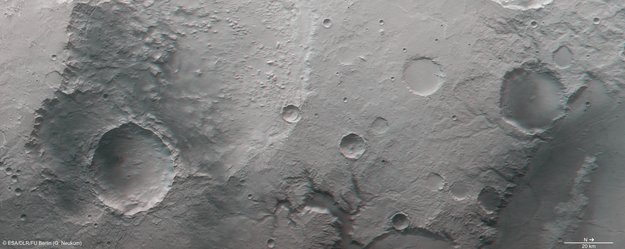
The 190 km-long Tinto Vallis is seen in the context image and is named after the famous Rio Tinto river in the Andalucía region of Spain. It is believed to have formed around 3.7 billion years ago, during the early history of Mars.
Valley feeding Palos Crater
 

The network of shorter valleys shown in the first perspective image is thought to have formed through volcanic activity melting subsurface ice and liberating water to the martian surface via seeps and springs.
If underground water emerges to the surface from the side of a slope – a process that planetary geologists call ‘groundwater sapping’ – it weakens the ground above it, causing it to collapse. Over time, this process may lead to the formation of steep-sided U-shaped valleys.
Groundwater sapping is believed to be responsible for erosion seen in many of the valley networks on the Red Planet.
Amenthes Planum in context
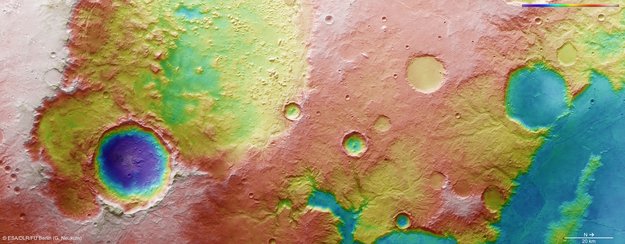
Another eye-catching feature is the relatively deep 35 km-wide crater seen in the left-hand portion of the colour, topographic and 3D images. Spectacular landslides along the crater’s walls can be seen and are particularly evident along the broken southern (left) rim.
This crater sits on top of at least three older craters, the largest of which is 100 km wide and dominates the whole top left half of the 2D and 3D anaglyph images. The western rim of this crater continues beyond the image frame, and can be more easily distinguished in the context image.
Amenthes Planum topography
 

The floor of this 100 km-wide crater is chaotic, with flat-topped geological features called mesas, and their smaller siblings, buttes, littering the floor. These are probably the result of the removal of subsurface water ice leading to the collapse of weaker material around them, leaving these more resistant high-sided features behind.
On Earth, the desert regions in Utah are home to many examples of these types of formation.
Trough feeding Amenthes Planum


Toward the north (right) side of the 2D images, several smaller craters display very smooth and flat floors, from infilling by sediments.
The darker regions to the far north and south shown most clearly in the first colour image are covered in wind-transported basaltic sands.
The smooth low-lying region to the far right and shown in the second perspective image is a small trough that feeds into the broader lava field of Amenthes Planum. The trough has likely been modified by the outflow of material from the ancient lake that may have once existed in Palos crater, the rim of which can only just be seen at the bottom of the colour, topographic and 3D images.
This smooth, channel-like feature brushes against the rim of a 30 km-wide crater, and both have been covered with dark wind-blown materials.
Amenthes Planum in 3D


With these recent images, Mars Express continues to show the similarities between regions on Mars with those on our home planet.
ESA
Guillermo Gonzalo Sánchez Achutegui
ayabaca@gmail.com
ayabaca@hotmail.com
ayabaca@yahoo.com

domingo, 10 de febrero de 2013

ESA - Columbus anniversary


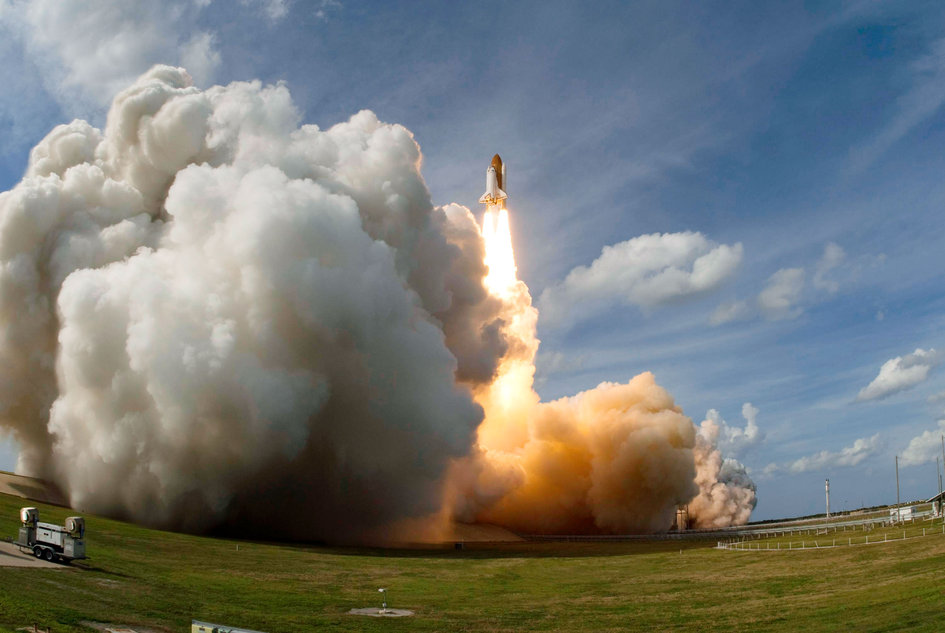
Columbus launched onboard Space Shuttle Atlantis

Columbus launched onboard Space Shuttle Atlantis Space Shuttle Atlantis and its seven-member STS-122 crew head toward the International Space Station. Liftoff from Kennedy Space Center's launch pad 39A occurred at 12:45 (EST). The launch was the third attempt for Atlantis since December 2007 to carry ESA's Columbus laboratory to the Station. During the 11-day mission, the crew's primary objective was to attach the laboratory to the Harmony module, adding to the station's size and capabilities. Onboard are astronauts Steve Frick, commander; Alan Poindexter, pilot; Leland Melvin, Rex Walheim, ESA's Hans Schlegel, Stanley Love and ESA's Leopold Eyharts, all mission specialists. Léopold joined Expedition 16 to serve as a flight engineer aboard the International Space Station.
Credits: NASA

Columbus installation first spacewalk
  (937.74 kB
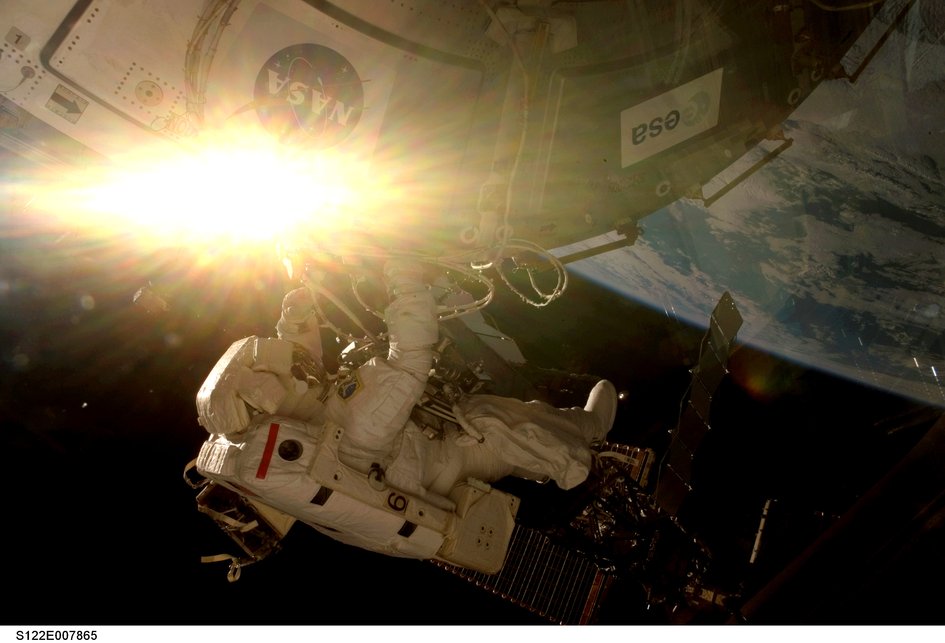
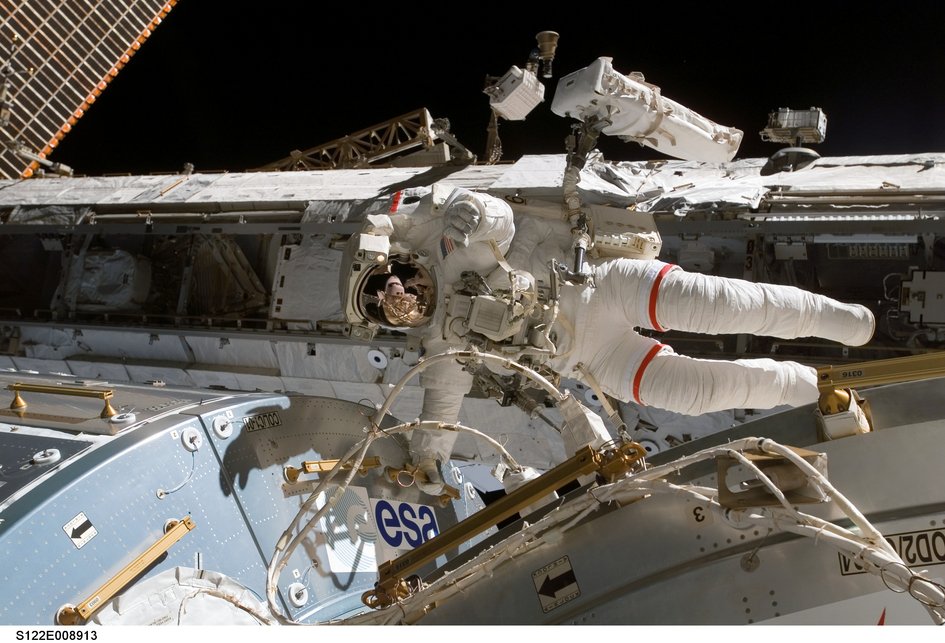
Columbus installation first spacewalk The European Columbus laboratory was installed during the first spacewalk of the STS-122 mission. NASA astronauts Stanley Love and Rex Walheim spent nearly 8 hours outside the International Space Station. Their tasks included preparation of the Columbus laboratory for transfer from Space Shuttle Atlantis' payload bay to the starboard side of the Station's Harmony module.
Credits: NASA
NASA Astronaut Rex Walheim hanging on to Columbus
(1.53 MB)
NASA Astronaut Rex Walheim hanging on to Columbus NASA astronaut Rex Walheim, mission specialist, holds onto a handrail on the Columbus laboratory on the International Space Station. His helmet visor mirrors the forward section of the Space Shuttle Atlantis that is docked to the Station. NASA astronaut Stanley Love (out of frame), mission specialist, shared this final period of STS-122 spacewalk with Rex.
Credits: NASA
On 7 February 2008 Space Shuttle Atlantis was launched to the International Space Station carrying ESA's Columbus laboratory.
Over 6 m long and more than 10 tonnes, its shell was built in Italy and completed in Germany. Columbus was shipped to the US to be launched from the Kennedy Space Center. ESA astronauts Léopold Eyharts and Hans Schlegel joined the Shuttle crew to install the module on the orbital complex.
Since then, more than a hundred ESA-led experiments have been conducted in many areas such as biology, fluid physics, material sciences, radiation physics and the human body.
More
Five years of supporting science from ESA's Columbus Control Centre
Related Articles:
ESA
Guillermo Gonzalo Sánchez Achutegui
ayabaca@gmail.com
ayabaca@hotmail.com
ayabaca@yahoo.com

ESA - Week in Images


This image combines Hubble observations of M 106 with additional information captured by amateur astronomers Robert Gendler and Jay GaBany. Gendler combined Hubble data with his own observations to produce this stunning colour image. M 106 is a relatively nearby spiral galaxy, a little over 20 million light-years away.
Credits: NASA, ESA, the Hubble Heritage Team (STScI/AURA), and R. Gendler (for the Hubble Heritage Team). Acknowledgment: J. GaBany, A van der Hoeven
Mapping Mars
 
 
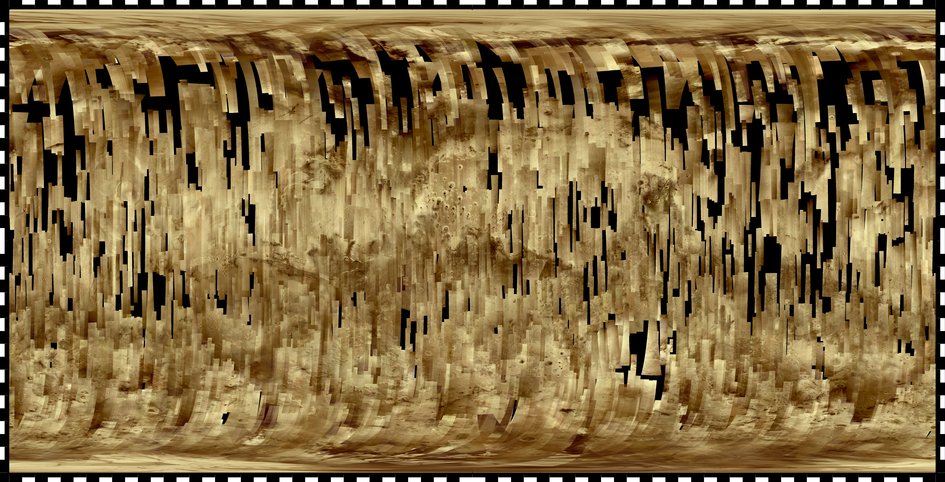
Mapping Mars The latest Mars image mosaic as seen through the lens of the High Resolution Stereo Camera on ESA’s Mars Express.
The mosaic comprises 2702 individual swaths of the martian surface, up to and including the spacecraft’s 10 821st orbit of the planet, which it completed on 30 June 2012.
In total, 87.8% of the surface has been mapped at any resolution, with 61.5% mapped at a resolution of 20 m per pixel or better.
Each white marker around the border of the image represents 10º of latitude or longitude.
This image was released as a Space Science Image of the Week feature on 4 February 2013.
Credits: ESA/DLR/FU Berlin (G. Neukum); images processed by F. Jansen (ESA).

Space penguin

Space penguin This Adélie Penguin is not from outer space but its nearest equivalent on Earth: Antarctica. The penguin was photographed at Terra Nova Bay, Antarctica by ESA-sponsored medical research doctor Vangelis Kaimakamis on one of his stopovers on the long voyage to Concordia research station in the heart of the white continent.
His voyage took him from Greece to Germany, Singapore, Australia and New Zealand before arriving at McMurdo base in Antarctica. From there he transferred to the Italian Zucchelli Station at Terra Nova Bay, where weather grounded him for a week.
The Adélie Penguin may have been one of the last animals Vangelis sees during his 10-month stay at Concordia because no living being can survive the harsh conditions there. With temperatures as low as –80°C, no outside help can be flown in during the winter and even the Sun does not rise above the horizon for four months.
The closest base to Concordia is the Russian Vostok outpost, some 600 km away. In comparison, the International Space Station is closer to civilisation – astronauts can escape in an emergency and land in under four hours.
Vangelis will run experiments on how people adapt to the stress of living in close isolation. The research this year will be as diverse as studying how the crew’s body posture changes and which materials are more resistant to bacterial growth.
This is one of the many ways ESA is studying human physiology and psychology in preparation for future long missions beyond Earth.
Credits: n/a

Lake Powell, United States
 
 
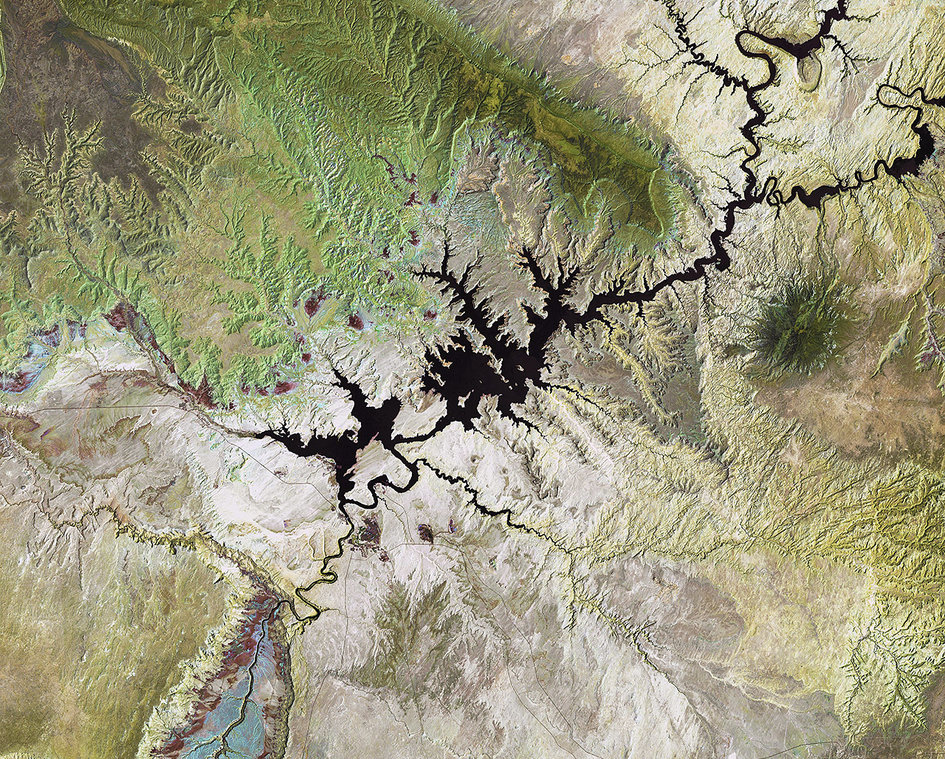
Lake Powell, United States This Landsat image from 19 July 2011 shows Lake Powell, a reservoir on the Colorado River in the southwestern United States. Straddling the border of the states Utah (to the north) and Arizona (to the south), it is the second largest artificial lake in the country. The area to the north of Lake Powell is known as the Grand Staircase-Escalante National Monument, and covers over 760 000 hectares. Appearing green in this false-colour image, the Kaiparowits Plateau makes up a significant portion of the Monument, with the Fiftymile mountain (dark green) separating it from the Escalante Canyons. Another feature of the Monument is the Grand Staircase – a sequence of sedimentary rock layers – part of which is visible in the lower-left corner.
This image is featured on the Earth from Space video programme.
Credits: USGS/ESA

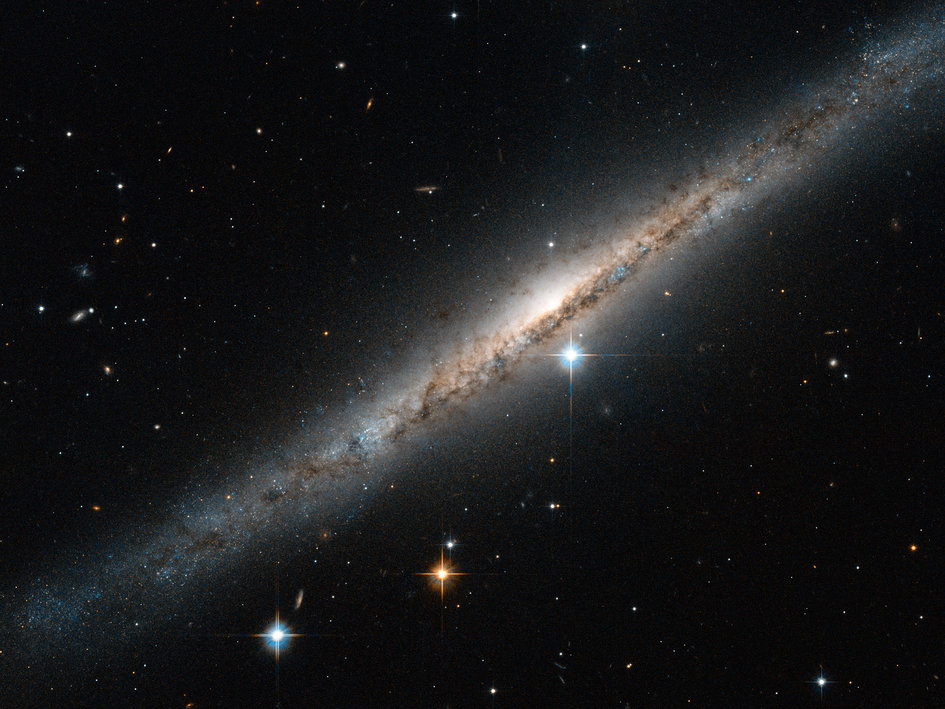
ESO 121-6 seen by Hubble

ESO 121-6 seen by Hubble This thin, glittering streak of stars is the spiral galaxy ESO 121-6, which lies in the southern constellation of Pictor (The Painter's Easel). Viewed almost exactly side-on, the intricate structure of the swirling arms is hidden, but the full length of the galaxy can be seen — including the intense glow from the central bulge, a dense region of tightly packed young stars sitting at the centre of the spiral arms.
Tendrils of dark dust can be seen across the frame, partially obscuring the bright centre of the galaxy and continuing out towards the smattering of stars at its edges, where the dust lanes and shapes melt into the inky background. Numerous nearby stars and galaxies are visible as small smudges in the surrounding sky, and the brightest stars are dazzlingly prominent towards the bottom left of the image.
ESO 121-6 is a galaxy with patchy, loosely wound arms and a relatively faint central bulge. It actually belongs to a group of galaxies, a clump of no more than 50 similar structures all loosely bound to one another by gravity. The Milky Way is also a member of a galactic group, known as the Local Group.
Credits: ESA/Hubble & NASA
ESA
Guillermo Gonzalo Sánchez Achutegui
ayabaca@gmail.com
ayabaca@hotmail.com
ayabaca@yahoo.com 

ESA - Alphasat experiences heaven on Earth


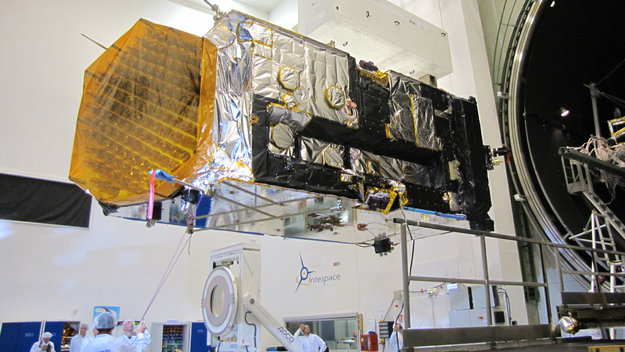
8 February 2013 Tucked away in a vacuum chamber for several months, Europe’s largest telecom satellite has faced the harsh conditions it will deal with once it is launched into space this summer.
Testing at Intespace in Toulouse, France, simulated conditions close to those Alphasat will experience in flight, including the intense cold of its transfer orbits in the early stages of the mission.
Not only was Alphasat’s ability to control its temperature tested, but other features were also put through their paces to ensure everything can run under the extreme cold and hot conditions.
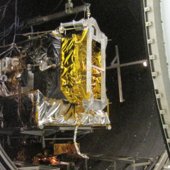
Alphasat inside the Intespace Simmer vacuum chamber.
Inside the Intespace Simmer vacuum chamber
“If you were going to test a new car for extreme conditions, you would probably want to do the same thing: not only check the heating and air conditioning, but also make sure that the engine, brakes, ignition and radio work in low temperatures as well as high,” explained Philippe Sivac, ESA’s Alphasat acting project manager.
To monitor the satellite inside the large chamber, nearly 600 temperature sensors were attached in key locations. A satellite the size of Alphasat can also carry up to 400 flight thermal sensors.
Alphasat’s customer team take a final look before the chamber door is closed.
Alphasat's customer service team
Readouts are displayed in real time, together with the satellite’s internal data to help build an overall picture for the team monitoring Alphasat around the clock.
Running Alphasat under very stable thermal situations showed that the thermal-mathematical model is well suited to predict the temperatures in orbit.
“Finally, the performance and functional tests show that all the electronics and software perform as expected even at extreme temperatures.”
However, the model will further be checked and refined where needed.  “This will require a lot of data processing to adjust the thermal model and make it fit to the measurements gathered during the test,” notes Philippe.
Engineers took this opportunity to test new methods and tools that will speed up the processing of such large amounts of information.
The vacuum chamber door closes
All satellites endure a similar series of demanding tests before they are considered to be qualified for launch. Usually it takes about a month, but Alphasat is not quite like other telecom satellites.
Five thermal engineers from ESA worked around-the-clock throughout the extended tests, even working through the Christmas break.
“The complexity of the payload, the number of redundancies and configurations to test and customer specific requirements required testing to exceed two months,” says Philippe.
And that’s not all. While the 10 m-long, 8 m-diameter chamber was large enough for Alphasat, the handling equipment had to be modified to accommodate the massive satellite.
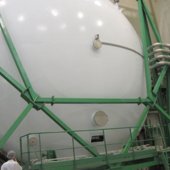
The Simmer chamber door is closed and sealed on Alphasat
Chamber door is closed and sealed
Alphasat is a high-power telecom satellite built by Astrium, through a public–private partnership between ESA and UK operator Inmarsat.
It is based on the mighty Alphabus, the new European telecom platform developed by Astrium and Thales Alenia Space under joint contract from ESA and the French space agency, CNES.
Alphabus is Europe’s response to increased market pressure for larger telecom payloads for direct-to-home TV broadcasting, digital audio broadcasting, broadband access and mobile services.
Launch is expected this summer aboard an Ariane 5 from Europe’s Spaceport in French Guiana.


Alphasat experiences heaven on Earth

08 Feb 2013
Tucked away in a vacuum chamber for several months, Europe’s largest telecom satellite has faced the harsh conditions it will deal with once it is launched into space this summer.
Testing at Intespace in Toulouse, France, simulated conditions close to those Alphasat will experience in flight, including the intense cold of its transfer orbits in the early stages of the mission.
Not only was Alphasat’s ability to control its temperature tested, but other features were also put through their paces to ensure everything can run under the extreme cold and hot conditions.
“If you were going to test a new car for extreme conditions, you would probably want to do the same thing: not only check the heating and air conditioning, but also make sure that the engine, brakes, ignition and radio work in low temperatures as well as high,” explained Philippe Sivac, ESA’s Alphasat acting project manager.
To monitor the satellite inside the large chamber, nearly 600 temperature sensors were attached in key locations. A satellite the size of Alphasat can also carry up to 400 flight thermal sensors.
Readouts are displayed in real time, together with the satellite’s internal data to help build an overall picture for the team monitoring Alphasat around the clock.
Running Alphasat under very stable thermal situations showed that the thermal-mathematical model is well suited to predict the temperatures in orbit.
However, the model will further be checked and refined where needed. “This will require a lot of data processing to adjust the thermal model and make it fit to the measurements gathered during the test,” notes Philippe.
Engineers took this opportunity to test new methods and tools that will speed up the processing of such large amounts of information.
“Finally, the performance and functional tests show that all the electronics and software perform as expected even at extreme temperatures.”
All satellites endure a similar series of demanding tests before they are considered to be qualified for launch. Usually it takes about a month, but Alphasat is not quite like other telecom satellites.
Five thermal engineers from ESA worked around-the-clock throughout the extended tests, even working through the Christmas break.
“The complexity of the payload, the number of redundancies and configurations to test and customer specific requirements required testing to exceed two months,” says Philippe.
And that’s not all. While the 10 m-long, 8 m-diameter chamber was large enough for Alphasat, the handling equipment had to be modified to accommodate the massive satellite.
Alphasat is a high-power telecom satellite built by Astrium, through a public–private partnership between ESA and UK operator Inmarsat.
It is based on the mighty Alphabus, the new European telecom platform developed by Astrium and Thales Alenia Space under joint contract from ESA and the French space agency, CNES.
Alphabus is Europe’s response to increased market pressure for larger telecom payloads for direct-to-home TV broadcasting, digital audio broadcasting, broadband access and mobile services.
Launch is expected this summer aboard an Ariane 5 from Europe’s Spaceport in French Guiana.
For more information see the links in the column to the right.
http://telecom.esa.int/telecom/media/img/hiresimage/Alphasat-entry-in-TVAC-hres.jpg
Download/View jpg (160 kb)  


ESA
Guillermo Gonzalo Sánchez Achutegui
ayabaca@gmail.com
ayabaca@hotmail.com
ayabaca@yahoo.com