sábado, 26 de enero de 2013

NASA - Remembering the Apollo 1 Crew

Apollo 1 (initially designated Apollo Saturn-204 and AS-204) was scheduled to
be the first manned mission of the U.S. Apollo manned lunar landing program, ...
en.wikipedia.org/wiki/Apollo_1 - 187k - Similar pages

The Apollo 1 tragedy

27 January 1967


Edward White, Command Pilot
Virgil "Gus" Grissom, Commander
Roger Chaffee, Pilot

One of the worst tragedies in the history of spaceflight occurred on January 27, 1967 when the crew of Gus Grissom, Ed White, and Roger Chaffee were killed in a fire in the Apollo Command Module during a preflight test at Cape Canaveral. They were training for the first crewed Apollo flight, an Earth orbiting mission scheduled to be launched on 21 February. They were taking part in a "plugs-out" test, in which the Command Module was mounted on the Saturn 1B on the launch pad just as it would be for the actual launch, but the Saturn 1B was not fueled. The plan was to go through an entire countdown sequence.
At 1 p.m. on Friday, 27 January 1967 the astronauts entered the capsule on Pad 34 to begin the test. A number of minor problems cropped up which delayed the test considerably and finally a failure in communications forced a hold in the count at 5:40 p.m. At 6:31 one of the astronauts (probably Chaffee) reported, "Fire, I smell fire." Two seconds later White was heard to say, "Fire in the cockpit." The fire spread throughout the cabin in a matter of seconds. The last crew communication ended 17 seconds after the start of the fire, followed by loss of all telemetry. The Apollo hatch could only open inward and was held closed by a number of latches which had to be operated by ratchets. It was also held closed by the interior pressure, which was higher than outside atmospheric pressure and required venting of the command module before the hatch could be opened. It took at least 90 seconds to get the hatch open under ideal conditions. Because the cabin had been filled with a pure oxygen atmosphere at normal pressure for the test and there had been many hours for the oxygen to permeate all the material in the cabin, the fire spread rapidly and the astronauts had no chance to get the hatch open. Nearby technicians tried to get to the hatch but were repeatedly driven back by the heat and smoke. By the time they succeeded in getting the hatch open roughly 5 minutes after the fire started the astronauts had already perished, probably within the first 30 seconds, due to smoke inhalation and burns.
The Apollo program was put on hold while an exhaustive investigation was made of the accident. It was concluded that the most likely cause was a spark from a short circuit in a bundle of wires that ran to the left and just in front of Grissom's seat. The large amount of flammable material in the cabin in the oxygen environment allowed the fire to start and spread quickly. A number of changes were instigated in the program over the next year and a half, including designing a new hatch which opened outward and could be operated quickly, removing much of the flammable material and replacing it with self-extinguishing components, using a nitrogen-oxygen mixture at launch, and recording all changes and overseeing all modifications to the spacecraft design more rigorously.
The mission, originally designated Apollo 204 but commonly referred to as Apollo 1, was officially assigned the name "Apollo 1" in honor of Grissom, White, and Chaffee. The first Saturn V launch (uncrewed) in November 1967 was designated Apollo 4 (no missions were ever designated Apollo 2 or 3). The Apollo 1 Command Module capsule 012 was impounded and studied after the accident and was then locked away in a storage facility at NASA Langley Research Center. The changes made to the Apollo Command Module as a result of the tragedy resulted in a highly reliable craft which, with the exception of Apollo 13, helped make the complex and dangerous trip to the Moon almost commonplace. The eventual success of the Apollo program is a tribute to Gus Grissom, Ed White, and Roger Chaffee, three fine astronauts whose tragic loss was not in vain.
For more detail on Apollo 1 see the references below.

More on Apollo 1

 NASA moves Apollo 1 capsule to new storage facility - NASA Press Release, February 2007
 Disaster on Pad 34 - National Air and Space Museum
 Apollo-1 - Kennedy Space Center
 Apollo-1 - NASA History Office
 Apollo 1 - The Fire - Apollo By The Numbers
 The Fire that Seared the Spaceport - Moonport: A History of Apollo Launch Facilities and Operations
 Tragedy and Recovery - Chariots for Apollo
 A Tragic Fire Takes Three Lives - Apollo Expeditions to the Moon
 Setback and Recovery: 1967 - Where No Man Has Gone Before: A History of Apollo Lunar Exploration Missions


[NASA Logo]
Author/Curator:
Dr. David R. Williams, dave.williams@nasa.gov
NSSDC, Mail Code 690.1
NASA Goddard Space Flight Center
Greenbelt, MD 20771
+1-301-286-1258

Apollo 1 Crew

Download Image

› Full Size
 
 
Read the full text of The Times article or other headlines from the day.  Buy a Reproduction
Front Page Image
Tragedy at Cape
Rescuers Are Blocked by Dense Smoke -- Cause is Studied
By The Associated Press
RELATED HEADLINES Apollo Program Dealt Hard Blow: The Slim Margin for Failure Believed Jeopardizing a Moon Landing by '70
Fire on Spacecraft Captured on Film
OTHER HEADLINES 500,000 in the City go Without Heat in Housing Strike: Elderly Are the Hardest Hit in Public Developments Affected by Dispute: 6,000 Employes Are Out: 'Real Progress' Is Reported by Union as Negotiations With Officials Resume
Nation's Banks Set 5 3/4% Rate; Rebuking Chase: Prime Borrowing Cost Falls From 6% but Not to Level of 5 1/2%, Kept by Leader
Chicago is Crippled by a 23-Inch Snow; Police Kill Looter
Lindsay Orders O'Dwyer Ousted: But Procaccino Says Board Counsel Will Stay On in Transit Subsidy Suit
Einstein Relativity Theory Challenged
Towaway Policy is Eased for U.N.: City to Extend Parking Area for Dipolomats and Chase Other Materials Out
62 Nations Sign Treaty to Curb Arms in Space
Army Opposition to Mao Reported: Troops in 2 Regions Said to Resist Orders to Help in Ousting Party Officials
Cape Kennedy, Fla., Jan. 27 -- The three-man crew of astronauts for the Apollo 1 mission were killed tonight in a flash fire aboard the huge spacecraft designed to take man to the moon.
Those killed in the blaze on a launching pad were:
VIRGIL I. GRISSOM, 40 years old, Air Force lieutenant colonel, one of the seven original Mercury astronauts.
EDWARD H. WHITE 2d, 36, a lieutenant colonel in the Air Force, the first American to "walk" in space.
ROGER B. CHAFFEE, 31, a Navy lieutenant commander, who had been awaiting his first space flight.
The astronauts were the first American spacemen to be killed on the job and ironically, died while on the ground. The bodies were removed hours later and a space agency spokesman said death was "instantaneous."
Three other astronauts died in airplane crashes, in the line of duty, but today's tragedy involved the first "on premises" deaths in the American space program- the first time anyone was killed while in space hardware.
Simulation Under Way
The fire broke out at 6:31 P. M. while the three men were taking part in a full-scale simulation of the scheduled Feb. 21 launching that was to take them into the heavens for 14 days of orbiting the earth.
They were trapped behind closed hatches, according to the National Aeronautics and Space Administration.
[Officials said an electrical spark must have ignited the pure oxygen inside the cabin, United Press International reported.]
Paul Haney, spokesman for America's astronauts, said he understood there had been a fire in the cockpit. He said monitors had received no word from the astronauts during the fire.
Mr. Haney said 26 members of the launching pad crew were treated for smoke inhalation. He said 24 were released and two were hospitalized in good condition.
Space agency officials were alerted by someone on the ground that the fire had broken out, Mr. Haney reported. He said emergency crews tried to reach the astronauts but were blocked by the dense smoke that rolled out of the cockpit.
Officials at Cape Kennedy said that the three astronauts were seated abreast in the rocket in the exercise, just as they would be in actual flight, with Colonel Grissom occupying the command pilot's seat on the left, Colonel White in the middle, and Commander Chaffee on the right.
In Washington President Johnson mourned the death of the astronauts. He said the three men had given their lives in the nation's service.
Representative Joseph E. Karth, Democrat of Minnesota, said a dinner meeting of space program executives was underway in Washington when the announcement was made that there had been "a flash fire resulting from the use of pure oxygen..." He said no further explanation had been given at the dinner.
The fire was reported during a "plugs out" test of the booster and Apollo 1 craft. Mr. Haney said the test meant that the booster and spacecraft had been operating on their own poser systems and not power from the ground.
NASA officials later said the Apollo's escape system could not have been used. The system required an astronaut to trigger a rocket attached to the top of the Apollo. The rocket would jerk the spacecraft away from its booster.
A spokesman said a gantry and been wrapped around the entire rocket during today's test, enclosing the escape rocket. He said the only way the astronauts could have escaped would have been to open the hatches and scramble out.
Mr. Haney said the rehearsal had reached the minus 10-minute mark, meaning it was 10 minutes away from a simulated liftoff. The hatches were sealed.
A NASA official said minor difficulties had cropped up during the countdown with two systems, a communications system and the environmental control system.
Cause of Fire Unknown
Officials said they did not know whether the fire stemmed from the two troublesome systems. All data were held pending an investigation.
Space officials said the three victims possibly had no knowledge there was a serious problem aboard. The spacecraft and rocket were not fueled and explosive devices aboard the spacecraft had been inactivated and could not have caused the disaster, they said.
The Air Force and NASA jointly impounded all data. The space agency said reporters would not be permitted to the scene until tomorrow morning at the earliest and any pictures of the incident that might reveal details were also being withheld.
The backup astronauts for the scheduled 14-day flight-postponed indefinitely- now become the prime pilots for Apollo 1.

Back to the top of this page.
Back to today's page.
Go to another day.
Front Page Image Provided by UMI

Copyright 2011 The New York Times Company
Children's Privacy Notice
NASA
Guillermo Gonzalo Sánchez Achutegui
ayabaca@gmail.com
ayabaca@hotmail.com
ayabaca@yahoo.com

jueves, 24 de enero de 2013

NASA - Peta (South Indian Ocean)


http://www.nasa.gov/images/content/721439main_20130123-PETA-AIRS-FULL%20copy.jpg
 NASA's Aqua satellite passed over Western Australia on Jan. 23 at 0547 UTC (12:47 a.m. EST/U.S.) and AIRS instrument data revealed that cloud top temperatures have warmed which indicates the strength in the uplift of air (that helps form thunderstorms) has weakened. Credit: NASA JPL, Ed Olsen


http://www.nasa.gov/images/content/721441main_20130123-PETA-TRMM-FULL.jpg
TRMM revealed that rain was falling at a rate of up to 94 mm (~3.7 inches) per hour near the center of the developing tropical cyclone. A 3-D image constructed from TRMM's PR data showed that some intense storms had tops reaching above 16 km (~9.9 miles). Credit: NASA/SSAI, Hal Pierce 

NASA Catches the Very Brief Life of Tropical Cyclone Peta

Infrared data from NASA's Aqua satellite has shown that soon after a low pressure system in northwestern West Australia became Tropical Storm Peta, it made landfall and started to fall apart.

Early on Jan. 22, the Joint Typhoon Warning Center (JTWC) gave System 93S a high chance for development into a tropical depression. At that time, System 93S was located near 19.2S and 120.7E, about 415 nautical miles (477.6 miles/768.6 km) east-northeast of Learmonth, Australia. Satellite imagery showed that the center is consolidating, and bands of thunderstorms had developed, so the Australian Bureau of Meteorology had posted a watch for the coast of Western Australia, from De Grey to Onslow, including Port Hedland and Karratha. By 2100 UTC (4 p.m. EST/U.S.) the low became Tropical Depression 12S in the Southern Indian Ocean.

NASA's Tropical Rainfall Measuring Mission (TRMM) satellite saw tropical storm Peta forming off the coast of Port Hedland, Australia on January 22, 2013 at 1631 UTC (11:31 a.m. EST). Precipitation data from TRMM's Microwave Imager and Precipitation Radar (PR) instruments were coupled with enhanced infrared imagery from TRMM's Visible and InfraRed Scanner (VIRS) at NASA's Goddard Space Flight Center in Greenbelt, Md. to create a full view of Peta's rainfall rates. TRMM revealed that rain was falling at a rate of up to 94 mm (~3.7 inches) per hour near the center of the developing tropical cyclone. A 3-D image constructed from TRMM's PR data showed that some intense storms had tops reaching above 16 km (~9.9 miles).

On Jan. 23 at 0900 UTC, the depression gained strength and became Tropical Storm Peta. Peta moved over land in the Pilbara Coast near Karratha and was still over land by 1500 UTC (10 a.m. EST/U.S.). At that time, Peta was centered near 21.6 south and 117.3 east, about 180 nautical miles (207 miles/333 km) east of Learmonth, Australia. Peta's maximum sustained winds were near 35 knots (40 mph/64.8 kph) and it was moving to the south-southwest at 6 knots (7 mph/11.1 kph).

JTWC noted that radar imagery on Jan. 23 from Dampier, Australia showed the low-level circulation center was becoming increasingly difficult to pinpoint as Peta continued moving over land.

NASA's Aqua satellite passed over Western Australia on Jan. 23 at 0547 UTC (12:47 a.m. EST/U.S.) and the Atmospheric Infrared Sounder (AIRS) instrument gathered temperature data using infrared light. The AIRS data revealed that cloud top temperatures have warmed which indicates the strength in the uplift of air (that helps form thunderstorms) has weakened. The AIRS data also showed that the overall structure of the storm was becoming irregular.

By 1000 UTC (5 a.m. EST/U.S./6 p.m. WST local time, Australia) the Australian Bureau of Meteorology (ABM) noted that Peta had become an ex-tropical cyclone. The center of circulation was inland and just southeast of Karratha. ABM canceled the Cyclone Warning for coastal areas between Port Hedland and Dampier, including Karratha. Although the wind danger has passed, residents along the Pilbara coast may still experience heavy rainfall.

Forecasters at the Joint Typhoon Warning Center expect Peta to re-emerge over the open waters of the Indian Ocean, but do not expect the storm to strengthen. The movement over land and an increase in vertical wind shear has weakened the storm and will cause the storm to dissipate over the ocean.

Text Credit: Rob Gutro
NASA's Goddard Space Flight Center, Greenbelt, Md.
 NASA
Guillermo Gonzalo Sánchez Achutegui
ayabaca@gmail.com
ayabaca@hotmail.com
ayabaca@yahoo.com

domingo, 20 de enero de 2013

NASA - 'Yellowknife Bay' Veins and Concretions

Model of the Mars rover Curiosity

Download Image

› Full Size 
 
'Yellowknife Bay'

Download Image

› Full Size 
NASA
Guillermo Gonzalo Sánchez Achutegui
ayabaca@gmail.com
ayabaca@hotmail.com
ayabaca@yahoo.com  

ESA - Reull Vallis: atravesado por un río en el pasado

Reull Vallis


Vista en perspectiva de Reull Vallis.
18 enero 2013
El año pasado, la sonda Mars Express de la ESA captó en imágenes, con su cámara estéreo de alta resolución, la impactante parte superior de la región marciana de Reull Vallis.
Se cree que Reull Vallis, la estructura similar a un río que puede verse en estas imágenes, se formó cuando el agua fluía en Marte, en un pasado distante, cortando un canal de laderas empinadas que atraviesa las montañas de Promethei Terra, antes de perderse en el fondo de la vasta cuenca de Hellas. 
La sinuosa estructura, que se prolonga durante casi 1.500 km sobre el paisaje marciano, está flanqueada por numerosos afluentes, uno de los cuales podemos ver claramente atravesando el valle hacia la parte superior (norte). 

Perspective view of Reull Vallis


Vista perspectiva de Reull Vallis.
 Las nuevas imágenes de la sonda europea Mars Express muestran una región de Reull Vallis en un punto en el que el canal tiene casi 7 km de ancho y una profundidad de 300 metros. 

Topographic view of Reull Vallis


Vista topográfica de Reull Vallis.
En estas imágenes, los lados de Reull Vallis son particularmente escarpados y abruptos, con elementos paralelos longitudinales cubriendo el suelo del propio canal. Se cree que estas estructuras son el resultado del transcurso de hielo y escombros sueltos durante el periodo ‘Amazónico’ (que continúa actualmente) debido al flujo glacial a lo largo del canal.
Las estructuras se formaron mucho después de haber sido esculpidas originalmente por el agua líquida en el periodo Hespérico, que se cree terminó hace entre 3.500 y 1.800 millones de años.
En muchos de los cráteres de los alrededores, también pueden encontrarse estructuras lineales similares, las cuales se cree que tienen abundante hielo. 

Reull Vallis in context


Reull Vallis en contexto.
En la imagen de contexto, más amplia, los afluentes que cortan el canal principal parecen formar parte de una bifurcación del valle principal en dos ramas distintas más extensas río arriba, antes de fundirse de nuevo en un único valle. 
La parte derecha (norte) de la imagen principal está dominada por las montañas de Promethei Terra, con sus altas y redondeadas cimas que alcanzan alrededor de los 2.500 metros sobre los llanos de los alrededores.
La perspectiva inferior muestra una de esas montañas con cercanos cráteres de impacto rellenos de sedimentos.  

Perspective view of Reull Vallis


Perspectiva de Reull Vallis.
 La morfología de esta región es sorprendentemente similar a la de regiones de la Tierra afectadas por la glaciación. Por ejemplo, podemos ver estructuras escalonadas circulares en los muros interiores del cráter relleno de sedimentos que puede verse al fondo, en segundo plano. Los expertos en ciencias planetarias creen que puede tratarse de antiguos niveles glaciales o de los límites creados por el agua, antes de que el hielo y el agua sublimaran o se evaporaran por etapas a lo largo de distintas épocas. 

3D view of Reull Vallis


Vista 3D de Reull Vallis.
 La morfología de Reull Vallis sugiere que ha tenido una historia variada y compleja, con analogías vistas en la actividad glacial de la Tierra. Estas analogías dan a los geólogos planetarios tentadores destellos de un pasado del Planeta Rojo no muy diferente a eventos de nuestro propio mundo en nuestros tiempos.
ESA
Guillermo Gonzalo Sánchez Achutegui
ayabaca@gmail.com
ayabaca@hotmail.com
ayabaca@yahoo.com

NASA - PUMA Headgear

NASA - National Aeronautics and
Space Administration
www.nasa.gov
Portable Unit for Metabolic Analysis (PUMA)
OVERVIEW
The NASA Glenn Research Center (GRC) has developed an innovative device that
measures the six key quantities (oxygen, carbon dioxide, flow, temperature, pressure,
and heart rate) needed to evaluate human metabolic function. PUMA is a
rugged, self-contained, portable device capable of measuring metabolic function at
rest, during exercise, in clinical settings, or in the field using the following features:
• Battery powered and self-contained
• Electronics box fits into a small wearable pack (Camelback)
• Wireless transmission to remote laptop via Bluetooth
• Key sensors located close to the mouth
• Reconfigurable sensors for integration into a variety of systems
• Display and alerts can be customized
BENEFITS
• Highly timed-resolved measurements of all relevant quantities, eliminating timing
issues present in other devices
• Integration of gas concentration profiles to obtain breath-by-breath analysis
• Superior technology allowing for measurements of both volume-averaged and
end-tidal gas
• Placement of essential sensors closer to the mouth than other units, eliminating
common timing problems and allowing for the sampling of a larger portion of both
the inhale and exhale stream
APPLICATIONS
PUMA’s targeted applications include a variety of situations where basic physiological
measurements are required, including
• Determining the caloric requirements of daily living activities for development of
dietary/nutrition/weight-loss programs
• Field testing, training, and coaching of athletes to optimize performance and
design training programs
• Obtaining occupational fitness evaluations
(e.g., Department of Defense and fire fighters)
to develop training programs and determine
metabolic cost of varied activities
• Performing nutritional studies to determine
the effect of certain foods on metabolic rate
in a clinical environment
• Assessing the nutritional requirements of
critical care patients to develop appropriate
diets
• Performing periodic evaluations of fitness
center clientele
• Performing in-office measurements of obese
patients to develop and optimize diet and
exercise programs
Prototype PUMA unit.
The PUMA unit was designed to give the crew the ability to move around the spacecraft without being tethered to a large immovable unit.

Download Image

› Full Size
 
NASA
Guillermo Gonzalo Sánchez Achutegui
ayabaca@gmail.com
ayabaca@hotmail.com
ayabaca@yahoo.com

martes, 15 de enero de 2013

NASA - NASA Mars Rover Preparing to Drill Into First Martian Rock


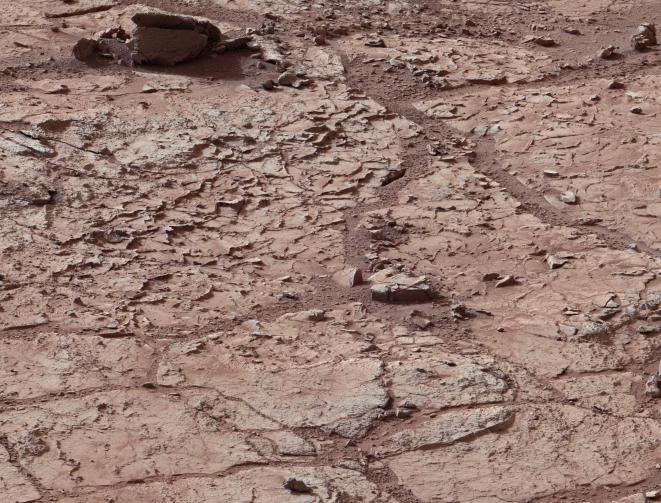
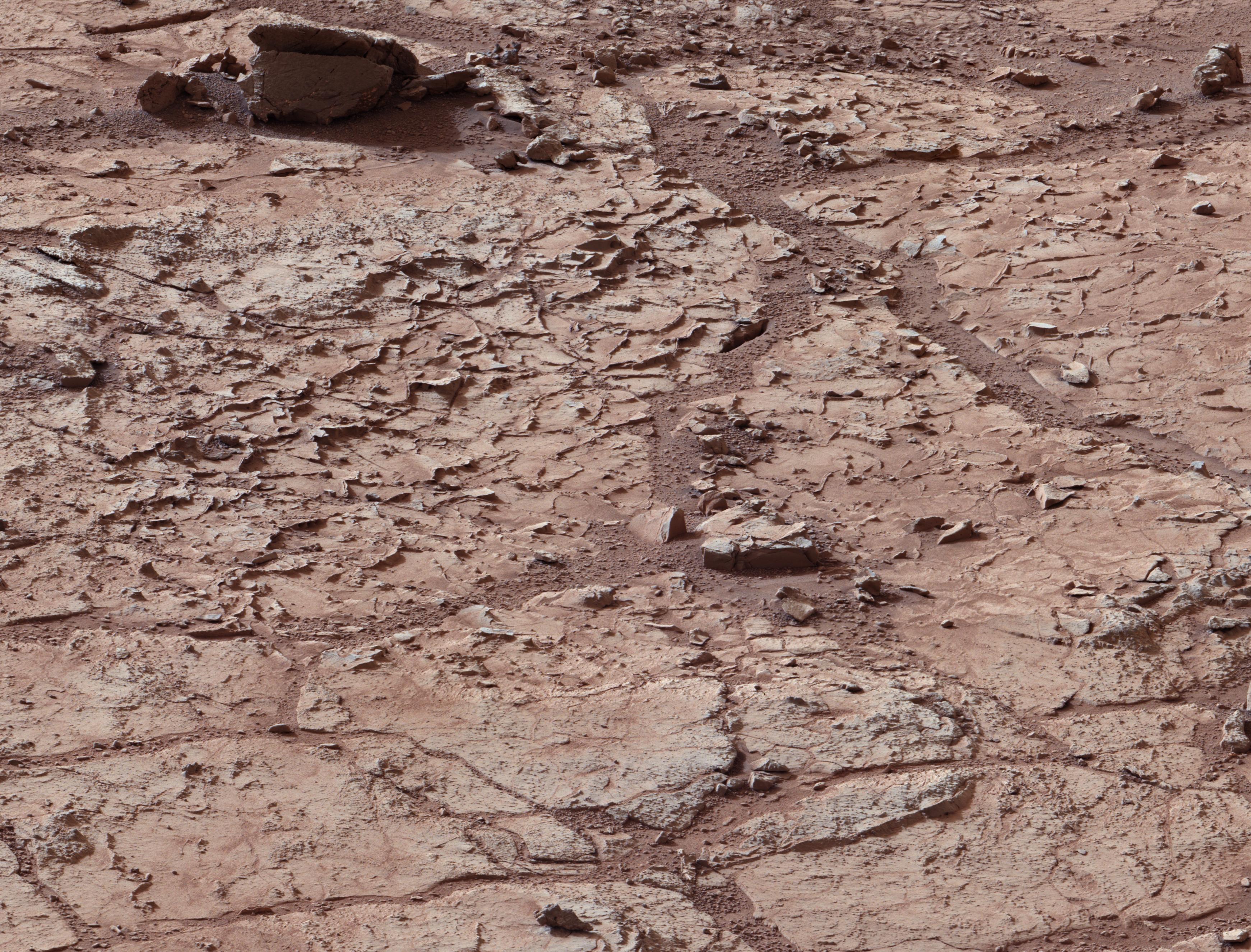
http://photojournal.jpl.nasa.gov/jpegMod/PIA16567_modest.jpg

Full-Res TIFF: PIA16567.tif (27.71 MB)
Full-Res JPEG: PIA16567.jpg (1.787 MB)  

NASA Mars Rover Preparing to Drill Into First Martian Rock 
PASADENA, Calif. -- NASA's Mars rover Curiosity is driving toward a flat rock with pale veins that may hold clues to a wet history on the Red Planet. If the rock meets rover engineers' approval when Curiosity rolls up to it in coming days, it will become the first to be drilled for a sample during the Mars Science Laboratory mission.

The size of a car, Curiosity is inside Mars' Gale Crater investigating whether the planet ever offered an environment favorable for microbial life. Curiosity landed in the crater five months ago to begin its two-year prime mission.

"Drilling into a rock to collect a sample will be this mission's most challenging activity since the landing. It has never been done on Mars," said Mars Science Laboratory project manager Richard Cook of NASA's Jet Propulsion Laboratory (JPL) in Pasadena, Calif. "The drill hardware interacts energetically wiGale Craterth Martian material we don't control. We won't be surprised if some steps in the process don't go exactly as planned the first time through."

Curiosity first will gather powdered samples from inside the rock and use those to scrub the drill. Then the rover will drill and ingest more samples from this rock, which it will analyze for information about its mineral and chemical composition.

The chosen rock is in an area where Curiosity's Mast Camera (Mastcam) and other cameras have revealed diverse unexpected features, including veins, nodules, cross-bedded layering, a lustrous pebble embedded in sandstone, and possibly some holes in the ground.
The rock chosen for drilling is called "John Klein" in tribute to former Mars Science Laboratory deputy project manager John W. Klein, who died in 2011.

"John's leadership skill played a crucial role in making Curiosity a reality," said Cook.

The target is on flat-lying bedrock within a shallow depression called "Yellowknife Bay." The terrain in this area differs from that of the landing site, a dry streambed about a third of a mile (about 500 meters) to the west. Curiosity's science team decided to look there for a first drilling target because orbital observations showed fractured ground that cools more slowly each night than nearby terrain types do.

"The orbital signal drew us here, but what we found when we arrived has been a great surprise," said Mars Science Laboratory project scientist John Grotzinger, of the California Institute of Technology in Pasadena. "This area had a different type of wet environment than the streambed where we landed, maybe a few different types of wet environments."

One line of evidence comes from inspection of light-toned veins with Curiosity's laser-pulsing Chemistry and Camera (ChemCam) instrument, which found elevated levels of calcium, sulfur and hydrogen.

"These veins are likely composed of hydrated calcium sulfate, such as bassinite or gypsum," said ChemCam team member Nicolas Mangold of the Laboratoire de Planetologie et Geodynamique de Nantes in France. "On Earth, forming veins like these requires water circulating in fractures."

Researchers have used the rover's Mars Hand Lens Imager (MAHLI) to examine sedimentary rocks in the area. Some are sandstone, with grains up to about peppercorn size. One grain has an interesting gleam and bud-like shape that have brought it Internet buzz as a "Martian flower." Other rocks nearby are siltstone, with grains finer than powdered sugar. These differ significantly from pebbly conglomerate rocks in the landing area.

"All of these are sedimentary rocks, telling us Mars had environments actively depositing material here," said MAHLI deputy principal investigator Aileen Yingst of the Planetary Science Institute in Tucson, Ariz. "The different grain sizes tell us about different transport conditions."

JPL manages the Mars Science Laboratory Project for NASA's Science Mission Directorate in Washington.
To see an image of the rock, visit:

For more information about the mission, visit:

Follow the mission on Facebook and Twitter at:
NASA
ayabaca@gmail.com
ayabaca@hotmail.com
ayabaca@yagoo.com

NASA - NASA Finds 2012 Sustained Long-Term Climate Warming Trend

NASA's analysis of Earth's surface temperature found that 2012 ranked as the ninth-warmest year since 1880. NASA scientists at the Goddard Institute for Space Studies (GISS) compare the average global temperature each year to the average from 1951 to 1980. This 30-year period provides a baseline from which to measure the warming Earth has experienced due to increasing atmospheric levels of heat-trapping greenhouse gases. While 2012 was the ninth-warmest year on record, all 10 of the warmest years in the GISS analysis have occurred since 1998, continuing a trend of temperatures well above the mid-20th century average. The record dates back to 1880 because that is when there were enough meteorological stations around the world to provide global temperature data.
Data source: NASA Goddard Institute for Space Studies
Visualization credit: NASA Goddard's Scientific Visualization Studio
› Download this video and related materials in HD formats

http://www.nasa.gov/images/content/719282main_2008_2012_printdata.1462.jpg
This map represents global temperature anomalies averaged from 2008 through 2012.
Data source: NASA Goddard Institute for Space Studies
Visualization credit: NASA Goddard's Scientific Visualization Studio
› Larger image
› Larger image (tif)
› Color bar scale (png)


NASA Finds 2012 Sustained Long-Term Climate Warming Trend
 
 
WASHINGTON -- NASA scientists say 2012 was the ninth warmest of any year since 1880, continuing a long-term trend of rising global temperatures. With the exception of 1998, the nine warmest years in the 132-year record all have occurred since 2000, with 2010 and 2005 ranking as the hottest years on record.

NASA's Goddard Institute for Space Studies (GISS) in New York, which monitors global surface temperatures on an ongoing basis, released an updated analysis Tuesday that compares temperatures around the globe in 2012 to the average global temperature from the mid-20th century. The comparison shows how Earth continues to experience warmer temperatures than several decades ago.

The average temperature in 2012 was about 58.3 degrees Fahrenheit (14.6 Celsius), which is 1.0 F (0.6 C) warmer than the mid-20th century baseline. The average global temperature has risen about 1.4 degrees F (0.8 C) since 1880, according to the new analysis.

Scientists emphasize that weather patterns always will cause fluctuations in average temperature from year to year, but the continued increase in greenhouse gas levels in Earth's atmosphere assures a long-term rise in global temperatures. Each successive year will not necessarily be warmer than the year before, but on the current course of greenhouse gas increases, scientists expect each successive decade to be warmer than the previous decade.

"One more year of numbers isn't in itself significant," GISS climatologist Gavin Schmidt said. "What matters is this decade is warmer than the last decade, and that decade was warmer than the decade before. The planet is warming. The reason it's warming is because we are pumping increasing amounts of carbon dioxide into the atmosphere."

Carbon dioxide is a greenhouse gas that traps heat and largely controls Earth's climate. It occurs naturally and also is emitted by the burning of fossil fuels for energy. Driven by increasing man-made emissions, the level of carbon dioxide in Earth's atmosphere has been rising consistently for decades.

The carbon dioxide level in the atmosphere was about 285 parts per million in 1880, the first year in the GISS temperature record. By 1960, the atmospheric carbon dioxide concentration, measured at NOAA's Mauna Loa Observatory, was about 315 parts per million. Today, that measurement exceeds 390 parts per million.

While the globe experienced relatively warm temperatures in 2012, the continental U.S. endured its warmest year on record by far, according to NOAA, the official keeper of U.S. weather records.

"The U.S. temperatures in the summer of 2012 are an example of a new trend of outlying seasonal extremes that are warmer than the hottest seasonal temperatures of the mid-20th century," GISS director James E. Hansen said. "The climate dice are now loaded. Some seasons still will be cooler than the long-term average, but the perceptive person should notice that the frequency of unusually warm extremes is increasing. It is the extremes that have the most impact on people and other life on the planet."

The temperature analysis produced at GISS is compiled from weather data from more than 1,000 meteorological stations around the world, satellite observations of sea-surface temperature, and Antarctic research station measurements. A publicly available computer program is used to calculate the difference between surface temperature in a given month and the average temperature for the same place during 1951 to 1980. This three-decade period functions as a baseline for the analysis. The last year that experienced cooler temperatures than the 1951 to 1980 average was 1976.

The GISS temperature record is one of several global temperature analyses, along with those produced by the Met Office Hadley Centre in the United Kingdom and the National Oceanic and Atmospheric Administration's National Climatic Data Center in Asheville, N.C. These three primary records use slightly different methods, but overall, their trends show close agreement.

For images related to the data, visit:
 
NASA


Guillermo Gonzalo Sánchez Achutegui
ayabaca@gmail.com
ayabaca@hotmail.com
ayabaca@yahoo.com