Mostrando entradas con la etiqueta Biology. Mostrar todas las entradas

domingo, 18 de agosto de 2013

nsf.gov - National Science Foundation - Keeping pace with plant pathogens

Plant immune system research ready for application, say researchers.-
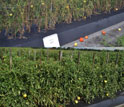
Potato plants
Late-blight-resistant potato plants, on left, compared with potatoes suffering from the disease
Credit and Larger Version
August 15, 2013
In the battle between diseases and plants--constant, changing and centuries old--scientists and farmers usually arm themselves through classical breeding, crossing varieties in the hopes of eventually reaching disease resistance. With advances in DNA sequencing and genetics, however, they may soon have a more sophisticated weapon: disease-resistant seeds.
Basic research on the genetic gears of plant immune systems has advanced so much that scientists can now begin applying that knowledge, building healthier plants to decrease dependence on pesticides, water overuse and help agriculture in developing countries, according to a paper in this week's edition of the journal Science.
"I think the backdrop is simple: We need to feed a lot of people, and we need to do it in a sustainable way," said Jeff Dangl, one of the paper's authors. He is a Howard Hughes Medical Institute investigator and biology professor at the University of North Carolina. "We need to feed them in a way that we use no more land than we use now. We need to do it more efficiently, and we need to do it in the face of ever-evolving pathogens."
The paper was also authored by Brian Staskawicz, plant and microbial biology professor at the University of California, Berkeley, and Diana Horvath, director of the Two Blades Foundation, a Chicago-area nonprofit promoting plant disease resistance research and application. NSF funds have helped fuel the research of all three.
The paper synthesizes two decades of research on plant immune systems, looking at "where technology has been applied, and what the future can be," said Staskawicz.
For more than a century, disease resistance in plants has been achieved through traditional breeding, a process that requires the "patience of Job," Dangl said. "Imagine waiting till you get to your grandchildren to see how your offspring turn out."
Disease-causing microbes multiply much, much faster. Modern agriculture--predominately single crops grown over many acres instead of the diversity hodgepodge seen in nature--also favors pathogens, microbial agents that cause disease.
Globally, about 15 percent of crop harvests are lost each year due to disease, but destruction varies greatly from crop to crop. Cassava blight, which attacks a staple food source in many developing countries, can destroy 20 to 100 percent of crops. Most loss occurs late in a crop's life, gallons and gallons and gallons of water in. "Plant diseases are a huge waste of water," Dangl said.
To combat pathogens, farmers rely on disease-resistant plant varieties--cultivated by careful, slow breeding--and pesticides. Both are far from foolproof. Pathogens evolve to outwit breeding and pesticides often carry harmful environmental side effects. Some farmers, like those in developing countries, also can't afford them. Creating disease resistant seeds, requiring little-to-no pesticides and no unfamiliar agricultural techniques, is "a simple and effective way to help farmers in developing countries," Horvath said.
Classical breeding has given plant researchers a wealth of genetic material, developed over generations, with which to breed disease resistant varieties. Combined with leaps and bounds in genetics research and quicker, cheaper DNA sequencing, scientists have learned how to build stronger plant varieties. They have pinpointed special receptors, housed both inside and outside plant cells, which scan for infection; launching the attack when a pathogen is found. They've identified disease-resistant genes housed in the molecular architecture of different plants. These genes can confer resistance to dangers such as wheat rust, powdery mildew and bacterial spot disease.
"We now know enough about the key molecules in the plant immune system that we can actually start to deploy what we've learned," said Dangl. This includes genetic editing--removing disease-prone genes--or mining disease-resistance genes from various plants and adding them into other crops. Combining a few disease-resistance genes would bolster plant immunity to multiple diseases, similar to the chemical cocktail developed to fight AIDS.
The ultimate objective is to build "predictive, highly refined molecular plant breeding that includes disease resistance," Dangl said. It's essentially an updated version of classical breeding, injecting genetic know-how into seed creation using disease-resistance genes from plants people eat every day: wheat, rice, pepper, tomato and others.
This has already been successful. Disease resistance genes bred into papaya helped save Hawaii's papaya industry from a ringspot virus in the mid-90s. Staskawicz and Horvath also worked to develop tomato plants resistant to bacterial pathogens. In Florida field tests, the modified varieties have higher yields and don't require harmful copper pesticides.
Still, researchers have much to learn. How all these disease resistance genes function, on a molecular basis, is to be discovered.  Staskawicz compares it to watching TV. You know if you press a certain button, the TV comes on, without understanding any mechanics behind the screen. "You can still use the gene without knowing exactly how it works," he said. Pathogens will also continue evolving, slowly subverting genetic disease resistance, engineered or not. "It's a constantly evolving process," Staskawicz said.
There are no simple solutions, said Michael Mishkind, a program director in NSF's Biological Sciences Directorate. Yet our current level of understanding of disease resistance mechanisms "speaks eloquently to the importance of basic research. Years of fundamental study of the plant immune system have added a powerful set of tools, helping us keep ahead of the pathogens that threaten our food supply."
-NSF-
Media Contacts Jessica Arriens, NSF (703) 292-2243
Related WebsitesTwo Blades Foundation:
 http://2blades.org/
Staskawicz Laboratory, UC-Berkeley:
 http://www.staskawiczlab.org/
Jeff Dangl, Howard Hughes Medical Institute: 
The National Science Foundation (NSF) is an independent federal agency that supports fundamental research and education across all fields of science and engineering. In fiscal year (FY) 2012, its budget was $7.0 billion. NSF funds reach all 50 states through grants to nearly 2,000 colleges, universities and other institutions. Each year, NSF receives about 50,000 competitive requests for funding, and makes about 11,500 new funding awards. NSF also awards about $593 million in professional and service contracts yearly.
Useful NSF Web Sites:
NSF Home Page:
 http://www.nsf.gov
NSF News:
 http://www.nsf.gov/news/
For the News Media:  
http://www.nsf.gov/news/newsroom.jsp
Science and Engineering Statistics:
 http://www.nsf.gov/statistics/
Awards Searches:

Tomato plants
The effects of bacterial leaf spot disease on regular tomatoes (on top) and genetically altered ones
Credit and Larger Version
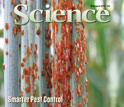
cover of Science magazine
The researchers' work is described in the Aug. 16, 2013, issue of the journal Science.
Credit and Larger Version

The National Science Foundation (NSF).

Guillermo Gonzalo Sánchez Achutegui
ayabaca@hotmail.com
ayabaca@gmail.com
ayabaca@yahoo.com

domingo, 11 de agosto de 2013

nsf.gov - Genomic and computational tools provide window to distant past

Researcher studies gene differences in humans and other species to better understand timeline of genetic changes.
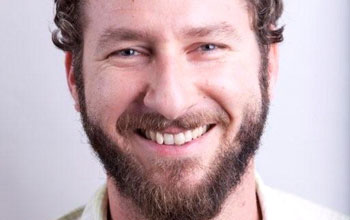
Matthew Hahn
Matthew Hahn is associate professor of biology and informatics at Indiana University at Bloomington.
Credit and Larger Version
 
August 8, 2013
Out of the estimated 23,000 or more genes in the human genome, about 100 of them will differ--they will be present or not--between any two individuals. Genes lost or gained over time result from evolution and adaptation, as species respond through the years to their environment and other influences.
The availability of genomic sequences now allows scientists to study the presence or absence of whole genes among individuals and between species, and the impact of such changes for evolution.
Some individuals, for example, have a sharper sense of smell than others because they have more copies of olfactory receptor genes, which allow them to detect a wider range of odors. Others, especially those who live in societies with starchy diets, have more copies of the gene responsible for producing amylase, an enzyme in saliva that breaks down starch.
"There have been lots of changes, and we want to know which ones might have been involved in human adaptation," says Matthew Hahn, an associate professor of biology and informatics at Indiana University at Bloomington. "The comparison of whole genomes has revealed large and frequent changes in the size of gene families. Comparative genomic analyses allow us to identify large-scale patterns of change in gene families, and to make inferences regarding the role of natural selection in gene gain and loss."
Using computer models and available genomic data, Hahn studies the differences in genes among humans and other species, and compares them, in order to better understand the timeline of genetic changes and adaptation throughout our history. By developing computational and statistical tools to analyze whole genomes, Hahn and his team are learning new things about the evolution of gene regulation and gene families, human genomic history, and the evolution of phenotypically important genes.
"We can't go back in time, but we can use current species to get a pretty good estimate of what the ancestors looked like, and to get some ideas of what changes occurred and the order of these changes," he says.
The scientists are examining all the genes in the genome, and focusing on differences among species, such as chimpanzees and other primates compared to humans. "There's a 6 percent difference between humans and chimps in the genes they have," he says. "In the end, after 6 million years of being separate, we don't have exactly the same set of genes as chimps. How and when did those differences occur?"
Hahn is conducting his research under a National Science Foundation (NSF) Faculty Early Career Development (CAREER) award, which he received in 2009 as part of NSF's American Recovery and Reinvestment Act funding. The award supports junior faculty who exemplify the role of teacher-scholars through outstanding research, excellent education and the integration of education, and research within the context of the mission of their organization. He is receiving about $1 million over five years.
The work could have wide-ranging applications in diagnosing and treating diseases, since many illnesses and conditions arise from genetic mutations, including the duplication or loss of important genes.
"There is a lot of interest in trying to associate these changes to human diseases," Hahn says. "There are diseases that are caused when you lose or even gain a gene, not just affecting smell or the ability to digest starch. A lot of the genes that differ in copy number are genes involved in our immune response, and these are obvious candidates for the genetic changes underlying differences in disease susceptibility among individuals. By understanding normal variation in gene copy-number, we hope to be able to better recognize changes that may be detrimental to human health."
The researchers often start by examining the differences in the number of copies of different genes among individual humans.
"The 1,000 Genomes Project (an international research effort, launched in 2008, to establish the most detailed catalogue of human genetic variation) has allowed us to study the full genetic complement of genes in a wide variety of human populations, from all of the inhabited continents," he says. "We find differences between individuals within populations and among populations, largely recapitulating the known relationships among humans.
"But we also find population-specific changes in genes that have allowed us to adapt to our surroundings," he adds. "These changes have involved both the adaptive gain and adaptive loss of genes, and are associated with important phenotypic differences among individuals."
To understand the differences shared among all humans, and that distinguish us from our ancestors, the researchers then compare the full complement of genes to those of other primates, including chimpanzees, orangutans, macaques and marmosets.
"These comparisons, and similar ones to other new genomes that are being sequenced all the time, allow us to make strong inferences about what our common ancestral genome looked like, and, therefore, the changes that have occurred along the human lineage," he says.
Such genetic changes are highly likely to have been involved in human-specific adaptations, for example, humans' increased cranium size, according to Hahn.
"Having these genomic and computational tools gives us a window into the distant past that we otherwise would not have had," he says.
-- Marlene Cimons, National Science Foundation
Investigators Matthew Hahn
Related Institutions/Organizations Indiana University
Locations Indiana
 
The National Science Foundation (NSF)
Guillermo Gonzalo Sánchez Achutegui

domingo, 14 de julio de 2013

nsf.gov - Controlling Destructive Locusts by Manipulating Their Genetics


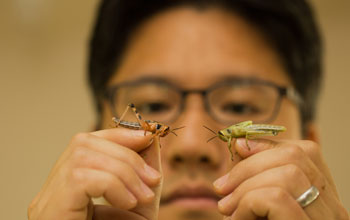
Song holding grasshopper nymphs
Some grasshoppers related to the desert locust respond differentially to rearing density.
Credit and Larger Version
Hojun Song
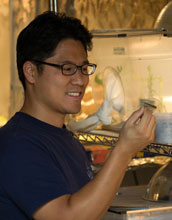
Hojun Song in the Department of Biology at the University of Central Florida studies density-dependent phenotypic plasticity using grasshoppers.

Credit: Derek A. Woller, Department of Biology, University of Central Florida
 
In 1921, a Russian entomologist named Boris Uvarov made a curious discovery. He noticed that a single species of grasshopper could transform its appearance and behavior, depending on its population density. When its population was low, the insects' color was nondescript, and they avoided each other. When its population rose to a high density, however, they became brightly colored and formed swarms.
"Up until then, these locusts were thought of as two different species," says Hojun Song, an assistant professor of biology at the University of Central Florida, who is studying this phenomenon. "He, however, proposed a hypothesis called a 'phase' theory that says these grasshoppers can change based on local population density."
It is important to note the distinction between grasshoppers and locusts. All locusts are grasshoppers, but not all grasshoppers are locusts. Locusts are a special type of grasshopper capable of altering their shape, color and behavior in response to a change in density, an ability known as locust phase polyphenism.
At low density, the phase is called "solitarious." At high density, the phase is known as "gregarious." This ability is not fixed; the trait is reversible within the life of a grasshopper. "You actually can induce them to change from one form to another in the lab," Song says.
The most famous locusts, and the most devastating in terms of their ability to destroy crops, are the desert locusts, a species found in Africa and the Middle East. "At low density, they are green, they are shy, and they avoid each other as juveniles," says the National Science Foundation- (NSF) funded scientist. "But at high density, they become yellow and black, and, as juveniles, they are attracted to each other."
Desert locusts belong to the genus Schistocerca, which contains about 50 other species. Song is studying the entire genus, trying to determine whether the others have a similar ability to undergo these changes, and, if so, to find the molecular mechanism behind it. "Our overall goal is to understand why some grasshoppers become locusts," he says.
"We know desert locusts can change, but it's not clear about the other species," he adds. "Within the genus, there are three other species known to be locusts, but the rest are just regular grasshoppers, not known to swarm. The question is: Do they have the ability, but live in an environment not conducive to swarming? Or do they not have the ability at all?"
This is important because swarming locusts are among the most serious pests in the world and can be extremely destructive to agriculture. Understanding the biological underpinnings of this behavior could lead to developing new, environmentally friendly ways of dealing with them. While the U.S. and Canada are as yet unaffected by locusts, they are a problem in Asia, Europe, Africa, Australia, and Central and South America, he says.
"Right now, the most effective way of controlling them is by using chemical pesticides, and that isn't good for the environment," Song says. "The results from this research could provide a novel way of controlling the locusts by manipulating their genetics during their development, possibly developing a specific control measure that won't harm other species or the environment."
Song is conducting his research under an NSF Faculty Early Career Development (CAREER) award he received in February. The award supports junior faculty who exemplify the role of teacher-scholars through outstanding research, excellent education and the integration of education and research within the context of the mission of their organization. NSF is funding his work with $787,000 over five years.
In the lab, Song has created two density scenarios--high and low--for several species of grasshoppers he has caught locally in Florida, as well as another species from Texas, and still another he plans to obtain from California. He also is conducting field studies in Mexico and South America on other species, because he cannot bring the insects into the U.S.
"We have a generation of grasshoppers in the lab that reproduce," he says. "From the beginning, when the eggs hatch, we divide the hatchlings into two groups. Each of the members of one group is in complete isolation--they cannot see or touch or smell each other--while we are rearing the second group in high density, 500 to 1,000 in a cage. They bump into each other, see each other, and smell each other."
The researchers already have generated data for two Florida species and have found that they do, in fact, have the ability to change, although they are non-swarming when found in nature. "They are showing the traits in the lab," he says. "They are shy when isolated, but attracted to each other in crowded conditions. They change color, and one species marches together."
He cannot yet explain why they don't fly in swarms outside the lab, although he speculates "there may be something in the Florida environment that makes swarming unnecessary."
In the grant's educational component, he is using locusts and grasshoppers as a model for teaching biology, both to his undergraduate students and, eventually, to fifth graders at a local public elementary school.
"Grasshoppers are familiar to students at all levels and they are easy to keep in the lab," he says. "I have colonies of several species in the lab that I am using for this project."
Recently, he created a new undergraduate level course on integrative biology in which students have the opportunity to learn about field biology, scientific methods, experimental designs and data analysis in a really hands-on way.
"These days, many biology undergrad students do not necessarily get serious introduction to scientific methods," he says. "Of course, they learn about hypothesis testing and other stuff in their science classes, but at a large school like UCF, such an opportunity is rare. The six-week summer class I just finished teaching was an eye-opening experience for the students because they had to come up with an original project and completely carry it out within the duration of the course. The feedback from the students was excellent, which demonstrates a real need for hands-on courses on scientific methods."
-- Marlene Cimons, National Science Foundation
Investigators Hojun Song
Related Institutions/Organizations University of Central Florida
Total Grants $161,500
Related WebsitesThe Song Laboratory of Insect Systematics and Evolution:

 
The National Science Foundation (NSF),
 
Guillermo Gonzalo Sánchez Achutegui

jueves, 23 de febrero de 2012

Science: A Biodiversity Discovery That Was Waiting in the Wings--Wasp Wings, That Is

Hi My Friends: AL VUELO DE UN QUINDE EL BLOG., Study of wing sizes of two wasp species helps explain huge diversity of shapes and sizes of organisms in nature Two species of tiny Nasonia wasps used to analyze different species wing sizes.
Credit and Larger Version


From spaghetti-like sea anemones to blobby jellyfish to filigreed oak trees, each species in nature is characterized by a unique size and shape. But the evolutionary changes that produce the seemingly limitless diversity of shapes and sizes of organisms on Earth largely remains a mystery. Nevertheless, a better understanding of how cells grow and enable organisms to assume their characteristic sizes and shapes could shed light on diseases that involve cell growth, including cancer and diabetes.

Providing new information about the evolution of the diversity of sizes and shapes in nature is a study identifying genetic differences between two closely related species of Nasonia wasps. These differences give males of one of the Nasonia species small flightless wings and the males of the other Nasonia species flight-worthy wings that are twice as large.

Jack Werren and David Loehlin at the University of Rochester led the research. (Loehlin is now a post-doc at the University of Wisconsin-Madison). Funded by the National Science Foundation (NSF), this week's issue of Science covers the research.

The research team identified the chromosomal location of the gene responsible for wing size in each of the two Nasonia species, the differences between the DNA sequences of these genes, as well as regulatory controls that determine when, where and how long each species' growth gene is turned on.

These genetic differences alter both the locations of growth centers in the wings and the timing of growth during Nasonia development--factors that give each species its distinct wing size. As evidence that the identified genes control wing size, the researchers nearly doubled the wing size of the small-winged species by cross-breeding into it the gene from the big-winged species.

Interestingly, Loehlin says the team's results indicate multiple genetic changes caused the differences in Nasonia wing size-changes, and these changes may have occurred incrementally. "It is possible that the diversity of size and shape differences between other animal species have similar origins in regulator DNA. And the gene we identified is thought to control growth in many other animals, including people."

The researchers suspect that the small winged Nasonia species evolved from the big-winged species, but it is also possible that the two species evolved in the opposite order.

"Understanding the types of changes in DNA that are responsible for evolution is critical to unraveling the causes of life's diversity," says Samuel Scheiner, a program director at NSF. "The recent explosion of new tools for DNA sequencing is now allowing this understanding. This study demonstrates that changes in gene regulation can be important for such evolution."

The two studied species of Nasonia wasps were chosen for this research because their close genetic relationship coupled with the large difference in their wing sizes makes genetic comparisons between them particularly easy. Nasonia wasps have become a model system for studying evolution because their genetics and breeding system simplify the identification of genetic changes behind complex traits.
-NSF-
Guillermo Gonzalo Sánchez Achutegui
ayabaca@gmail.com


martes, 17 de enero de 2012

Science: Biologists Replicate Key Evolutionary Step in Life on Earth

Hi My Friends: AL VUELO DE UN QUINDE EL BLOG., More than 500 million years ago, single-celled organisms on Earth's surface began forming multi-cellular clusters that ultimately became plants and animals.

Green cells are undergoing cell death, a cellular division-of-labor--fostering new life.

Credit: Will Ratcliff and Mike Travisano
Multi-cellular 'snowflake' yeast images with a blue cell-wall stain and red dead-cell stain.

Credit: Will Ratcliff and Mike Travisano
First steps in the transition to multi-cellularity: 'snowflake' yeast with dead cells stained red.

Credit: Will Ratcliff and Mike Travisano
A multi-cellular yeast consisting of hundreds of cells.

Credit: Will Ratcliff and Mike Travisano Multi-cellular yeast individuals containing central dead cells, which promote reproduction.

Credit: Will Ratcliff and Mike Travisano Aberrant shapes of multi-cellular yeast's dead cells: break points for reproduction.


Credit: Will Ratcliff and Mike Travisano

More than 500 million years ago, single-celled organisms on Earth's surface began forming multi-cellular clusters that ultimately became plants and animals.
Just how that happened is a question that has eluded evolutionary biologists.
Now scientists have replicated that key step in the laboratory using common Brewer's yeast, a single-celled organism.
The yeast "evolved" into multi-cellular clusters that work together cooperatively, reproduce and adapt to their environment--in essence, they became precursors to life on Earth as it is today.
The results are published in this week's issue of the journal Proceedings of the National Academy of Sciences (PNAS).
"The finding that the division-of-labor evolves so quickly and repeatedly in these 'snowflake' clusters is a big surprise," says George Gilchrist, acting deputy division director of the National Science Foundation's (NSF) Division of Environmental Biology, which funded the research.
"The first step toward multi-cellular complexity seems to be less of an evolutionary hurdle than theory would suggest," says Gilchrist. "This will stimulate a lot of important research questions."
It all started two years ago with a casual comment over coffee that bridging the famous multi-cellularity gap would be "just about the coolest thing we could do," recalled Will Ratcliff and Michael Travisano, scientists at the University of Minnesota (UMN) and authors of the PNAS paper.
Other authors of the paper are Ford Denison and Mark Borrello of UMN.
Then came the big surprise: it wasn't that difficult.
Using yeast cells, culture media and a centrifuge, it only took the biologists one experiment conducted over about 60 days.
"I don't think anyone had ever tried it before," says Ratcliff. "There aren't many scientists doing experimental evolution, and they're trying to answer questions about evolution, not recreate it."
The results have earned praise from evolutionary biologists around the world.
"To understand why the world is full of plants and animals, including humans, we need to know how one-celled organisms made the switch to living as a group, as multi-celled organisms," says Sam Scheiner, program director in NSF's Division of Environmental Biology.
"This study is the first to experimentally observe that transition," says Scheiner, "providing a look at an event that took place hundreds of millions of years ago."
In essence, here's how the experiments worked:
The scientists chose Brewer's yeast, or Saccharomyces cerevisiae, a species of yeast used since ancient times to make bread and beer because it is abundant in nature and grows easily.
They added it to nutrient-rich culture media and allowed the cells to grow for a day in test tubes.
Then they used a centrifuge to stratify the contents by weight.
As the mixture settled, cell clusters landed on the bottom of the tubes faster because they are heavier. The biologists removed the clusters, transferred them to fresh media, and agitated them again.
Sixty cycles later, the clusters--now hundreds of cells--looked like spherical snowflakes.
Analysis showed that the clusters were not just groups of random cells that adhered to each other, but related cells that remained attached following cell division.
That was significant because it meant that they were genetically similar, which promotes cooperation. When the clusters reached a critical size, some cells died off in a process known as apoptosis to allow offspring to separate.
The offspring reproduced only after they attained the size of their parents.
"A cluster alone isn't multi-cellular," Ratcliff says. "But when cells in a cluster cooperate, make sacrifices for the common good, and adapt to change, that's an evolutionary transition to multi-cellularity."
In order for multi-cellular organisms to form, most cells need to sacrifice their ability to reproduce, an altruistic action that favors the whole but not the individual, Ratcliff says.
For example, all cells in the human body are essentially a support system that allows sperm and eggs to pass DNA along to the next generation.
Thus multi-cellularity is by its nature very cooperative.
"Some of the best competitors in nature are those that engage in cooperation, and our experiment bears that out," says Travisano.
Evolutionary biologists have estimated that multi-cellularity evolved independently in about 25 groups.
Travisano and Ratcliff wonder why it didn't evolve more often since it's not that difficult to recreate in a lab.
Considering that trillions of one-celled organisms lived on Earth for millions of years, it seems like it should have, Ratcliff says.
That may be a question the biologists will answer in the future using the fossil record for thousands of generations of multi-cellular clusters, which are stored in a freezer in Travisano's lab.
Since the frozen samples contain multiple cell lines that independently became multi-cellular, the researchers can compare them to learn whether similar or different mechanisms and genes were responsible in each case, Travisano says.
The next steps will be to look at the role of multi-cellularity in cancer, aging and other critical areas of biology.
"Multi-cellular yeast is a valuable resource for investigating a wide variety of medically and biologically important topics," Travisano says.
"Cancer was recently described as a fossil from the origin of multi-cellularity, which can be directly investigated with the yeast system.
"Similarly the origins of aging, development and the evolution of complex morphologies are open to direct experimental investigation that would otherwise be difficult or impossible."
-NSF-
Guillermo Gonzalo Sánchez Achutegui
ayabaca@gmail.com
ayabaca@hotmail.com
ayabaca@yahoo.com