miércoles, 4 de diciembre de 2013

NASA : Hubble Traces Subtle Signals of Water on Hazy Worlds


Using the powerful­ eye of NASA's Hubble Space Telescope, two teams of scientists have found faint signatures of water in the atmospheres of five distant planets.
The presence of atmospheric water was reported previously on a few exoplanets orbiting stars beyond our solar system, but this is the first study to conclusively measure and compare the profiles and intensities of these signatures on multiple worlds.
Youtube Override:

Although exoplanets are too far away to be imaged, detailed studies of their size, composition and atmospheric makeup are possible. This video explains how researchers investigate those characteristics.
Image Credit: NASA Goddard/ESA/Hubble
Image Token:

The five planets -- WASP-17b, HD209458b, WASP-12b, WASP-19b and XO-1b -- orbit nearby stars. The strengths of their water signatures varied. WASP-17b, a planet with an especially puffed-up atmosphere, and HD209458b had the strongest signals. The signatures for the other three planets, WASP-12b, WASP-19b and XO-1b, also are consistent with water.
artist concept of a star's light illuminating the atmosphere of a planet
NASA scientists found faint signatures of water in the atmospheres of five distant planets orbiting three different stars. All five planets appear to be hazy. This illustration shows a star's light illuminating the atmosphere of a planet.
Image Credit: NASA's Goddard Space Flight Center
Image Token:
"We're very confident that we see a water signature for multiple planets," said Avi Mandell, a planetary scientist at NASA's Goddard Space Flight Center in Greenbelt, Md., and lead author of an Astrophysical Journal paper, published today, describing the findings for WASP-12b, WASP-17b and WASP-19b. "This work really opens the door for comparing how much water is present in atmospheres on different kinds of exoplanets, for example hotter versus cooler ones."
The studies were part of a census of exoplanet atmospheres led by L. Drake Deming of the University of Maryland in College Park. Both teams used Hubble's Wide Field Camera 3 to explore the details of absorption of light through the planets' atmospheres. The observations were made in a range of infrared wavelengths where the water signature, if present, would appear. The teams compared the shapes and intensities of the absorption profiles, and the consistency of the signatures gave them confidence they saw water. The observations demonstrate Hubble's continuing exemplary performance in exoplanet research.
"To actually detect the atmosphere of an exoplanet is extraordinarily difficult. But we were able to pull out a very clear signal, and it is water," said Deming, whose team reported results for HD209458b and XO-1b in a Sept. 10 paper in the same journal. Deming's team employed a new technique with longer exposure times, which increased the sensitivity of their measurements.
 
illustration depicting the atmosphere of a planet absorbing and transmitting different wavelengths of its star's light
To determine what’s in the atmosphere of an exoplanet, astronomers watch the planet pass in front of its host star and look at which wavelengths of light are transmitted and which are partially absorbed.
Image Credit:
NASA's Goddard Space Flight Center
Image Token:

The water signals were all less pronounced than expected, and the scientists suspect this is because a layer of haze or dust blankets each of the five planets. This haze can reduce the intensity of all signals from the atmosphere in the same way fog can make colors in a photograph appear muted. At the same time, haze alters the profiles of water signals and other important molecules in a distinctive way.
The five planets are hot Jupiters, massive worlds that orbit close to their host stars. The researchers were initially surprised that all five appeared to be hazy. But Deming and Mandell noted that other researchers are finding evidence of haze around exoplanets.
"These studies, combined with other Hubble observations, are showing us that there are a surprisingly large number of systems for which the signal of water is either attenuated or completely absent," said Heather Knutson of the California Institute of Technology, a co-author on Deming's paper. "This suggests that cloudy or hazy atmospheres may in fact be rather common for hot Jupiters."
Hubble's high-performance Wide Field Camera 3 is one of few capable of peering into the atmospheres of exoplanets many trillions of miles away. These exceptionally challenging studies can be done only if the planets are spotted while they are passing in front of their stars. Researchers can identify the gases in a planet's atmosphere by determining which wavelengths of the star's light are transmitted and which are partially absorbed.
Text issued as NASA Headquarters press release No. 13-324.

Hubble Traces Subtle Signals of Water on Hazy Worlds
Using the powerful eye of NASA's Hubble Space Telescope, two teams of scientists have found faint signatures of water in the atmospheres of five distant planets.
The presence of atmospheric water was reported previously on a few exoplanets orbiting stars beyond our solar system, but this is the first study to conclusively measure and compare the profiles and intensities of these signatures on multiple worlds.
The five planets -- WASP-17b, HD209458b, WASP-12b, WASP-19b and XO-1b -- orbit nearby stars. The strengths of their water signatures varied. WASP-17b, a planet with an especially puffed-up atmosphere, and HD209458b had the strongest signals. The signatures for the other three planets, WASP-12b, WASP-19b and XO-1b, also are consistent with water.
"We're very confident that we see a water signature for multiple planets," said Avi Mandell, a planetary scientist at NASA's Goddard Space Flight Center in Greenbelt, Md., and lead author of an Astrophysical Journal paper, published today, describing the findings for WASP-12b, WASP-17b and WASP-19b. "This work really opens the door for comparing how much water is present in atmospheres on different kinds of exoplanets, for example hotter versus cooler ones."
The studies were part of a census of exoplanet atmospheres led by L. Drake Deming of the University of Maryland in College Park. Both teams used Hubble's Wide Field Camera 3 to explore the details of absorption of light through the planets' atmospheres. The observations were made in a range of infrared wavelengths where the water signature, if present, would appear. The teams compared the shapes and intensities of the absorption profiles, and the consistency of the signatures gave them confidence they saw water. The observations demonstrate Hubble's continuing exemplary performance in exoplanet research.
"To actually detect the atmosphere of an exoplanet is extraordinarily difficult. But we were able to pull out a very clear signal, and it is water," said Deming, whose team reported results for HD209458b and XO-1b in a Sept. 10 paper in the same journal. Deming's team employed a new technique with longer exposure times, which increased the sensitivity of their measurements.
The water signals were all less pronounced than expected, and the scientists suspect this is because a layer of haze or dust blankets each of the five planets. This haze can reduce the intensity of all signals from the atmosphere in the same way fog can make colors in a photograph appear muted. At the same time, haze alters the profiles of water signals and other important molecules in a distinctive way.
The five planets are hot Jupiters, massive worlds that orbit close to their host stars. The researchers were initially surprised that all five appeared to be hazy. But Deming and Mandell noted that other researchers are finding evidence of haze around exoplanets.
"These studies, combined with other Hubble observations, are showing us that there are a surprisingly large number of systems for which the signal of water is either attenuated or completely absent," said Heather Knutson of the California Institute of Technology, a co-author on Deming's paper. "This suggests that cloudy or hazy atmospheres may in fact be rather common for hot Jupiters."
Hubble's high-performance Wide Field Camera 3 is one of few capable of peering into the atmospheres of exoplanets many trillions of miles away. These exceptionally challenging studies can be done only if the planets are spotted while they are passing in front of their stars. Researchers can identify the gases in a planet's atmosphere by determining which wavelengths of the star's light are transmitted and which are partially absorbed.
Please direct inquiries for the University of Maryland to Heather Dewar at 301-405-9267 or hdewar@umd.edu.
For images and more information about Hubble, visit:
and
 
NASA
Guillermo Gonzalo Sánchez Achutegui
ayabaca@gmail.com
ayabaca@hotmail.com
ayabaca@yahoo.com  

martes, 3 de diciembre de 2013

NASA : View of the Transantarctic Mountains


View of the Transantarctic Mountains
This image of the Transantarctic Mountains was taken from the NASA P-3 airborne laboratory on Nov. 27, 2013, near the end of the 2013 IceBridge Antarctic campaign.
NASA’s Operation IceBridge images Earth's polar ice in unprecedented detail to better understand processes that connect the polar regions with the global climate system. IceBridge utilizes a highly specialized fleet of research aircraft and the most sophisticated suite of innovative science instruments ever assembled to characterize annual changes in thickness of sea ice, glaciers, and ice sheets. In addition, IceBridge collects critical data used to predict the response of earth’s polar ice to climate change and resulting sea-level rise. IceBridge also helps bridge the gap in polar observations between NASA's ICESat satellite missions.
Image Credit: NASA / Michael Studinger
NASA
Guillermo Gonzalo Sánchez Achutegui
ayabaca@gmail.com
ayabaca@hotmail.com
ayabaca@yahoo.com

domingo, 1 de diciembre de 2013

ESA: Las nuevas misiones de la ESA para estudiar el universo invisible


Artist's impression of an active galaxy
 

Las nuevas misiones de la ESA para estudiar el universo invisible

29 noviembre 2013
El universo caliente y energético y la búsqueda de las elusivas ondas gravitatorias serán los objetivos de las próximas dos grandes misiones de ciencia de la ESA, según se anunció ayer.
Ambos temas crean un puente entre la astrofísica fundamental y la cosmología, estudiando en detalle los procesos cruciales para la evolución a gran escala del universo y la física subyacente.
El tema científico El universo caliente y energéticoha sido el elegido para L2, la segunda gran misión en el programa de ciencia de la ESA Visión Cósmica, y se espera que se traduzca en un observatorio avanzado de rayos X.
Esta misión, cuyo lanzamiento está previsto para 2028, abordará dos cuestiones clave: cómo y por qué la materia ordinaria se agrupa para formar las galaxias y cúmulos de galaxias que vemos hoy; y cómo crecen, e influyen en su entorno, los agujeros negros.
Los agujeros negros, que permanecen ocultos en el centro de casi todas las galaxias, se consideran una de las claves para entender la formación y la evolución de las galaxias.
La misión L3 estudiará el universo gavitacional, buscandoarrugasen el tejido mismo del espacio tiempo, creadas por objetos celestes que ejercen una fuerte atracción gravitatoria, como parejas de agujeros negros cuyas órbitas los hacen acercarse poco a poco y que acabarán fusionándose.
Las ondas gravitatorias, predichas en la teoría de la relatividad general de Einstein, aún no han sido detectadas nunca. Cuando lo sean abrirán una ventana del todo nueva al universo.
El lanzamiento de esta nueva misión se prevé para el 2034. Exigirá el desarrollo de un observatorio espacial de ondas gravitatorias, o un 'gravitómetro' de alta precisión, un objetivo ambicioso que desplazará las fronteras de la tecnología actual.
“La ESA ha demostrado ampliamente su capacidad de desarrollar observatorios espaciales en la vanguardia tecnológica, que han revolucionado nuestro conocimiento de cómo se han formado y cómo han evolucionado las estrellas y galaxias”, ha dicho Álvaro Giménez, director de Ciencia y Exploración Robótica de la ESA.
“Con estos dos nuevos temas científicos seguiremos ampliando las fronteras del conocimiento y desvelando los misterios del universo invisible”.
El proceso de selección de L2 y L3 empezó en marzo de 2013, cuando la ESA publicó una convocatoria solicitando a la comunidad científica europea que sugiriera los temas científicos en que deberían centrarse las misionesLarge-Grandes- del programa Visión Cósmica.
Se recibieron 32 propuestas, que fueron evaluadas por una comisión de seniors -Senior Survey Committee-. Los dos temas principales recomendados al Director de Ciencia y Exploración Robótica de la ESA fueron elegidos, finalmente, tras una interacción intensa con la comunidad científica.
“Ha sido difícil decidir qué temas científicos escoger, de entre todos los candidatos excelentes, pero creemos que las misiones para estudiar el universo caliente y energético, y las ondas gravitatorias, generarán descubrimientos de gran valor para la cosmología, la astrofísica y la física en general”, dijo Catherine Cesarsky, presidenta de la comisión de selección.
Aunque falta más de una década para los lanzamientos de L2 y L3, ambas misiones empezarán a prepararse muy pronto. A principios de 2014 se publicará una convocatoria de conceptos para L2, un observatorio espacial de rayos X. Posteriormente se seguirá un procedimiento similar para L3.
“Hoy hemos creado una nueva hoja de ruta científica para Europa, un plan que establecerá nuestro liderazgo en el área durante las próximas dos décadas, mientras desarrollamos e implementamos las tecnologías para estas emocionantes misiones”, añadió Giménez.

El satélite más frío en alcanzar la órbita entorno al punto L2

Refrigerando los Instrumentos de Planck
3 julio 2009
El pasado jueves por la noche, los detectores del Instrumento de Alta Frecuencia de Planck alcanzaron su extraordinariamente baja temperatura de funcionamiento de -273°C, convirtiendo al satélite en el objeto conocido más frío del espacio. El satélite también acaba de alcanzar su órbita definitiva entorno al segundo punto de Lagrange del sistema Sol-Tierra, conocido como L2.
Planck está equipado con un sistema de refrigeración pasivo que reduce su temperatura hasta unos -230°C radiando calor al espacio. Tres refrigeradores activos lo relevan en este punto para reducir todavía más la temperatura hasta la extraordinaria cifra de -273.05°C, tan solo 0.1°C por encima del cero absoluto – la temperatura más baja teóricamente posible en el Universo.
Estas temperaturas tan bajas son necesarias para que los detectores de Planck puedan estudiar el Fondo Cósmico en Microondas (CMB, en su acrónimo inglés), la primera luz emitida por el universo tan solo 380 000 años después del Big Bang, midiendo su temperatura a lo largo del cielo.

Equivalente a detectar el calor de un conejo en la Luna

Planck telescope focal plane unit
Unidad del plano focal del telescopio de Planck
Los detectores buscarán variaciones en la temperatura del CMB del orden de la millonésima parte de un grado – lo que es comparable a detectar desde la Tierra el calor generado por un conejo sentado en la Luna. Este es el motivo por el que los detectores se deben enfriar a temperaturas cercanas al cero absoluto (-273.15°C, o cero Kelvin, 0K).
Se puede encontrar más información sobre las diferentes etapas del proceso de refrigeración en el enlace ‘Planck in depth’, situado en el menú de la derecha.

Llegada al punto L2

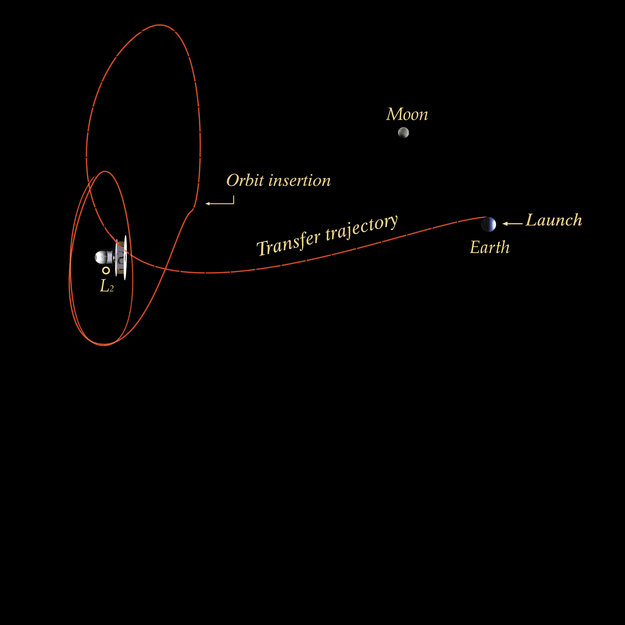
A partir de las 13:15 CEST del pasado Jueves, 2 de Julio, el Equipo de Control de la Misión Planck llevó a cabo una crítica maniobra de inserción en órbita, diseñada para situar al satélite en su órbita definitiva entorno al punto L2.

Órbita de Planck
Una vez enviado el comando, el desarrollo de la maniobra se controló de forma autónoma por el propio satélite, encendiendo sus motores durante un periodo de entre 12 y 24 horas. La maniobra dirigió al satélite hacia su órbita operacional definitiva entorno al segundo punto de Lagrange del sistema Sol-Tierra, el L2.
El encendido de los motores se planeó deliberadamente para ser un poco más corto de lo necesario, lo que permitirá realizar una pequeña maniobra de ‘ajuste fino’ en los próximos días que dejará al satélite perfectamente situado en la trayectoria definitiva.
“Si bien la maniobra en si es rutinaria, representa el último gran paso en el largo viaje hacia el L2, y todo el equipo aquí está muy contento de ver cómo Planck alcanza finalmente su órbita operacional”, comenta Chris Watson, Responsable de las Operaciones del Satélite, desde la Sala de Control Dedicada de la misión en el Centro Europeo de Operaciones Espaciales de la ESA en Darmstadt, Alemania.
Combined focal planes of Planck's two instruments
Plano focal combinado de los dos instrumentos de Planck
La maniobra se diseñó para cambiar la velocidad del satélite en 211.6 km/hora, finalizando con una velocidad de 1010 km/hora respecto al suelo. Acompañando a la Tierra y al punto virtual L2, Planck estará orbitando entorno al Sol a una velocidad de 106 254 km/hora (29.5 km/segundo).
Al comienzo de la maniobra, Planck estaba situado a 1.43 millones de kilómetros de la Tierra.

Las Operaciones Científicas, a punto de comenzar

Planck escaneando el cielo
Todas las actividades de puesta en servicio continúan según el programa, y esta fase de la misión está prácticamente terminada. Durante las próximas semanas, se realizará un ajuste fino del funcionamiento de los instrumentos para mejorar sus prestaciones.
Planck comenzará a cartografiar el cielo a mediados de Agosto.

Nota a los editores:

Las tres etapas de refrigeración han sido construidas por diferentes institutos, como parte del consorcio para la construcción y entrega de los dos instrumentos de Planck, el Instrumento de Alta Frecuencia (HFI) y el de Baja Frecuencia (LFI):

  • El refrigerador de 20K: El Jet Propulsion Laboratory, California, Estados Unidos.
  • El refrigerador de 4K: El Rutherford Appleton Laboratory (miembro del consorcio para el HFI) en Didcot, y Astrium, ambos en el Reino Unido.
  • El refrigerador de 0.1K: Centre de Recherches des Très Basses Températures, en Grenoble, Francia y el Institut d’Astrophysique Spatiale, en Orsay, Francia (ambos miembros del consorcio para el HFI), así como DTA Air Liquide, también en Grenoble, Francia.


Guillermo Gonzalo Sánchez Achutegui
ayabaca@gmail.com
ayabaca@hotmail.com
ayabaca@yahoo.com

ESA : Las estaciones de seguimiento de la ESA ayudarán a la misión lunar china

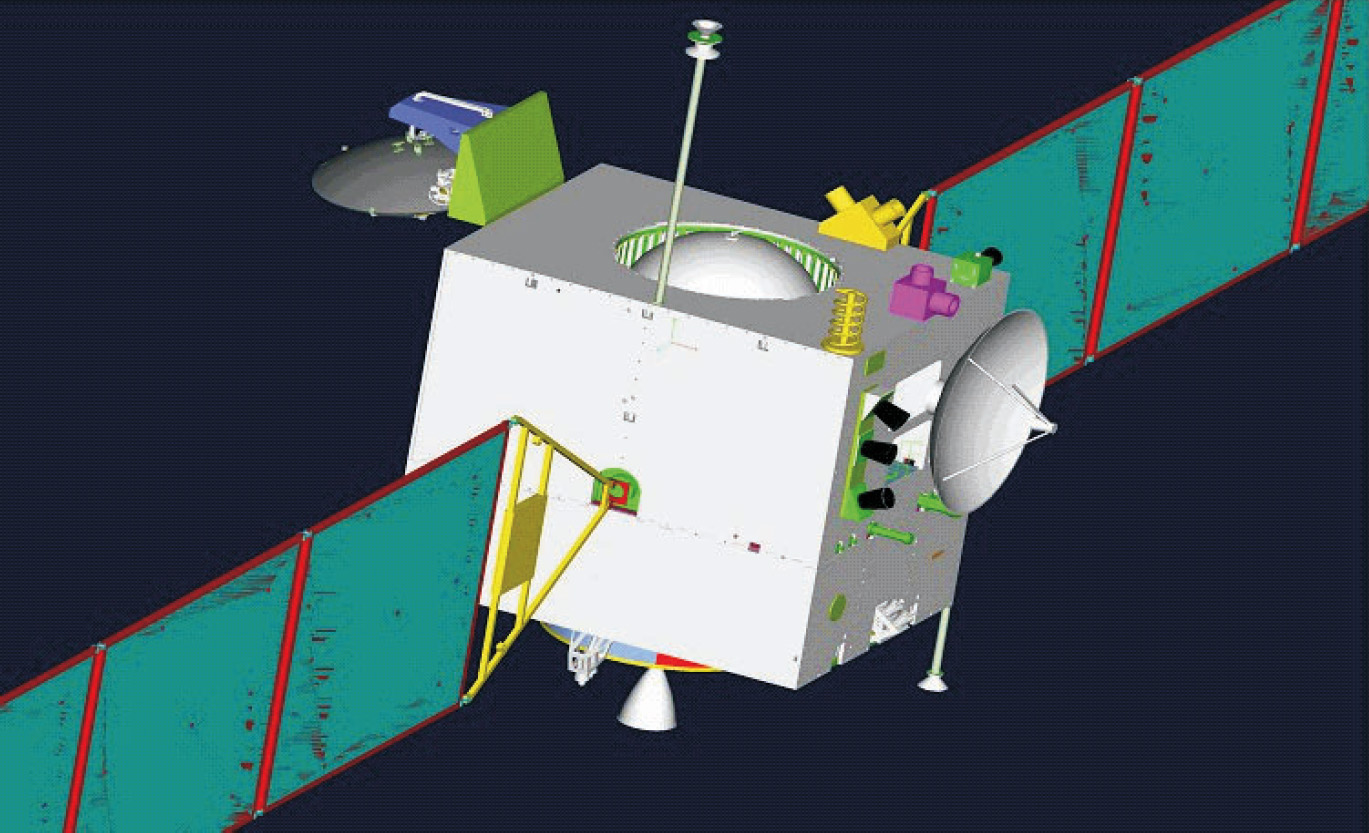
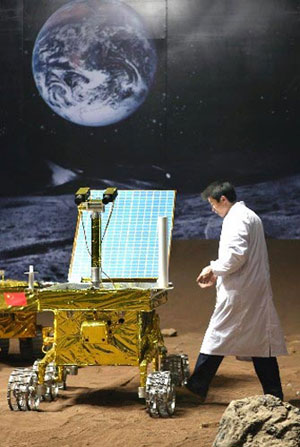
Full resolution(1,369 × 833 pixels, file size: 312 KB, MIME type: image/jpeg)
Chang'e 3 is a lunar exploration mission operated by China National Space Administration, incorporating a robotic lander and a rover. Chang'e 3 was successfully launched on 1 December 2013 as part of the second phase of the Chinese Lunar Exploration Program.[4][7][8] It will be China's first lunar rover, and the first spacecraft in 37 years to make a soft landing on the Moon, since the Soviet Luna 24 mission in 1976.[9] It is named after Chang'e, the goddess of the Moon in Chinese mythology, and is a follow-up to the Chang'e 1 and Chang'e 2 lunar orbiters. The lunar probe is also called the Yutu, or Jade Rabbit, a name selected in an online poll that comes from a Chinese myth about a white rabbit that lives on the Moon.[10]
Wikipedia.

Las estaciones de seguimiento de la ESA ayudarán a la misión lunar china
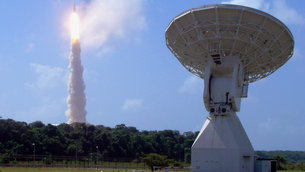
Ariane 5 flight V188 rises above ESA's Estrack station in Kourou, French Guyana
Kourou tracking station
29 noviembre 2013
La red de estaciones de seguimiento de la ESA entrará en acción poco después del lanzamiento de la misión chinaChang’E-3, proporcionando un apoyo crucial durante su viaje de cinco días hacia la Luna.
La misiónChang’E-3, bautizada con el nombre de la diosa de la Luna en la mitología china, despegará el próximo día 1 de diciembre desde la base de lanzamiento Xichang LC-2, en la provincia china de Sichuan, y está formada por una plataforma estacionaria y por un vehículo de exploración lunar de seis ruedas.
La misión aterrizará en la Bahía del Arco Iris (Sinus Iridum) el día 14 de diciembre, en el primer alunizaje suave desde la misión rusa Luna 24, en 1976.

La ESA aportará su experiencia en seguimiento

Instantes después del despegue, la antena de 15 metros de la ESA en Kourou, Guayana Francesa, empezará a prestar apoyo de telecomunicaciones, recibiendo las señales de la misión y enviando comandos en coordinación con el centro de control de la misión en China.
Shortly after China’s Chang’e-3 spacecraft departs Earth to land on the Moon, ESA’s network of tracking stations will swing into action, providing crucial support for the vessel’s five-day lunar cruise.
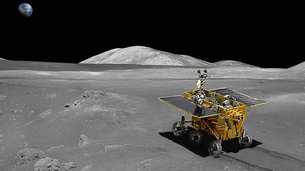
Chinese Moon rover
La ESA seguirá la misión durante todo el viaje a la Luna. Durante la fase de descenso y después del aterrizaje, utilizará sus estaciones de espacio profundo para proporcionar servicios de localización ultra-precisos.
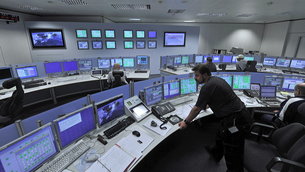
El apoyo europeo a la misión se coordinará desde el Centro de Control de Estrack, en el Centro Europeo de Operaciones Espaciales de la ESA (ESOC) en Darmstadt, Alemania.
“Estamos orgullosos de que la experiencia de nuestros equipos de dinámica del vuelo y de estaciones de seguimiento, y la sofisticada tecnología de nuestra red global Estrack, puedan ayudar a China a llevar a la Luna una misión de gran relevancia científica”, comenta Thomas Reiter, Director de Vuelos Tripulados y Operaciones de la ESA.
“Una cooperación internacional como ésta es fundamental para las futuras misiones de exploración, tripuladas o robóticas, de los planetas, lunas y asteroides, para el beneficio de todos”.

Siguiendo el progreso de la misión lunar

El lanzamiento deChang’E-3 está programado para el día 1 de diciembre a las 18:00 UTC. La estación de seguimiento de Kourou recibirá sus primeras señales alrededor de las 18:44 UTC.
ESA's Estrack tracking station control room at ESOC, the European Space Operations Centre, Darmstadt
Tracking network control room
Kourou seguirá a la nave hasta que entre en órbita lunar el día 6 de diciembre, y durante su descenso a la superficie de la Luna, previsto para el mediodía del día 14, en coordinación con las estaciones de seguimiento chinas.
El alunizaje y las operaciones en superficie se controlarán desde dos estaciones chinas: Kashi y Jiamusi.
“En cuanto la nave se encuentre sobre la superficie lunar, utilizaremos nuestras antenas de espacio profundo de 35 metros de diámetro en Cebreros, España, y Nueva Norcia, Australia, para determinar su posición utilizando la técnica ‘delta-DOR’, explica Erik Soerensen, responsable del apoyo de seguimiento a misiones externas en el ESOC.
“La técnica ‘delta-DOR’ permite determinar la posición de la nave con una precisión extrema, lo que ayudará a nuestros compañeros chinos a evaluar con precisión el lugar del alunizaje”.

Las estaciones de Cebreros y Nueva Norcia seguirán el alunizaje en directo

Las estaciones de Cebreros y Nueva Norcia grabarán las señales enviadas porChang’E-3 durante la fase de alunizaje, ayudando a la agencia espacial china a reconstruir y analizar la trayectoria de la nave.
Un equipo de ingenieros chinos se desplazará a Darmstadt para ayudar con las tareas de apoyo a esta misión.
“Las dos agencias estamos utilizando unos estándares técnicos internacionales que hacen posible que nuestras estaciones y el ESOC se puedan comunicar con las naves y sistemas de tierra chinos”, aclara Soerensen.
“Aunque aquí en el ESOC seamos un equipo muy internacional, muy pocos hablan mandarín, por lo que la presencia de nuestros compañeros chinos será de gran utilidad si surge cualquier imprevisto"
 

Chang’e 3: The Chinese Rover Mission


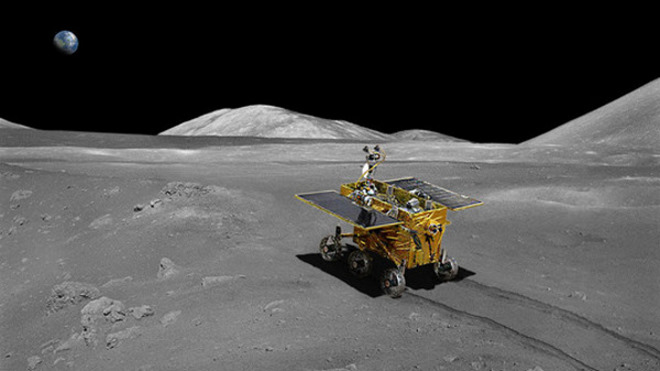
The proposed Chang’e 3 rover mission, scheduled for launch in December 2013. Image Credit: Glen Nagle.
The proposed Chang’e 3 rover, scheduled for launch in December 2013. Image Credit: Glen Nagle.
Currently scheduled for launch in December 2013 from the Xichang Satellite Launch Center in Sichuan province, the Chang’e 3 mission aims to land a Chinese rover on the Moon. If the mission is successful, it will be the first soft landing on the Moon since the Russian Luna 24 mission in 1976. Overseen by the China National Space Administration, the Chang’e program is following a step-wise approach to lunar exploration that could lead to the first taikonaut stepping onto the Moon by 2025.
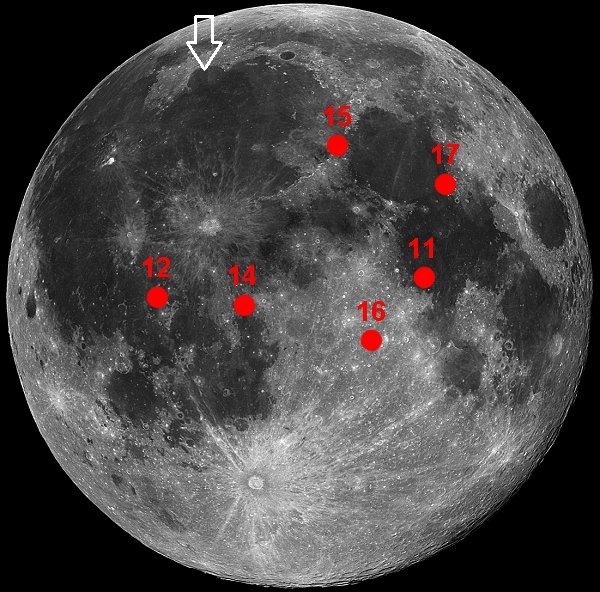
landingsites_600_sn
The white arrow shows the proposed Chang’e 3 landing site in comparison to the Apollo landing sites. Image Credit: NASA (amended by the author).
The previous Chang’e 1 and 2 lunar orbiting missions, launched in 2007 and 2010, represented the first phase of the Chang’e program. Chang’e 3, to be followed by Chang’e 4, represent the second phase of the program, both involving rovers. The third phase, with Chang’e 5, will be a sample-return mission and is currently scheduled for 2017. After that, it is anticipated that a new program will commence, which might culminate in a manned landing.
Chang’e is the name of a Chinese goddess who ascended to the Moon after consuming an immortality pill and there befriended a jade rabbit who was already a lunar resident. The elements of this legend were relayed by NASA to the Apollo 11 crew ahead of the first Moon landing in 1969. Michael Collins famously responded “Okay. We’ll keep a close eye out for the bunny girl.”
The Chang’e 3 lander will set down in Sinus Iridum, which is an extension of Mare Ibrium and roughly opposite the Apollo 15 landing site near Hadley Rille.
Chang'e-3
A scale model of the Chang’e 3 rover.
Image Credit: Unknown (sourced from http://www.ecns.cn)
After landing, a solar-powered rover will roll off the lander and commence its mission, which is expected to last for at least three months, although presumably that will include a lot of down-time while the two-week-long lunar nights prevail.
The Chang’e 3 lander itself will continue to operate as a stationary science platform. It will be powered by a radioisotope thermoelectric generator and hence will be largely unaffected by the presence or absence of direct sunlight. The lander will operate a number of science instruments, including an optical telescope and a “soil probe” to conduct analyses of lunar regolith.
The Chang’e 3 rover will have a mass of 120 kilograms, including a 20 kg science payload. It is reported that it will explore widely over an area within a 5 kilometer radius of the lander. This sounds a little ambitious considering that the Spirit and Opportunity rovers traveled just 2 to 3 kilometers over their first year of operation, but the Chang’e 3 rover will have more advanced technology and more solar energy to draw upon.
The rover will also have autonomous hazard avoidance and navigation capacity, but with a radio delay of only 1.3 seconds from Earth, it will be mostly under the direct control of an Earth-based driver.
The rover’s science payload will include an alpha particle X-ray spectrometer, which has been standard issue on all the NASA Mars rovers to date, to enable geochemical analyses. The rover will also have a radar device on its underside, to investigate the structure and depth of the lunar regolith as well as the underlying structure of the lunar crust.
AmericaSpace.
Guillermo Gonzalo Sánchez Achutegui
ayabaca@gmail.com
ayabaca@hotmail.com
ayabaca@yahoo.com

domingo, 24 de noviembre de 2013

ESA : Swarm constellation deploys booms

 
Swarm boom deployment

Swarm constellation deploys booms

23 November 2013
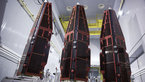
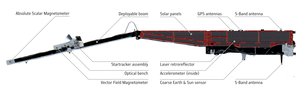
Following yesterday’s successful launch, another critical milestone has been passed. The three Swarm satellites have each deployed their four-metre long boom.
Carrying instruments essential to the mission, the boom trails at the back of the satellite.
The long booms were folded in the rocket fairing during launch.
During deployment, the booms swings gently back and forth before locking into position. Now deployed, each satellite measures just over nine metres in length.
 
Since magnetic cleanliness is of paramount importance to the mission, each satellite’s sensitive scalar magnetometer is housed at the end of the boom.
This is to avoid any magnetic disturbance that the electrical units on the satellite body could cause.
The optical bench holding the vector field magnetometer and the three startrackers are mounted half-way alon
Swarm instruments (side view)
g the boom.
The constellation was launched yesterday at 12:02 GMT (13:02 CET) on a single Rocket launcher from the Plesetsk Cosmodrome in northern Russia.
Swarm liftoff

All three satellites are controlled by ESA teams at the European Space Operation Centre in Darmstadt, Germany.
Engineers are working around the clock during the critical launch and early orbit phase to ensure the satellites are healthy and to switch on and configure vital systems. This phase lasts for about four days.
Related articles:
Swarm ready for launch22 November 2013
Swarm ready for launch22 November 2013 With the rocket fully fuelled and its electrical checks done, Swarm is set to liftoff today at 12:02 GMT from Plesetsk in northern Russia.
Swarm launch timeline21 November 2013
ESA
Guillermo Gonzalo Sánchez Achutegui

domingo, 17 de noviembre de 2013

NASA : NASA Administrator to View Orion Spacecraft and MAVEN Launch Preparations


MAVEN Placed Atop Atlas V
Nov. 8, 2013 -- Crews guide NASA's Mars Atmosphere and Volatile EvolutioN, or MAVEN, spacecraft, inside a payload fairing, into place atop a United Launch Alliance Atlas V rocket at the Vertical Integration Facility at Space Launch Complex 41.
Photo credit: NASA/Kim Shiflett
 

NASA Administrator to View Orion Spacecraft and MAVEN Launch Preparations
NASA Administrator Charles Bolden will view the latest progress on NASA's Orion spacecraft and launch preparations for the next Mars mission at the agency's Kennedy Space Center in Florida on Sunday, Nov. 17.
Media are invited to meet with Bolden at 2:30 p.m. EST in Kennedy's Operations and Checkout Building where the Orion crew capsule is being prepared for its first flight test in 2014. At 3:30 p.m., media then can accompany Bolden to Cape Canaveral Air Force Station's Space Launch Complex 41 where NASA's Mars Atmosphere and Volatile Evolution (MAVEN) spacecraft will launch aboard a United Launch Alliance Atlas V rocket on a 10-month journey to the Red Planet on Monday, Nov. 18.
MAVEN launch credentials will be used for these events. For U.S. media who require new credentials to cover these events, contact the Kennedy Public Affairs Office at 321-867-2468. New credentialing for international media is closed.
Media will leave Kennedy's Press Site for the Operations and Checkout Building at 2 p.m. and return from Space Launch Complex 41 by 4:35 p.m. Media wishing only to attend the Orion event may return to the Press Site at 3 p.m. Journalists who plan only to attend the MAVEN event may depart from the Press Site at 2:30 p.m.
For information about NASA's programs and missions, including Orion and MAVEN, visit:
 
 
NASA Centers Host Public Viewing Events for Nov. 18 Mars Mission Launch
Five NASA centers around the United States will host events and activities Monday, Nov. 18, for the public to view the launch of the agency's Mars Atmosphere and Volatile Evolution (MAVEN) spacecraft and learn about its mission.
MAVEN, which is set to launch at 1:28 p.m. EST from Cape Canaveral Air Force Station in Florida, will take critical measurements of the Martian upper atmosphere to help scientists understand climate change over the Red Planet's history.
Here is a schedule of events at NASA facilities in Washington, Maryland, Mississippi, Alabama and West Virginia:
(All times Eastern)
11 a.m. -- NASA's Stennis Space Center, near Bay St. Louis, Miss.: The INFINITY Science Center located on I-10 Exit 2, will host a live viewing of the launch, science project discussions with featured speakers, conduct a parachute design and launch demonstration and a Mars habitat competition. Visitors also may have their photographs taken on a simulated Martian surface. For more information, call 228-533-9025, ext. 311.
Noon -- NASA Headquarters, Washington: Launch coverage will be available in the James Webb Auditorium at 300 E St. SW. Jim Garvin, chief scientist at NASA’s Goddard Space Flight Center in Greenbelt Md., will discuss Mars exploration plans and answer questions from the public. MAVEN materials and other handouts will be available.
Noon -- NASA's Marshall Space Flight Center in Huntsville, Ala. and the U.S. Space & Rocket Center will host a pre-launch panel discussion with representatives from the Marshall Center titled "Deep Space Exploration: Mars and Beyond." There will also be educational activities for children. The event will be held in the U.S. Space & Rocket Center's Davidson Center Digital Theater located at One Tranquility Base, Huntsville, Ala., 35805. The event is open to the public and there will be signs directing the public where to park. The launch will be shown live in the theater at 1:28 p.m. For more information, contact Shannon Ridinger at 256-544-3774.
1 p.m. -- NASA's Goddard Space Flight Center, Greenbelt, Md.: Goddard's Visitors Center auditorium located off ICESat Road (formerly Soil Conservation Road) will show the launch and have available a planetary scientist to answer visitors' questions. For more information, contact the Goddard newsroom at 301-286-8955.
1 p.m. -- NASA’s Independent Verification and Validation (IV&V) Facility, 5000 NASA Blvd. 5th Floor, Fairmont, W.Va: Events will include educational activities for students and educators before and after launch coverage. Take either elevator to the 5th floor. Media should use the South entrance. For more information contact Jennifer Neptune at: 304-367-8262.
For more details on MAVEN launch and mission activities, visit:
 
LeVar Burton Shares MAVEN’s Story in a New NASA PSA
Actor LeVar Burton
(Image Credit: NASA)
As NASA prepares for next week's launch of the agency's next Mars-bound spacecraft, the Mars Atmosphere and Volatile Evolution (MAVEN), actor LeVar Burton shares the excitement of the mission in a new NASA public service announcement (PSA).
The video, containing newly edited NASA animations, will be used at events around the country and shared on the web and social media. The goal is to educate the public about MAVEN and NASA’s efforts to better understand the Red Planet and the history of climate change there.
Burton has been a lifelong advocate of education through his many STEM initiatives and participation in educational programming. He is also known worldwide as Geordi LeForge, chief engineer of the Starship Enterprise on "Star Trek: The Next Generation," as Kunta Kinte in the breakthrough mini-series "Roots" and beloved by generations of children as the host and producer of the "Reading Rainbow" television series.
"NASA is thrilled to have LeVar Burton explain this mission to the greater public," said Bert Ulrich, NASA's multimedia liaison for film and TV collaborations. "Thanks to Burton’s engaging talents and passion for space exploration, audiences of all ages will be able to share in the excitement of NASA’s next mission to Mars."
MAVEN is targeted to launch Monday, Nov. 18 at 1:28 p.m. EST from Cape Canaveral Air Force Station in Florida. The spacecraft will take critical measurements of the Martian upper atmosphere to help scientists understand climate change over the Red Planet's history. MAVEN is the first spacecraft devoted to exploring and understanding the Martian upper atmosphere.
To view the PSA, visit:
For more information about NASA's MAVEN mission, visit:
 
NASA Administrator Available for Satellite Interviews on Agency's Next Mars Mission
NASA Administrator Charles Bolden is available for live satellite interviews from 6-8 a.m. EST Monday, Nov. 18, the morning of launch for the agency's next mission to Mars. The interviews will be carried live on NASA Television.
NASA's Mars Atmosphere and Volatile Evolution (MAVEN) spacecraft is scheduled to launch from Cape Canaveral Air Force Station in Florida at 1:28 p.m. on a 10-month journey to the Red Planet. MAVEN is the first spacecraft devoted to exploring and understanding the Martian upper atmosphere. It will take critical measurements of the Martian upper atmosphere to help scientists understand climate change over the planet's history.
Bolden, who will be at NASA's Kennedy Space Center -- just a few miles from MAVEN's launch pad -- can talk about the importance of this mission, how it fits into the agency's exploration priorities, including sending astronauts to Mars in the 2030s.
To participate in the live satellite interviews, reporters should contact Guy Noffsinger at NASA Headquarters in Washington at 310-386-0972 (cell) no later than 4 p.m. Sunday.
For more information about MAVEN, visit:
For NASA TV streaming video, downlink and scheduling information, visit:
For information about NASA's programs and missions, visit:
 
NASA
Guillermo Gonzalo Sánchez Achutegui