domingo, 8 de diciembre de 2013

NASA : 92B (Northern Indian Ocean)

NASA Satellite Catches Birth of Tropical Cyclone 06B
AIRS image of 06B
Aqua satellite passed over the tropical cyclone on December 5 at 20:17 UTC/3:17 p.m. EST. Strong rising air and thunderstorms (purple) were building over the low-level circulation center and in a band of thunderstorms wrapping to the southwest.
Image Credit: NASA JPL, Ed Olsen
Image Token:
NASA's Aqua satellite provided visible and infrared satellite imagery to forecasters helping confirm the birth of the sixth tropical cyclone of the Northern Indian Ocean cyclone season.
Tropical Cyclone 06B, which may be renamed "Madi," organized from low pressure System 92B today, December 6, when it was about 266 nautical miles/306 miles/492.6 km southeast of Chennai, India. Tropical Cyclone 06B was centered near 9.8 north latitude and 93.7 west longitude. Its maximum sustained winds were near 45 knots/51.7 mph/83.3 kph, making it tropical-storm strength. Those tropical storm force winds extended out 50 nautical miles/57.5 miles/92.6 km from the center, making the small tropical storm just about 100 nautical miles/115.1 miles/185.2 km in diameter. 06B was moving to the northwest at 3 knots/3.4 mph/5.5 kph.
NASA's Aqua satellite passed over the tropical cyclone on December 5 at 20:17 UTC/3:17 p.m. EST. Strong rising air (convection) was building over the low-level circulation center and continued on December 6. AIRS data showed high, strong, cold thunderstorm cloud top temperatures as cold as -62F/-52C over a large area around the center and in a band wrapping into the center from the south.
The forecasters at the Joint Typhoon Warning Center or JTWC expect 06B to continue strengthening over the next couple of days because it is located in warm waters.
06B is expected to drift northward because there are no weather systems to guide it until a low to mid-level subtropical ridge (elongated area) of high pressure builds up over the eastern Bay of Bengal. Once that happens, the tropical cyclone is expected to curve to the north-northeast.
JTWC forecasters also expect that 06B will briefly reach cyclone/hurricane strength sometime on December 9 as it parallels the coast of east-central India while remaining far off-shore.
Text credit: Rob Gutro
NASA's Goddard Space Flight Center

Dec. 05, 2013 - NASA Eyes Another Developing Depression in Northern Indian Ocean
AIRS image of 92B
NASA's Aqua satellite passed over System 92B on Dec. 5 at 2:59 a.m. EST. Aqua's AIRS instrument data showed a large area of strong convection and high, cold (purple) thunderstorm cloud tops north and east of the center.
Image Credit: NASA JPL, Ed Olsen
Image Token:
The Northern Indian Ocean typhoon season usually lasts until the end of December, but it's not going out without a fight this year. Infrared satellite data from 92B (Northern Indian Ocean)92B (Northern Indian Ocean)showed bands of thunderstorms wrapping around low pressure System 92B's center. If this system develops it would become Tropical Depression 06B.
NASA's Aqua satellite passed over the low pressure area designated as System 92B on Dec. 5 at 07:59 UTC/2:59 a.m. EST and the Atmospheric Infrared Sounder or AIRS instrument captured infrared data about the developing storm. AIRS data showed a large area of strong convection and high, cold thunderstorm cloud tops north and east of the center of circulation.
At the time of the AIRS image, the western-most edge of the low covered most of the island nation of Sri Lanka where it brought rain. AIRS data showed bands of thunderstorms also wrapping into the center from the west and south. The circulation appears to be consolidating today, December 5.
At 1500 UTC/10 a.m. EDT on December 5, System 92B as centered near 9.8 north and 84. 0 east, about 293 nautical miles southeast of Chennai, India. Winds in the area were estimated to be 25 to 30 knots/28.7 to 34.5 mph/46.3 to 55.5 kph. Satellite data indicated that the strongest winds were in the northern half of the low. The low pressure area is moving north-northeastward at 6 knots/6.9 mph/11.1 kph.
The low-level center of the system lies to the south of a subtropical ridge (elongated area) of high pressure, which is providing good outflow, but is also causing vertical wind shear, which is inhibiting the development.
The Joint Typhoon Warning Center expects this low pressure area to become a tropical depression and curve away from India. It is expected to move in a northeasterly direction toward the center of the Bay of Bengal.
Text credit: Rob Gutro
NASA's Goddard Space Flight Center
NASA
Guillermo Gonzalo Sánchez Achutegui

NASA : NASA Initiative Helps Launch Student-Built Satellites

Thinking Inside the Box, Launching into Space
NASA CubeSats heading into orbit
The NROL-39 GEMSat mission lifted off from California's Vandenberg Air Force Base on Dec. 5, 2013, aboard a United Launch Alliance Atlas V rocket.
Image Credit: P. Corkery/ULA
Image Token:
Artist's concept of CubeSat
Artist's concept of the Intelligent Payload Experiment (IPEX) and M-Cubed/COVE-2, two NASA Earth-orbiting cube satellites ("CubeSats") that were launched as part of the NROL-39 GEMSat mission from California's Vandenberg Air Force Base on Dec. 5, 2013.
Image Credit: NASA/JPL-Caltech
Image Token:
Two tiny, cube-shaped research satellites hitched a ride to Earth orbit to validate new hardware and software technologies for future NASA Earth-observing instruments.
The cube satellites, or “CubeSats,” which typically have a volume of exactly 33.814 ounces (1 liter), were launched on a United Launch Alliance Atlas V rocket at 11:14 p.m. PST last night (Dec. 5) from California's Vandenberg Air Force Base as part of the NROL-39 GEMSat mission. Led by NASA's Jet Propulsion Laboratory, Pasadena, Calif., and developed with university and industry partners, these two CubeSats will help enable near-real-time processing capabilities relevant to future climate science measurements.
One of the CubeSats that launched was developed in collaboration with California Polytechnic State University, San Luis Obispo, and is called the Intelligent Payload Experiment, or IPEX. It enables imagery to be transmitted more rapidly from satellite missions back to Earth. By using new software and algorithms, the spacecraft can sift through the data, looking only for the most important images that the scientists urgently need on the ground. This method is designed to speed delivery time of critical data products from days to minutes.
“IPEX will demonstrate software that will enable future NASA missions to recognize science events such as flooding, volcanism and wildfires, and respond by sending alerts and autonomously acquiring follow-up imagery,” said Steve Chien of JPL, principal investigator for the IPEX mission.
The other CubeSat launched is the Michigan Multipurpose Mini-satellite/CubeSat On-board processing Validation Experiment, or M-Cubed/COVE.
M-Cubed, developed in partnership with the University of Michigan, Ann Arbor, will image Earth. The COVE payload will use these data to validate an instrument image data processing algorithm that will greatly reduce the science data transmission rate required for on-orbit operations.
“The COVE payload will advance processor and algorithm technology designed for use in a future science instrument to characterize properties of aerosols and clouds, which will help our understanding of global climate change,” said Paula Pingree of JPL, principal investigator of the MCubed/COVE-2 mission.
These technology validation missions are sponsored by NASA’s Earth Science Technology Office. They are designed to satisfy their science objectives within six months, but will remain in Earth orbit for many years.
The California Institute of Technology in Pasadena manages JPL for NASA.
For additional information on NASA's CubeSat Launch Initiative program, visit:
David Israel 818-354-4797
Jet Propulsion Laboratory, Pasadena, Calif.
david.israel@jpl.nasa.gov
Joshua Buck 202-358-1100
NASA Headquarters, Washington
jbuck@nasa.gov
NASA
Guillermo Gonzalo Sánchez Achutegui

miércoles, 4 de diciembre de 2013

NASA : NASA Commercial Crew Partner Blue Origin Test-Fires New Rocket Engine


Blue Origin Test
Blue Origin test fires a powerful new hydrogen- and oxygen-fueled American rocket engine at the company's West Texas facility in Van Horn. During the test, the BE-3 engine fired at full power for more than two minutes to simulate a launch, then paused for about four minutes, mimicking a coast through space before it re-ignited for a brief final burn. The last phase of the test covered the work the engine could perform in landing the booster back softly on Earth. Blue Origin, a partner of NASA’s Commercial Crew Program, is developing its Orbital Launch Vehicle, which could eventually be used to launch the company's Space Vehicle into orbit to transport crew and cargo to low-Earth orbit. (Photo Credit: Blue Origin)
 
NASA commercial crew partner Blue Origin of Kent, Wash., announced it has tested a new, hydrogen- and oxygen-fueled engine designed to lift the company's crewed Space Vehicle on future missions out of Earth's atmosphere. Blue Origin is one of the American companies developing next generation rockets and spacecraft capable of carrying humans to low-Earth orbit.
Blue Origin conducted the test of its BE-3 rocket engine on a stand at the company's West Texas facility near Van Horn on Nov. 20. The engine fired for 2 1/2 minutes, then paused for several minutes before re-igniting for a minute in a pattern that simulated a suborbital mission.
NASA's Commercial Crew Program (CCP) has been working with the company on several aspects of the engine's development. The program supported testing of the BE-3 under the agency’s Commercial Crew Development Round 2 (CCDev2) initiative and continues to offer technical support. NASA and Blue Origin also are partnered in review and tests of the company's Space Vehicle design.
"Blue Origin has made steady progress since the start of our partnership under the first Commercial Crew Development round," said Phil McAlister, NASA's director of Commercial Spaceflight Development. "We're thrilled to see another successful BE-3 engine test fire."
During the test, the engine demonstrated a full mission duty cycle, mimicking the flight of the company’s suborbital New Shepard vehicle by thrusting at 110,000 pounds in a 145-second boost phase, shutting down to simulate coast through apogee. The engine then restarted and throttled down to 25,000 pounds thrust to simulate controlled vertical landing.
Blue Origin's Orbital Launch Vehicle will use the BE-3 engine to propel the company's Space Vehicle into orbit. Unlike other boosters that burn once and then fall away to never be used again, the Reusable Booster System is designed to send a crew into space and then make a soft landing on Earth before being refurbished for another mission. The Space Vehicle is envisioned to carry people into orbit and could potentially carry astronauts to the International Space Station.
"Working with NASA accelerated our BE-3 development by over a year in preparation for flight testing on our New Shepard suborbital system and ultimately on vehicles carrying humans to low-Earth orbit," said Rob Meyerson, president and program manager of Blue Origin. "The BE-3 is a versatile, low-cost hydrogen engine applicable to NASA and commercial missions."
The engine firing comes about a year after the BE-3's thrust chamber was tested at NASA's Stennis Space Center in Mississippi. Developing a new rocket engine is one of the most difficult aspects of launch vehicle design because of the dynamics involved with creating a powerful machine that can safely operate in a range of -423 degrees Fahrenheit, the temperature of liquid hydrogen, to more than 6,000 degrees Fahrenheit in the engine during a firing. The BE-3 is the first new liquid-hydrogen rocket engine built for production since the RS-68, which was developed more than a decade ago for the Delta IV rocket family.
All of NASA's industry partners, including Blue Origin, continue to meet their established milestones in developing commercial crew transportation capabilities.
For more information about NASA's Commercial Crew Program and its aerospace industry partners, visit:
 
NASA Advances Effort to Again Launch Astronauts from U.S. Soil to Space Station
 
 
NASA Commercial Crew Program
This artist concept features a NASA astronaut, the Earth and the International Space Station. The Earth focuses on the United States, from which NASA's Commercial Crew Program plans to safely launch astronauts using commercially developed space transportation capabilities by the end of 2017.
Image Credit: NASA/Greg Lee
Image Token:
Feature Link:

NASA took another step Tuesday to restore an American capability to launch astronauts from U.S. soil to the International Space Station by the end of 2017, subject to the availability of adequate funding. The agency's Commercial Crew Program (CCP) requested proposals from U.S. companies to complete development of crew transportation systems that meet NASA certification requirements and begin conducting crewed flights to the space station.
"NASA is committed to launching American astronauts from U.S. soil in the very near future, and we're taking a significant step toward achieving that goal today," NASA Administrator Charles Bolden said. "Our American industry partners have already proven they can safely and reliably launch supplies to the space station, and now we're working with them to get our crews there as well. However, we will require that these companies provide spacecraft that meet the same rigorous safety standards we had for the space shuttle program, while providing good value to the American taxpayer."
This phase of the CCP, called Commercial Crew Transportation Capability (CCtCap), will enable NASA to ensure a company's crew transportation system is safe, reliable and cost-effective. The certification process will assess progress throughout the production and testing of one or more integrated space transportation systems, which include rockets, spacecraft and ground operations. Requirements under CCtCap also will include at least one crewed flight test to the space station before certification can be granted.
"The U.S. commercial space industry has made tremendous progress designing and developing the next generation of U.S. crew transportation systems for low-Earth orbit," said William Gerstenmaier, NASA's associate administrator for human exploration and operations in Washington. "Finalizing these systems in accordance with NASA’s certification requirements will not be easy. The acquisition approach we are using is designed to leverage the innovative power of industry with the expertise, skill and hard learned lessons from NASA. This request for proposals begins the journey for a new era in U.S. human spaceflight."
As with all of NASA's human spaceflight activities, astronaut safety will be a priority. CCtCap ensures a strong emphasis on crew safety through its requirements, including NASA insight throughout development and thorough testing of the space transportation systems.
"NASA is taking its years of expertise in human spaceflight systems and partnering with industry to develop a safe and reliable crew transportation system for NASA and for the nation," said Phil McAlister, NASA's director of commercial spaceflight development. "These certification contracts are part of a strategy that will help ensure human safety."
NASA expects to award one or more CCtCap contracts no later than September 2014.
CCtCap is the second phase of a two-phased effort that began last year. It builds on the accomplishments of a first certification phase, called Certification Products Contracts (CPC). CPC required companies to deliver a range of products that establish a baseline for their integrated system certification. CCtCap is open to any company with systems at the design maturity level consistent with the completion of the first certification phase.
CCtCap contractors will plan, manage and execute long-term production and operational plans for their systems. The firm-fixed price contracts, based on the Federal Acquisition Regulations (FAR), will include at least one, crewed flight test to verify the spacecraft can dock to the space station and that all its systems perform as expected. CCtCap contracts also will include at least two and as many as six crewed, post-certification missions to enable NASA to meet its station crew rotation requirements.
While CCtCap will enable NASA to acquire a capability to transport crews to the space station, systems developed by U.S. industry can be marketed and used by other customers.
As NASA works with U.S. industry partners to develop commercial spaceflight capabilities to low Earth orbit, the agency also is developing the Orion spacecraft and the Space Launch System (SLS), a crew capsule and heavy-lift rocket to provide an entirely new capability for human exploration. Designed to be flexible for launching spacecraft for crew and cargo missions, SLS and Orion will expand human presence beyond low-Earth orbit and enable new missions of exploration across the solar system.
For more information about NASA's Commercial Crew Program, visit:
To view the CCtCap Request for Proposals, visit:
 

Blue Origin Test-Fires New Rocket Engine


12.03.13 - NASA commercial crew partner Blue Origin of Kent, Wash., announced it has tested a new, hydrogen- and oxygen-fueled engine designed to lift the company's crewed Space Vehicle on future missions out of Earth's atmosphere. Blue Origin is one of the American companies developing next generation rockets ...

  • Massive Black Hole Duo: Possible Sighting by WISE

    12.03.13 - Astronomers have spotted what appear to be two supermassive black holes at the heart of a remote galaxy, circling each other like dance partners. The incredibly rare sighting was made with the help of NASA's Wide-field Infrared Survey Explorer, or WISE.

  • Hubble Finds Subtle Signals of Water on Distant Planets

    12.03.13 - Using the powerful­ eye of NASA's Hubble Space Telescope, two teams of scientists have found faint signatures of water in the atmospheres of five distant planets. The presence of atmospheric water was reported previously on a few exoplanets orbiting stars beyond our solar system, but this is the fir ...

  • LAS Tower Prepped for Orion's First Mission

    12.03.13 - NASA engineers and contractors have successfully completed the Orion Launch Abort System (LAS) tower, marking a milestone that puts NASA one step closer to sending Orion 3,600 miles into space on the uncrewed Exploration Flight Test-1 (EFT-1) mission, scheduled to launch in September 2014. Orion is ...

  • Comet ISON Spotted From Space Station

    12.02.13 - Prior to its journey around the sun, comet ISON was photographed on Nov. 23 by one of the Expedition 38 crew members aboard the International Space Station. This image reveals a pin-head sized view of an object which is actually the comet ISON, seen just to the right of center and a little below cen ...

  • Airborne Radar Looking Through Thick Polar Ice

    12.02.13 - The bedrock hidden beneath the thick ice sheets covering Greenland and Antarctica has intrigued researchers for years. Scientists are interested in how the shape of this hidden terrain affects how ice moves -- a key factor in making predictions about the future of these massive ice reservoirs and th ...

  • NASA's HS3 Hurricane Mission Calls it a Wrap for 2013

    12.02.13 - NASA's Hurricane and Severe Storms Sentinel airborne mission known as HS3 wrapped up for the 2013 Atlantic Ocean hurricane season at the end of September, and had several highlights. HS3 will return to NASA’s Wallops Flight Facility in Wallops Island, Va., for the 2014 Atlantic hurricane season.

  • 'Space Station Live' and New Weekly Web Series

    11.29.13 - Starting in December, NASA will show the public the International Space Station in new ways that will highlight all the scientific research, cutting-edge technology testing and even the wonder of living and working in space. NASA is enhancing its daily NASA Television "Space Station Live" program an ...

  • Comet ISON May Have Survived

    11.29.13 - Continuing a history of surprising behavior, material from Comet ISON appeared on the other side of the sun on the evening on Nov. 28, 2013, despite not having been seen in observations during its closest approach to the sun. The question remains whether it is merely debris from the comet, or if som ...

  • Do Black Holes Come in Size Medium?

    11.29.13 - NASA's Nuclear Spectroscopic Telescope Array, or NuSTAR, is busy scrutinizing a class of black holes that may fall into the proposed medium-sized category. Evidence for medium-sized black holes might come from objects called ultraluminous X-ray sources, or ULXs. > What is a black hole? > NuSTAR Mi ...
  • NASA
    Guillermo Gonzalo Sánchez Achutegui

    NASA : Hubble Traces Subtle Signals of Water on Hazy Worlds


    Using the powerful­ eye of NASA's Hubble Space Telescope, two teams of scientists have found faint signatures of water in the atmospheres of five distant planets.
    The presence of atmospheric water was reported previously on a few exoplanets orbiting stars beyond our solar system, but this is the first study to conclusively measure and compare the profiles and intensities of these signatures on multiple worlds.
    Youtube Override:

    Although exoplanets are too far away to be imaged, detailed studies of their size, composition and atmospheric makeup are possible. This video explains how researchers investigate those characteristics.
    Image Credit: NASA Goddard/ESA/Hubble
    Image Token:

    The five planets -- WASP-17b, HD209458b, WASP-12b, WASP-19b and XO-1b -- orbit nearby stars. The strengths of their water signatures varied. WASP-17b, a planet with an especially puffed-up atmosphere, and HD209458b had the strongest signals. The signatures for the other three planets, WASP-12b, WASP-19b and XO-1b, also are consistent with water.
    artist concept of a star's light illuminating the atmosphere of a planet
    NASA scientists found faint signatures of water in the atmospheres of five distant planets orbiting three different stars. All five planets appear to be hazy. This illustration shows a star's light illuminating the atmosphere of a planet.
    Image Credit: NASA's Goddard Space Flight Center
    Image Token:
    "We're very confident that we see a water signature for multiple planets," said Avi Mandell, a planetary scientist at NASA's Goddard Space Flight Center in Greenbelt, Md., and lead author of an Astrophysical Journal paper, published today, describing the findings for WASP-12b, WASP-17b and WASP-19b. "This work really opens the door for comparing how much water is present in atmospheres on different kinds of exoplanets, for example hotter versus cooler ones."
    The studies were part of a census of exoplanet atmospheres led by L. Drake Deming of the University of Maryland in College Park. Both teams used Hubble's Wide Field Camera 3 to explore the details of absorption of light through the planets' atmospheres. The observations were made in a range of infrared wavelengths where the water signature, if present, would appear. The teams compared the shapes and intensities of the absorption profiles, and the consistency of the signatures gave them confidence they saw water. The observations demonstrate Hubble's continuing exemplary performance in exoplanet research.
    "To actually detect the atmosphere of an exoplanet is extraordinarily difficult. But we were able to pull out a very clear signal, and it is water," said Deming, whose team reported results for HD209458b and XO-1b in a Sept. 10 paper in the same journal. Deming's team employed a new technique with longer exposure times, which increased the sensitivity of their measurements.
     
    illustration depicting the atmosphere of a planet absorbing and transmitting different wavelengths of its star's light
    To determine what’s in the atmosphere of an exoplanet, astronomers watch the planet pass in front of its host star and look at which wavelengths of light are transmitted and which are partially absorbed.
    Image Credit:
    NASA's Goddard Space Flight Center
    Image Token:

    The water signals were all less pronounced than expected, and the scientists suspect this is because a layer of haze or dust blankets each of the five planets. This haze can reduce the intensity of all signals from the atmosphere in the same way fog can make colors in a photograph appear muted. At the same time, haze alters the profiles of water signals and other important molecules in a distinctive way.
    The five planets are hot Jupiters, massive worlds that orbit close to their host stars. The researchers were initially surprised that all five appeared to be hazy. But Deming and Mandell noted that other researchers are finding evidence of haze around exoplanets.
    "These studies, combined with other Hubble observations, are showing us that there are a surprisingly large number of systems for which the signal of water is either attenuated or completely absent," said Heather Knutson of the California Institute of Technology, a co-author on Deming's paper. "This suggests that cloudy or hazy atmospheres may in fact be rather common for hot Jupiters."
    Hubble's high-performance Wide Field Camera 3 is one of few capable of peering into the atmospheres of exoplanets many trillions of miles away. These exceptionally challenging studies can be done only if the planets are spotted while they are passing in front of their stars. Researchers can identify the gases in a planet's atmosphere by determining which wavelengths of the star's light are transmitted and which are partially absorbed.
    Text issued as NASA Headquarters press release No. 13-324.

    Hubble Traces Subtle Signals of Water on Hazy Worlds
    Using the powerful eye of NASA's Hubble Space Telescope, two teams of scientists have found faint signatures of water in the atmospheres of five distant planets.
    The presence of atmospheric water was reported previously on a few exoplanets orbiting stars beyond our solar system, but this is the first study to conclusively measure and compare the profiles and intensities of these signatures on multiple worlds.
    The five planets -- WASP-17b, HD209458b, WASP-12b, WASP-19b and XO-1b -- orbit nearby stars. The strengths of their water signatures varied. WASP-17b, a planet with an especially puffed-up atmosphere, and HD209458b had the strongest signals. The signatures for the other three planets, WASP-12b, WASP-19b and XO-1b, also are consistent with water.
    "We're very confident that we see a water signature for multiple planets," said Avi Mandell, a planetary scientist at NASA's Goddard Space Flight Center in Greenbelt, Md., and lead author of an Astrophysical Journal paper, published today, describing the findings for WASP-12b, WASP-17b and WASP-19b. "This work really opens the door for comparing how much water is present in atmospheres on different kinds of exoplanets, for example hotter versus cooler ones."
    The studies were part of a census of exoplanet atmospheres led by L. Drake Deming of the University of Maryland in College Park. Both teams used Hubble's Wide Field Camera 3 to explore the details of absorption of light through the planets' atmospheres. The observations were made in a range of infrared wavelengths where the water signature, if present, would appear. The teams compared the shapes and intensities of the absorption profiles, and the consistency of the signatures gave them confidence they saw water. The observations demonstrate Hubble's continuing exemplary performance in exoplanet research.
    "To actually detect the atmosphere of an exoplanet is extraordinarily difficult. But we were able to pull out a very clear signal, and it is water," said Deming, whose team reported results for HD209458b and XO-1b in a Sept. 10 paper in the same journal. Deming's team employed a new technique with longer exposure times, which increased the sensitivity of their measurements.
    The water signals were all less pronounced than expected, and the scientists suspect this is because a layer of haze or dust blankets each of the five planets. This haze can reduce the intensity of all signals from the atmosphere in the same way fog can make colors in a photograph appear muted. At the same time, haze alters the profiles of water signals and other important molecules in a distinctive way.
    The five planets are hot Jupiters, massive worlds that orbit close to their host stars. The researchers were initially surprised that all five appeared to be hazy. But Deming and Mandell noted that other researchers are finding evidence of haze around exoplanets.
    "These studies, combined with other Hubble observations, are showing us that there are a surprisingly large number of systems for which the signal of water is either attenuated or completely absent," said Heather Knutson of the California Institute of Technology, a co-author on Deming's paper. "This suggests that cloudy or hazy atmospheres may in fact be rather common for hot Jupiters."
    Hubble's high-performance Wide Field Camera 3 is one of few capable of peering into the atmospheres of exoplanets many trillions of miles away. These exceptionally challenging studies can be done only if the planets are spotted while they are passing in front of their stars. Researchers can identify the gases in a planet's atmosphere by determining which wavelengths of the star's light are transmitted and which are partially absorbed.
    Please direct inquiries for the University of Maryland to Heather Dewar at 301-405-9267 or hdewar@umd.edu.
    For images and more information about Hubble, visit:
    and
     
    NASA
    Guillermo Gonzalo Sánchez Achutegui
    ayabaca@gmail.com
    ayabaca@hotmail.com
    ayabaca@yahoo.com  

    martes, 3 de diciembre de 2013

    NASA : View of the Transantarctic Mountains


    View of the Transantarctic Mountains
    This image of the Transantarctic Mountains was taken from the NASA P-3 airborne laboratory on Nov. 27, 2013, near the end of the 2013 IceBridge Antarctic campaign.
    NASA’s Operation IceBridge images Earth's polar ice in unprecedented detail to better understand processes that connect the polar regions with the global climate system. IceBridge utilizes a highly specialized fleet of research aircraft and the most sophisticated suite of innovative science instruments ever assembled to characterize annual changes in thickness of sea ice, glaciers, and ice sheets. In addition, IceBridge collects critical data used to predict the response of earth’s polar ice to climate change and resulting sea-level rise. IceBridge also helps bridge the gap in polar observations between NASA's ICESat satellite missions.
    Image Credit: NASA / Michael Studinger
    NASA
    Guillermo Gonzalo Sánchez Achutegui
    ayabaca@gmail.com
    ayabaca@hotmail.com
    ayabaca@yahoo.com

    domingo, 1 de diciembre de 2013

    ESA: Las nuevas misiones de la ESA para estudiar el universo invisible


    Artist's impression of an active galaxy
     

    Las nuevas misiones de la ESA para estudiar el universo invisible

    29 noviembre 2013
    El universo caliente y energético y la búsqueda de las elusivas ondas gravitatorias serán los objetivos de las próximas dos grandes misiones de ciencia de la ESA, según se anunció ayer.
    Ambos temas crean un puente entre la astrofísica fundamental y la cosmología, estudiando en detalle los procesos cruciales para la evolución a gran escala del universo y la física subyacente.
    El tema científico El universo caliente y energéticoha sido el elegido para L2, la segunda gran misión en el programa de ciencia de la ESA Visión Cósmica, y se espera que se traduzca en un observatorio avanzado de rayos X.
    Esta misión, cuyo lanzamiento está previsto para 2028, abordará dos cuestiones clave: cómo y por qué la materia ordinaria se agrupa para formar las galaxias y cúmulos de galaxias que vemos hoy; y cómo crecen, e influyen en su entorno, los agujeros negros.
    Los agujeros negros, que permanecen ocultos en el centro de casi todas las galaxias, se consideran una de las claves para entender la formación y la evolución de las galaxias.
    La misión L3 estudiará el universo gavitacional, buscandoarrugasen el tejido mismo del espacio tiempo, creadas por objetos celestes que ejercen una fuerte atracción gravitatoria, como parejas de agujeros negros cuyas órbitas los hacen acercarse poco a poco y que acabarán fusionándose.
    Las ondas gravitatorias, predichas en la teoría de la relatividad general de Einstein, aún no han sido detectadas nunca. Cuando lo sean abrirán una ventana del todo nueva al universo.
    El lanzamiento de esta nueva misión se prevé para el 2034. Exigirá el desarrollo de un observatorio espacial de ondas gravitatorias, o un 'gravitómetro' de alta precisión, un objetivo ambicioso que desplazará las fronteras de la tecnología actual.
    “La ESA ha demostrado ampliamente su capacidad de desarrollar observatorios espaciales en la vanguardia tecnológica, que han revolucionado nuestro conocimiento de cómo se han formado y cómo han evolucionado las estrellas y galaxias”, ha dicho Álvaro Giménez, director de Ciencia y Exploración Robótica de la ESA.
    “Con estos dos nuevos temas científicos seguiremos ampliando las fronteras del conocimiento y desvelando los misterios del universo invisible”.
    El proceso de selección de L2 y L3 empezó en marzo de 2013, cuando la ESA publicó una convocatoria solicitando a la comunidad científica europea que sugiriera los temas científicos en que deberían centrarse las misionesLarge-Grandes- del programa Visión Cósmica.
    Se recibieron 32 propuestas, que fueron evaluadas por una comisión de seniors -Senior Survey Committee-. Los dos temas principales recomendados al Director de Ciencia y Exploración Robótica de la ESA fueron elegidos, finalmente, tras una interacción intensa con la comunidad científica.
    “Ha sido difícil decidir qué temas científicos escoger, de entre todos los candidatos excelentes, pero creemos que las misiones para estudiar el universo caliente y energético, y las ondas gravitatorias, generarán descubrimientos de gran valor para la cosmología, la astrofísica y la física en general”, dijo Catherine Cesarsky, presidenta de la comisión de selección.
    Aunque falta más de una década para los lanzamientos de L2 y L3, ambas misiones empezarán a prepararse muy pronto. A principios de 2014 se publicará una convocatoria de conceptos para L2, un observatorio espacial de rayos X. Posteriormente se seguirá un procedimiento similar para L3.
    “Hoy hemos creado una nueva hoja de ruta científica para Europa, un plan que establecerá nuestro liderazgo en el área durante las próximas dos décadas, mientras desarrollamos e implementamos las tecnologías para estas emocionantes misiones”, añadió Giménez.

    El satélite más frío en alcanzar la órbita entorno al punto L2

    Refrigerando los Instrumentos de Planck
    3 julio 2009
    El pasado jueves por la noche, los detectores del Instrumento de Alta Frecuencia de Planck alcanzaron su extraordinariamente baja temperatura de funcionamiento de -273°C, convirtiendo al satélite en el objeto conocido más frío del espacio. El satélite también acaba de alcanzar su órbita definitiva entorno al segundo punto de Lagrange del sistema Sol-Tierra, conocido como L2.
    Planck está equipado con un sistema de refrigeración pasivo que reduce su temperatura hasta unos -230°C radiando calor al espacio. Tres refrigeradores activos lo relevan en este punto para reducir todavía más la temperatura hasta la extraordinaria cifra de -273.05°C, tan solo 0.1°C por encima del cero absoluto – la temperatura más baja teóricamente posible en el Universo.
    Estas temperaturas tan bajas son necesarias para que los detectores de Planck puedan estudiar el Fondo Cósmico en Microondas (CMB, en su acrónimo inglés), la primera luz emitida por el universo tan solo 380 000 años después del Big Bang, midiendo su temperatura a lo largo del cielo.

    Equivalente a detectar el calor de un conejo en la Luna

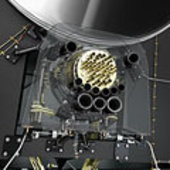
    Planck telescope focal plane unit
    Unidad del plano focal del telescopio de Planck
    Los detectores buscarán variaciones en la temperatura del CMB del orden de la millonésima parte de un grado – lo que es comparable a detectar desde la Tierra el calor generado por un conejo sentado en la Luna. Este es el motivo por el que los detectores se deben enfriar a temperaturas cercanas al cero absoluto (-273.15°C, o cero Kelvin, 0K).
    Se puede encontrar más información sobre las diferentes etapas del proceso de refrigeración en el enlace ‘Planck in depth’, situado en el menú de la derecha.

    Llegada al punto L2

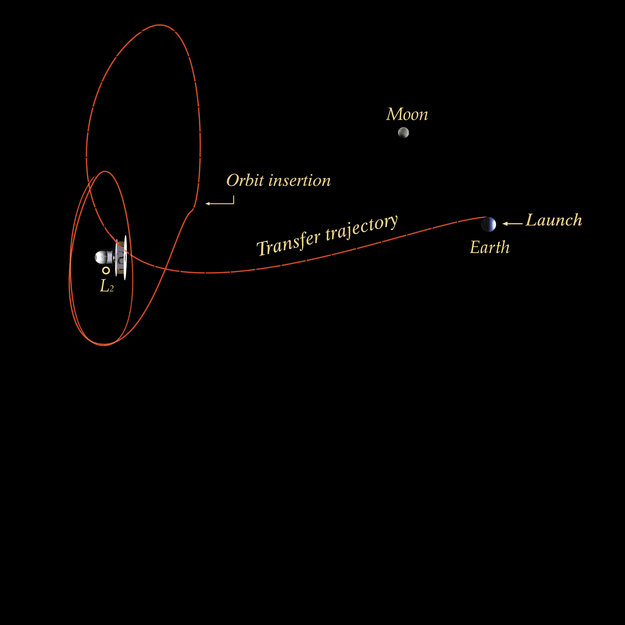
    A partir de las 13:15 CEST del pasado Jueves, 2 de Julio, el Equipo de Control de la Misión Planck llevó a cabo una crítica maniobra de inserción en órbita, diseñada para situar al satélite en su órbita definitiva entorno al punto L2.

    Órbita de Planck
    Una vez enviado el comando, el desarrollo de la maniobra se controló de forma autónoma por el propio satélite, encendiendo sus motores durante un periodo de entre 12 y 24 horas. La maniobra dirigió al satélite hacia su órbita operacional definitiva entorno al segundo punto de Lagrange del sistema Sol-Tierra, el L2.
    El encendido de los motores se planeó deliberadamente para ser un poco más corto de lo necesario, lo que permitirá realizar una pequeña maniobra de ‘ajuste fino’ en los próximos días que dejará al satélite perfectamente situado en la trayectoria definitiva.
    “Si bien la maniobra en si es rutinaria, representa el último gran paso en el largo viaje hacia el L2, y todo el equipo aquí está muy contento de ver cómo Planck alcanza finalmente su órbita operacional”, comenta Chris Watson, Responsable de las Operaciones del Satélite, desde la Sala de Control Dedicada de la misión en el Centro Europeo de Operaciones Espaciales de la ESA en Darmstadt, Alemania.
    Combined focal planes of Planck's two instruments
    Plano focal combinado de los dos instrumentos de Planck
    La maniobra se diseñó para cambiar la velocidad del satélite en 211.6 km/hora, finalizando con una velocidad de 1010 km/hora respecto al suelo. Acompañando a la Tierra y al punto virtual L2, Planck estará orbitando entorno al Sol a una velocidad de 106 254 km/hora (29.5 km/segundo).
    Al comienzo de la maniobra, Planck estaba situado a 1.43 millones de kilómetros de la Tierra.

    Las Operaciones Científicas, a punto de comenzar

    Planck escaneando el cielo
    Todas las actividades de puesta en servicio continúan según el programa, y esta fase de la misión está prácticamente terminada. Durante las próximas semanas, se realizará un ajuste fino del funcionamiento de los instrumentos para mejorar sus prestaciones.
    Planck comenzará a cartografiar el cielo a mediados de Agosto.

    Nota a los editores:

    Las tres etapas de refrigeración han sido construidas por diferentes institutos, como parte del consorcio para la construcción y entrega de los dos instrumentos de Planck, el Instrumento de Alta Frecuencia (HFI) y el de Baja Frecuencia (LFI):

    • El refrigerador de 20K: El Jet Propulsion Laboratory, California, Estados Unidos.
    • El refrigerador de 4K: El Rutherford Appleton Laboratory (miembro del consorcio para el HFI) en Didcot, y Astrium, ambos en el Reino Unido.
    • El refrigerador de 0.1K: Centre de Recherches des Très Basses Températures, en Grenoble, Francia y el Institut d’Astrophysique Spatiale, en Orsay, Francia (ambos miembros del consorcio para el HFI), así como DTA Air Liquide, también en Grenoble, Francia.


    Guillermo Gonzalo Sánchez Achutegui
    ayabaca@gmail.com
    ayabaca@hotmail.com
    ayabaca@yahoo.com

    ESA : Las estaciones de seguimiento de la ESA ayudarán a la misión lunar china

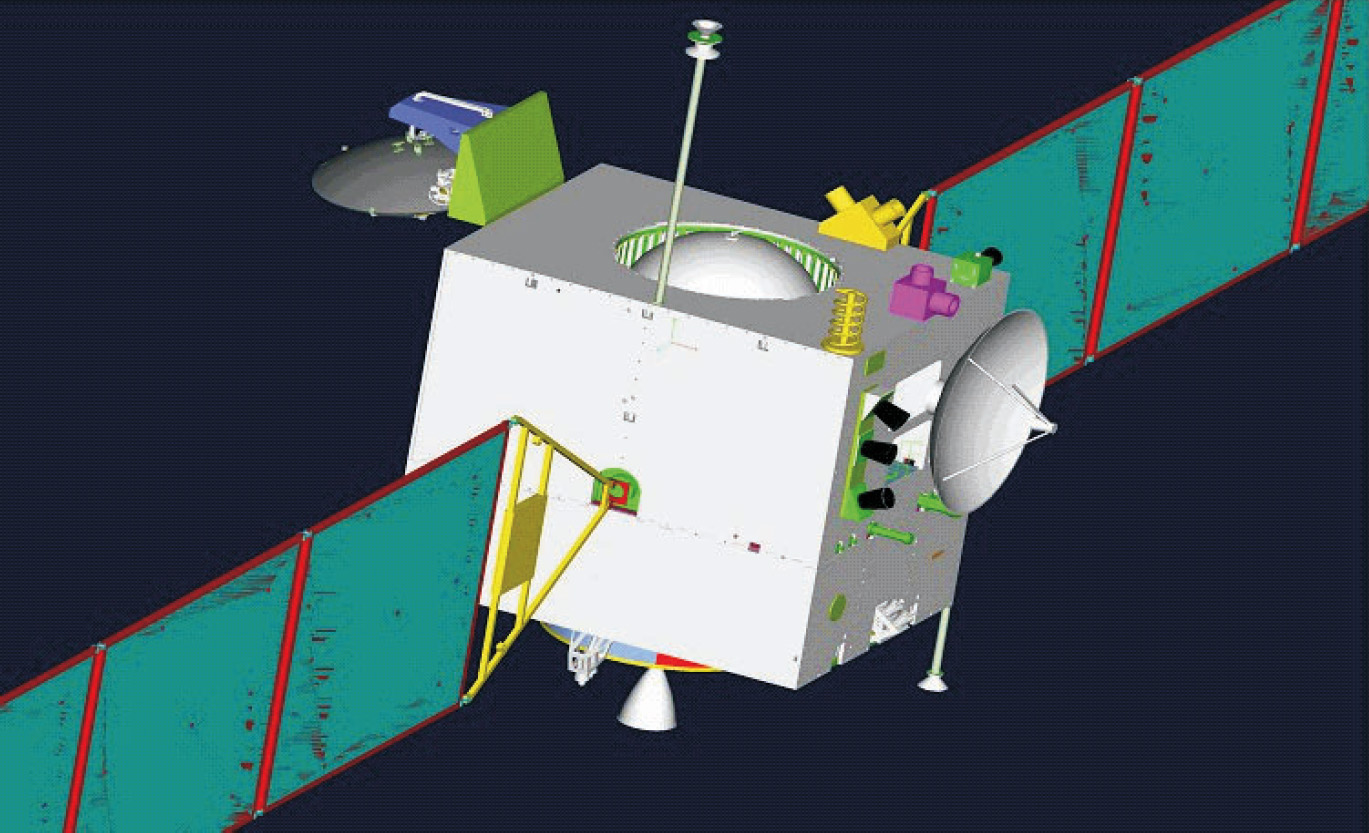
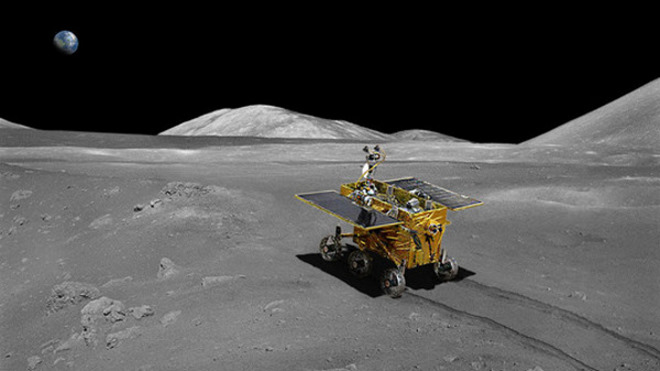
    Full resolution(1,369 × 833 pixels, file size: 312 KB, MIME type: image/jpeg)
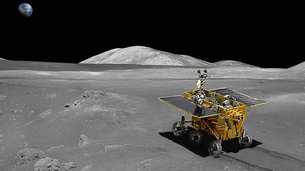
    Chang'e 3 is a lunar exploration mission operated by China National Space Administration, incorporating a robotic lander and a rover. Chang'e 3 was successfully launched on 1 December 2013 as part of the second phase of the Chinese Lunar Exploration Program.[4][7][8] It will be China's first lunar rover, and the first spacecraft in 37 years to make a soft landing on the Moon, since the Soviet Luna 24 mission in 1976.[9] It is named after Chang'e, the goddess of the Moon in Chinese mythology, and is a follow-up to the Chang'e 1 and Chang'e 2 lunar orbiters. The lunar probe is also called the Yutu, or Jade Rabbit, a name selected in an online poll that comes from a Chinese myth about a white rabbit that lives on the Moon.[10]
    Wikipedia.

    Las estaciones de seguimiento de la ESA ayudarán a la misión lunar china
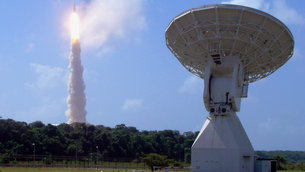
    Ariane 5 flight V188 rises above ESA's Estrack station in Kourou, French Guyana
    Kourou tracking station
    29 noviembre 2013
    La red de estaciones de seguimiento de la ESA entrará en acción poco después del lanzamiento de la misión chinaChang’E-3, proporcionando un apoyo crucial durante su viaje de cinco días hacia la Luna.
    La misiónChang’E-3, bautizada con el nombre de la diosa de la Luna en la mitología china, despegará el próximo día 1 de diciembre desde la base de lanzamiento Xichang LC-2, en la provincia china de Sichuan, y está formada por una plataforma estacionaria y por un vehículo de exploración lunar de seis ruedas.
    La misión aterrizará en la Bahía del Arco Iris (Sinus Iridum) el día 14 de diciembre, en el primer alunizaje suave desde la misión rusa Luna 24, en 1976.

    La ESA aportará su experiencia en seguimiento

    Instantes después del despegue, la antena de 15 metros de la ESA en Kourou, Guayana Francesa, empezará a prestar apoyo de telecomunicaciones, recibiendo las señales de la misión y enviando comandos en coordinación con el centro de control de la misión en China.
    Shortly after China’s Chang’e-3 spacecraft departs Earth to land on the Moon, ESA’s network of tracking stations will swing into action, providing crucial support for the vessel’s five-day lunar cruise.
    Chinese Moon rover
    La ESA seguirá la misión durante todo el viaje a la Luna. Durante la fase de descenso y después del aterrizaje, utilizará sus estaciones de espacio profundo para proporcionar servicios de localización ultra-precisos.
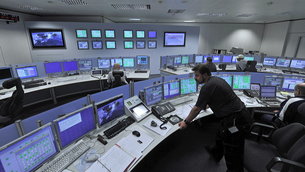
    El apoyo europeo a la misión se coordinará desde el Centro de Control de Estrack, en el Centro Europeo de Operaciones Espaciales de la ESA (ESOC) en Darmstadt, Alemania.
    “Estamos orgullosos de que la experiencia de nuestros equipos de dinámica del vuelo y de estaciones de seguimiento, y la sofisticada tecnología de nuestra red global Estrack, puedan ayudar a China a llevar a la Luna una misión de gran relevancia científica”, comenta Thomas Reiter, Director de Vuelos Tripulados y Operaciones de la ESA.
    “Una cooperación internacional como ésta es fundamental para las futuras misiones de exploración, tripuladas o robóticas, de los planetas, lunas y asteroides, para el beneficio de todos”.

    Siguiendo el progreso de la misión lunar

    El lanzamiento deChang’E-3 está programado para el día 1 de diciembre a las 18:00 UTC. La estación de seguimiento de Kourou recibirá sus primeras señales alrededor de las 18:44 UTC.
    ESA's Estrack tracking station control room at ESOC, the European Space Operations Centre, Darmstadt
    Tracking network control room
    Kourou seguirá a la nave hasta que entre en órbita lunar el día 6 de diciembre, y durante su descenso a la superficie de la Luna, previsto para el mediodía del día 14, en coordinación con las estaciones de seguimiento chinas.
    El alunizaje y las operaciones en superficie se controlarán desde dos estaciones chinas: Kashi y Jiamusi.
    “En cuanto la nave se encuentre sobre la superficie lunar, utilizaremos nuestras antenas de espacio profundo de 35 metros de diámetro en Cebreros, España, y Nueva Norcia, Australia, para determinar su posición utilizando la técnica ‘delta-DOR’, explica Erik Soerensen, responsable del apoyo de seguimiento a misiones externas en el ESOC.
    “La técnica ‘delta-DOR’ permite determinar la posición de la nave con una precisión extrema, lo que ayudará a nuestros compañeros chinos a evaluar con precisión el lugar del alunizaje”.

    Las estaciones de Cebreros y Nueva Norcia seguirán el alunizaje en directo

    Las estaciones de Cebreros y Nueva Norcia grabarán las señales enviadas porChang’E-3 durante la fase de alunizaje, ayudando a la agencia espacial china a reconstruir y analizar la trayectoria de la nave.
    Un equipo de ingenieros chinos se desplazará a Darmstadt para ayudar con las tareas de apoyo a esta misión.
    “Las dos agencias estamos utilizando unos estándares técnicos internacionales que hacen posible que nuestras estaciones y el ESOC se puedan comunicar con las naves y sistemas de tierra chinos”, aclara Soerensen.
    “Aunque aquí en el ESOC seamos un equipo muy internacional, muy pocos hablan mandarín, por lo que la presencia de nuestros compañeros chinos será de gran utilidad si surge cualquier imprevisto"
     

    Chang’e 3: The Chinese Rover Mission


    The proposed Chang’e 3 rover mission, scheduled for launch in December 2013. Image Credit: Glen Nagle.
    The proposed Chang’e 3 rover, scheduled for launch in December 2013. Image Credit: Glen Nagle.
    Currently scheduled for launch in December 2013 from the Xichang Satellite Launch Center in Sichuan province, the Chang’e 3 mission aims to land a Chinese rover on the Moon. If the mission is successful, it will be the first soft landing on the Moon since the Russian Luna 24 mission in 1976. Overseen by the China National Space Administration, the Chang’e program is following a step-wise approach to lunar exploration that could lead to the first taikonaut stepping onto the Moon by 2025.
    landingsites_600_sn
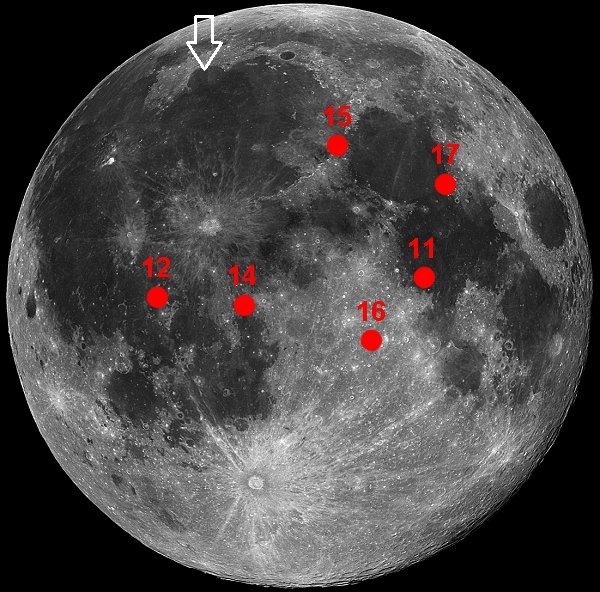
    The white arrow shows the proposed Chang’e 3 landing site in comparison to the Apollo landing sites. Image Credit: NASA (amended by the author).
    The previous Chang’e 1 and 2 lunar orbiting missions, launched in 2007 and 2010, represented the first phase of the Chang’e program. Chang’e 3, to be followed by Chang’e 4, represent the second phase of the program, both involving rovers. The third phase, with Chang’e 5, will be a sample-return mission and is currently scheduled for 2017. After that, it is anticipated that a new program will commence, which might culminate in a manned landing.
    Chang’e is the name of a Chinese goddess who ascended to the Moon after consuming an immortality pill and there befriended a jade rabbit who was already a lunar resident. The elements of this legend were relayed by NASA to the Apollo 11 crew ahead of the first Moon landing in 1969. Michael Collins famously responded “Okay. We’ll keep a close eye out for the bunny girl.”
    The Chang’e 3 lander will set down in Sinus Iridum, which is an extension of Mare Ibrium and roughly opposite the Apollo 15 landing site near Hadley Rille.
    Chang'e-3
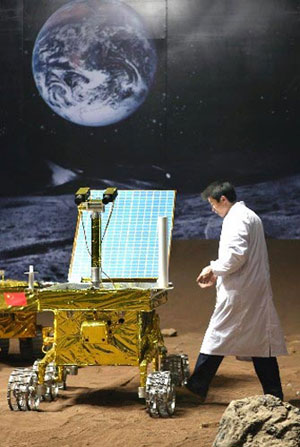
    A scale model of the Chang’e 3 rover.
    Image Credit: Unknown (sourced from http://www.ecns.cn)
    After landing, a solar-powered rover will roll off the lander and commence its mission, which is expected to last for at least three months, although presumably that will include a lot of down-time while the two-week-long lunar nights prevail.
    The Chang’e 3 lander itself will continue to operate as a stationary science platform. It will be powered by a radioisotope thermoelectric generator and hence will be largely unaffected by the presence or absence of direct sunlight. The lander will operate a number of science instruments, including an optical telescope and a “soil probe” to conduct analyses of lunar regolith.
    The Chang’e 3 rover will have a mass of 120 kilograms, including a 20 kg science payload. It is reported that it will explore widely over an area within a 5 kilometer radius of the lander. This sounds a little ambitious considering that the Spirit and Opportunity rovers traveled just 2 to 3 kilometers over their first year of operation, but the Chang’e 3 rover will have more advanced technology and more solar energy to draw upon.
    The rover will also have autonomous hazard avoidance and navigation capacity, but with a radio delay of only 1.3 seconds from Earth, it will be mostly under the direct control of an Earth-based driver.
    The rover’s science payload will include an alpha particle X-ray spectrometer, which has been standard issue on all the NASA Mars rovers to date, to enable geochemical analyses. The rover will also have a radar device on its underside, to investigate the structure and depth of the lunar regolith as well as the underlying structure of the lunar crust.
    AmericaSpace.
    Guillermo Gonzalo Sánchez Achutegui
    ayabaca@gmail.com
    ayabaca@hotmail.com
    ayabaca@yahoo.com