Mostrando entradas con la etiqueta The Climate Change. Mostrar todas las entradas

jueves, 23 de enero de 2014

NASA : NASA Searches for Climate Change Clues in the Gateway to the Stratosphere


NASA's Global Hawk 872
NASA's Global Hawk 872 on a checkout flight from Dryden Flight Research Center, Edwards, Calif., in preparation for the 2014 ATTREX mission over the western Pacific Ocean.
Image Credit: NASA/Tom Miller
Image Token:
NASA's uncrewed Global Hawk research aircraft is in the western Pacific region on a mission to track changes in the upper atmosphere and help researchers understand how these changes affect Earth's climate.
Deployed from NASA's Dryden Flight Research Center in Edwards, Calif., the Global Hawk landed at Andersen Air Force Base in Guam Thursday at approximately 5 p.m. EST and will begin science flights Tuesday, Jan. 21. Its mission, the Airborne Tropical Tropopause Experiment (ATTREX), is a multi-year NASA airborne science campaign.
ATTREX will measure the moisture levels and chemical composition of upper regions of the lowest layer of Earth's atmosphere, a region where even small changes can significantly impact climate. Scientists will use the data to better understand physical processes occurring in this part of the atmosphere and help make more accurate climate predictions.
"We conducted flights in 2013 that studied how the atmosphere works and how humans are affecting it," said Eric Jensen, ATTREX principal investigator at NASA’s Ames Research Center in Moffett Field, Calif. "This year, we plan to sample the western Pacific region which is critical for establishing the humidity of the air entering the stratosphere."
Studies show even slight changes in the chemistry and amount of water vapor in the stratosphere, the same region that is home to the ozone layer, which protects life on Earth from the damaging effects of ultraviolet radiation, can affect climate significantly by absorbing thermal radiation rising from the surface. Predictions of stratospheric humidity changes are uncertain because of gaps in the understanding of the physical processes occurring in the tropical tropopause layer.
ATTREX is studying moisture and chemical composition from altitudes of 55,000 feet to 65,000 feet in the tropical tropopause, which is the transition layer between the troposphere, or the lowest part of the atmosphere, and the stratosphere, which extends up to 11 miles above Earth's surface. Scientists consider the tropical tropopause to be the gateway for water vapor, ozone and other gases that enter the stratosphere. For this mission, the Global Hawk carries instruments that will sample the tropopause near the equator over the Pacific Ocean.
ATTREX scientists installed 13 research instruments on NASA's Global Hawk 872. Some of these instruments capture air samples while others use remote sensing to analyze clouds, temperature, water vapor, gases and solar radiation.
"Better understanding of the exchange between the troposphere and stratosphere and how that impacts composition and chemistry of the upper atmosphere helps us better understand how, and to what degree, the upper atmosphere affects Earth’s climate," Jensen said.
In 2013, for the first time, ATTREX instruments sampled the tropopause region in the Northern Hemisphere during winter, when the region is coldest and extremely dry air enters the stratosphere. Preparations for this mission started in 2011 with engineering test flights to ensure the aircraft and its research instruments operated well in the extremely cold temperatures encountered at high altitudes over the tropics, which can reach minus 115 degrees Fahrenheit. ATTREX conducted six science flights totaling more than 150 hours last year.
Jensen and Project Manager Dave Jordan of Ames lead the ATTREX mission. It includes investigators from Ames and three other NASA facilities: Langley Research Center in Hampton, Va., Goddard Space Flight Center in Greenbelt, Md., and the Jet Propulsion Laboratory in Pasadena, Calif. The team also includes investigators from the National Oceanic and Atmospheric Administration, the National Center for Atmospheric Research, universities and private industry.
ATTREX is one of the first research missions of NASA's new Earth Venture project. These small and targeted science investigations complement NASA's broader science research satellite missions. The Earth Venture missions are part of NASA's Earth System Science Pathfinder Program managed by Langley.
For more information about the ATTREX mission, visit:
An ATTREX press kit is available at
 
NASA
Guillermo Gonzalo Sánchez Achutegui

domingo, 11 de agosto de 2013

nsf.gov - Large Western wildfires increase. What to do?

Discovery
As large Western wildfires increase, scientists look for answers


What are the causes and impacts of the upsurge in U.S. western wildfires?
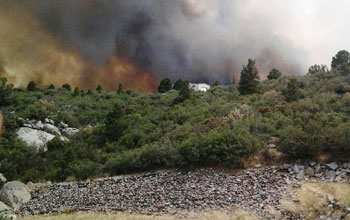
Photo of wildfire next to a house and forest in Arizona
Scene from a 2013 wildfire near Yarnell, Ariz.
Credit and Larger Version
August 8, 2013
Barely halfway into the summer of 2013, this year's wildfire season is already a record breaker. The Yarnell Hill wildfire, which started on June 28, was the deadliest fire in Arizona's history, killing 19 firefighters. The Black Forest wildfire, which started on June 11, was the most destructive wildfire in Colorado's history; it scorched more than 14,000 acres, destroyed more than 500 homes and killed two people.
The western U.S. has seen large, destructive wildfires on a daily basis this summer. Already in 2013, the acreage burned is more than three times the size of Rhode Island. What's more, the worst may be yet to come. Large swathes of the western U.S. will remain at risk of significant burning through September, according to the National Interagency Fire Center (NIFC). NIFC attributes this prolonged risk to long-term drought along with record high temperatures and dry weather.
 
Our flammable planet
"Wildfires are not new. They have continuously occurred on Earth for at least the last 400 million years," says Jennifer Balch of Penn State University. But, she adds, research shows that since the 1970s, the frequency of wildfires has increased at least four-fold.
According to this research--a study published in 2006 by a team led by A.L. Westerling of the Scripps Institution of Oceanography and the University of California, Merced--the total size of burn areas in the western U.S. increased at least six-fold in the later part of the 20th century. In addition, studies show that wildfires at high altitudes, which used to be rare, are increasing. (Thomas Swetnam of the University of Arizona discussed this finding during a 2009 National Science Foundation- (NSF) sponsored teleconference.) All of this means that large western wildfires are becoming more frequent and more intense.
Steadily rising, the cost of fighting U.S. wildfires totaled close to $2 billion in 2012, according to NIFC. According to Balch's most recent analysis, more than 80 percent of reported landscape fires that burned in the U.S. from 2001 to 2008 were started by people.
 
Invasive species fan the flames
Bigger and more frequent fires are linked to various types of human activities, including those that spread invasive species. A case in point: During the westward expansion, around 1880, settlers accidentally introduced to the west from Europe and Asia an invasive grass known as cheatgrass. Today, this plant covers more than 40,000 square kilometers of the western U.S., says Balch.
Scientists suspect that cheatgrass increases the number and severity of fires because it grows in arid lands and dries out before native vegetation does--a continuous carpet of fuel for fires.
An NSF-funded study conducted by Balch and other scientists shows that cheatgrass has been involved in a disproportionately large number of fires in the Great Basin, a 600,000-square kilometer area that includes parts of Nevada, Utah, Colorado, California and Oregon.
"Over the past decade, cheatgrass fueled the majority of the largest fires, including 39 of the largest 50 fires, even though this species only dominates about 6 percent of the land in the Great Basin," said Balch. "In addition, cheatgrass burned twice as frequently as any other vegetation."
 
The heat is on
Another factor promoting increased wildfires in the western U.S. is climate change, which is characterized by increased year-round temperatures, reduced precipitation and earlier springs. These changes:
  • create hot, dry conditions that are conducive to fires,
  • increase the length of the wildfire season, and
  • generate fuel for wildfires by increasing infestations of mountain bark beetles that kill trees. Since the mid-2000s, mountain bark beetles have felled millions of acres of forests, from New Mexico to British Columbia.
Climate change promotes fire-friendly infestations of bark beetles via a double whammy: Milder winters enable populations of bark beetles to survive the winter, and thereby increase their numbers and amplify their killing power. By contrast, populations of these pests used to be thinned, and thereby neutralized, by the killing cold of winter.
At the same time, climate change increases the vulnerability of forests to bark beetle attacks. It does so by triggering droughts that subject trees to water stress, which reduces their resistance to bark beetle infestations--much the way that starvation reduces the resistance of people to infections.
 
Climate change and wildfires reinforce each other
To make matters worse, the problem is not only that climate change promotes wildfires--but also that the reverse is true. That is, wildfires promote climate change. How? For one thing, wildfires char and darken the land. Darkened land absorbs more heat than non-charred, vegetated land. In addition, wildfires release carbon dioxide and methane--both of which are greenhouse gases that trap heat in the atmosphere and thereby help raise global temperatures. In fact, fires that people intentionally start to clear land of vegetation currently contribute up to one-fifth of human-caused increases in carbon dioxide emissions, according to a study conducted by Balch and other scientists.
The complex relationship between climate change and wildfires mean that areas that experience temperature increases and altered precipitation patterns may also experience more wildfires. And if wildfires occur more frequently across the globe, they will emit more greenhouse gases into the atmosphere.
 
Fighting fire with fire
An upsurge in wildfires raises pressing questions about fire management, says Balch. One management option, she says, is to reduce fuel for intense fires through prescribed and controlled burns--a trend that began during recent decades following almost 100 years of widespread fire suppression. But efforts to increase prescribed and controlled burns face major obstacles, including funding shortages during these lean economic times and a lack of support from the public, which is generally fearful of fires.
 
After the fire...
NSF is continuing to support research that will improve our understanding wildfire behavior. This topic is important because wildfire characteristics can change with maddening capriciousness over short distances and short time periods. In fact, a single wildfire may devastate one particular area but leave a similar, nearby area relatively unscathed because of even slight changes in time and space involving weather conditions, local winds, landscape features, microclimates, day-to-night changes in atmospheric conditions, soil moisture and the types and distribution of vegetation.
To better define the influence of these and other factors on wildfire behavior, a study of the causes and impacts of the High Park wildfire in northern Colorado, which started on June 9, 2012, is being jointly conducted by Colorado State University (CSU) and the NSF-funded National Ecological Observatory Network (NEON), headquartered in Boulder, Colo. (See this Science Nation video.)
The High Park wildfire was selected for study because it was among the worst wildfires in Colorado history and because CSU researchers had fortuitously been studying the area before the fire started, and had thereby generated rare, pre-fire baseline data on area ecology.
Critical components of the High Park study are flyovers of the burn scar and adjacent areas by a Twin Otter airplane that collects ecological measurements with state-of-the-art remote-sensing instruments. These instruments can quickly collect high-resolution measurements down to 1 meter and capture data from much larger areas than can ground sensors or field crews. In fact, these instruments may measure the individual tree heights, leaf area and leaf chemistry of 15 million trees in a single flyover.
High Park data--which will offer unparalleled precision related to the extent and condition of surviving vegetation, plant species, ash cover, soil properties and other factors--are being incorporated into high-definition, 3-D images as well as other types of rich ecological data covering the study area. Release to the public of High Park data is slated to begin later in 2013.
Results from the High Park study may help scientists understand how preexisting conditions defined by the CSU data influenced the behavior and severity of the fire and how the fire's burn patterns are affecting recovery of vegetation, wildlife and water resources. They may also support regional recovery efforts conducted by the U.S. and state forest service and the cities of Fort Collins and Greeley, Colo.--both of which have water supplies that are likely to be affected by post-fire erosion. And they may ultimately be used to help refine models of fire behavior and help improve future firefighting and post-fire management decisions.
Editor's Note: This Behind the Scenes article was first provided to
LiveScience in partnership with the National Science Foundation.
-- Lily Whiteman, National Science Foundation (703) 292-8070
  lwhitema@nsf.gov
Investigators T Ferguson
Frank Davis
Robert Keane
Omer Reichman
Thomas Swetnam
Edward McCauley
William Murdoch
Christopher Roos
Matthew Liebmann
Stephanie Hampton
Related Institutions/Organizations University of Arizona
University of California-Santa Barbara
Total Grants $19,900,626
 
Sagebrush steppe rangeland
A characteristic sagebrush steppe rangeland invaded by cheatgrass.
Credit and Larger Version
Image of a wildlifire fueled by cheatgrass
A wildfire fueled by invasive cheatgrass burns fragile sage steppe habitat.
Credit and Larger Version

Image of a mountenous landscape and the text NEON
View Video
With the help of NEON, scientists study wildfires in unpreced detail.
Credit and Larger Version

 
The National Science Foundation (NSF)
Guillermo Gonzalo Sánchez Achutegui

jueves, 23 de febrero de 2012

Science: Evolution of Earliest Horses Driven by Climate Change

Hi My Friends: AL VUELO DE UN QUINDE EL BLOG., When Sifrhippus sandae, the earliest known horse, first appeared in the forests of North America more than 50 million years ago, it would not have been mistaken for a Clydesdale. An artist's reconstruction of a modern horse compared with Sifrhippus.
Credit: Danielle Byerley, UFL

Teeth of Sifrhippus at its larger size with teeth from the same species after its size shrank.
Credit: Kristen Grace, UFL


When Sifrhippus sandae, the earliest known horse, first appeared in the forests of North America more than 50 million years ago, it would not have been mistaken for a Clydesdale.

It weighed in at around 12 pounds--and it was destined to get much smaller over the ensuing millennia.

Sifrhippus lived during the Paleocene-Eocene Thermal Maximum (PETM), a 175,000-year interval of time some 56 million years ago in which average global temperatures rose by about 10 degrees Fahrenheit.

The change was caused by the release of vast amounts of carbon into the atmosphere and oceans.

About a third of mammal species responded with a significant reduction in size during the PETM, some by as much as one-half.

Sifrhippus shrank by about 30 percent, to the size of a small house cat--about 8.5 pounds--in the PETM's first 130,000 years, then rebounded to about 15 pounds in the final 45,000 years of the PETM.

Scientists have assumed that rising temperatures or high concentrations of carbon dioxide primarily caused the "dwarfing" phenomenon in mammals during this period.

New research led by Ross Secord of the University of Nebraska-Lincoln and Jonathan Bloch of the Florida Museum of Natural History at the University of Florida offers evidence of the cause-and-effect relationship between temperature and body size.

Their findings also provide clues to what might happen to animals in the near future from global warming.

In a paper published in this week's issue of the journal Science, Secord, Bloch and colleagues used measurements and geochemical composition of fossil mammal teeth to document a progressive decrease in Sifrhippus' body size that correlates very closely to temperature change over a 130,000-year span.

"The reduction in available oxygen some 50 million years ago led to a reduction in the body size of animal life," says H. Richard Lane, program director in the National Science Foundation's (NSF) Division of Earth Sciences, which funded the research. "What does that say about the future for Earth's animals?"

Bloch said that multiple trails led to the discovery.

One was the fossils themselves, recovered from the Cabin Fork area of the southern Bighorn Basin near Worland, Wyo.

Stephen Chester at Yale, a paper co-author, had the task of measuring the horses' teeth.

What he found when he plotted them through time caught Bloch and Secord by surprise.

"He pointed out that the first horses in the section were much larger than those later on," Bloch says. "I thought something had to be wrong, but he was right and the pattern became more robust as we collected more fossils."

Secord performed the geochemical analysis of the teeth. What he found was an even bigger surprise.

"It was absolutely startling when Ross pulled up the data," Bloch said. "We realized that it was exactly the same pattern that we were seeing with the horse body.

"For the first time, going back into deep time--tens of millions of years--we were able to show that indeed temperature was causing essentially a one-to-one shift in body size in this lineage of horse.

"Because it's over a long enough time, you can argue very strongly that what you're looking at is natural selection and evolution that it's actually corresponding to the shift in temperature and driving the evolution of these horses."

Secord says that the finding raises important questions about how plants and animals will respond to rapid change in the not-too-distant future.

"This has implications for what we might expect to see over the next century or two with climate models that are predicting warming of as much as 4 degrees Centigrade over the next 100 years," he says, which is 7 degrees Fahrenheit.

Those predictions are based largely on the 40 percent increase of atmospheric carbon dioxide levels, from 280 to 392 parts per million, since the start of the Industrial Revolution in the mid-19th century.

Ornithologists, Secord says, have already started to notice that there may be a decrease in body size among birds.

"One of the issues is that warming during the PETM happened much more slowly, over 10,000 to 20,000 years to increase by 10 degrees, whereas now we're expecting it to happen over a century or two."

"So there's a big difference in scale. One of the questions is, 'Are we going to see the same kind of response?' Are animals going to be able to keep up and readjust their body sizes over the next couple of centuries?"

Increased temperatures are not the only change to which animals may have to adapt.

Experiments show that increased atmospheric carbon dioxide lowers the nutritional content of plants, which could have been a secondary driver of dwarfism during the PETM.

Other co-authors of the paper are Doug Boyer of Brooklyn College, Aaron Wood of the Florida Museum of Natural History, Scott Wing of the Smithsonian National Museum of Natural History, Mary Kraus of the University of Colorado-Boulder, Francesca McInerny of Northwestern University and John Krigbaum of the University of Florida.

The research was also funded by University of Nebraska-Lincoln.
-NSF-
Guillermo Gonzalo Sánchez Achutegui
ayabaca@gmail.com
ayabaca@hotmail.com
ayabaca@yahoo.com