Mostrando entradas con la etiqueta the National Oceanic and Atmospheric Administration (NOAA). Mostrar todas las entradas

domingo, 7 de septiembre de 2014

NASA : NASA Awards Ozone Mapping and Profiling Suite Modification for the Joint Polar Satellite

Small Asteroid to Safely Pass Close to Earth Sunday

This graphic depicts the passage of asteroid 2014 RC past Earth on September 7, 2014
This graphic depicts the passage of asteroid 2014 RC past Earth on September 7, 2014. At time of closest approach, the space rock will be about one-tenth the distance from Earth to the moon. Times indicated on the graphic are Universal Time.
Image Credit: 
NASA/JPL-Caltech
Orbit of Asteroid 2014 RC
This graphic depicts the orbit of asteroid 2014 RC around the sun. A house-sized asteroid will safely fly past Earth Sunday afternoon, September 7, at a distance equivalent to about one-tenth of the distance between Earth and the moon.
Image Credit: 
NASA/JPL-Caltech
 
A small asteroid, designated 2014 RC, will safely pass very close to Earth on Sunday, Sept. 7, 2014.  At the time of closest approach, based on current calculations to be about 2:18 p.m. EDT (11:18 a.m. PDT / 18:18 UTC), the asteroid will be roughly over New Zealand.  From its reflected brightness, astronomers estimate that the asteroid is about 60 feet (20 meters) in size.
Asteroid 2014 RC was initially discovered on the night of August 31 by the Catalina Sky Survey near Tucson, Arizona, and independently detected the next night by the Pan-STARRS 1 telescope, located on the summit of Haleakalā on Maui, Hawaii.  Both reported their observations to the Minor Planet Center in Cambridge, Massachusetts.  Additional follow-up observations by the Catalina Sky Survey and the University of Hawaii 88-inch (2.2-meter) telescope on Mauna Kea confirmed the orbit of 2014 RC. 
At the time of closest approach, 2014 RC will be approximately one-tenth the distance from the center of Earth to the moon, or about 25,000 miles (40,000 kilometers). The asteroid's apparent magnitude at that time will be about 11.5, rendering it unobservable to the unaided eye.  However, amateur astronomers with small telescopes might glimpse the fast-moving appearance of this near-Earth asteroid.
The asteroid will pass below Earth and the geosynchronous ring of communications and weather satellites orbiting about 22,000 miles (36,000 kilometers) above our planet’s surface.  While this celestial object does not appear to pose any threat to Earth or satellites, its close approach creates a unique opportunity for researchers to observe and learn more about asteroids.
While 2014 RC will not impact Earth, its orbit will bring it back to our planet's neighborhood in the future.  The asteroid's future motion will be closely monitored, but no future threatening Earth encounters have been identified.
For a heliocentric view of the orbit of asteroid 2014 RC with respect to Earth and other planets, visit:
NASA
 
 
NASA Awards Ozone Mapping and Profiling Suite Modification for the Joint Polar Satellite System-2 Mission
NASA has awarded a sole source contract modification to Ball Aerospace and Technology Corp. of Boulder, Colorado, for the Ozone Mapping and Profiling Suite (OMPS) for flight on the Joint Polar Satellite System-2 (JPSS-2) mission.
The JPSS-2 mission is funded by the National Oceanic and Atmospheric Administration (NOAA) to provide global environmental data in low Earth polar orbit in support of NOAA's mission. NASA is the acquisition agent for the flight systems and components of the ground system.
This is a cost-plus-award-fee modification in the amount of $113 million. This action extends the period of performance of the contract from November 2013 through May 2021.
Under this contract, Ball Aerospace and Technology will manufacture, test and deliver the OMPS instrument, support instrument integration on the JPSS-2 spacecraft and provide launch and post-launch support. The OMPS instrument will be similar to the OMPS currently flying on the joint NASA-NOAA Suomi NPP mission and planned for the JPSS-1 mission. JPSS-1 is being planned for launch in 2016 and JPSS-2 is planned for launch in 2021.
OMPS will monitor ozone from space, collect total column and vertical profile ozone data, and continue the current daily global data provided by the Solar Backscatter Ultraviolet radiometer-2 and Total Ozone Mapping Spectrometer. The collection of this data contributes to fulfilling the U.S. treaty obligation to monitor the ozone depletion for the Montreal Protocol to ensure no gaps on ozone coverage.
For information about NASA and agency programs, visit:
Guillermo Gonzalo Sánchez Achutegui

domingo, 11 de agosto de 2013

nsf.gov - Seasonal carbon dioxide range expanding as more is added to Earth's atmosphere


Northern Hemisphere land-based ecosystems "taking deeper breaths," scientists find.-

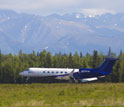
The NSF/NCAR Gulfstream V aircraft in Anchorage, Alaska, outside the hangar
The NSF/NCAR Gulfstream V aircraft in Anchorage, Alaska, as it takes part in the HIPPO study.
Credit and Larger Version
August 8, 2013
Levels of carbon dioxide in the atmosphere rise and fall each year as plants, through photosynthesis and respiration, take up the gas in spring and summer, and release it in fall and winter.
Now the range of that cycle is expanding as more carbon dioxide is emitted from burning fossil fuels and other human activities, according to a study led by scientists at the Scripps Institution of Oceanography (SIO).
The findings come from a multi-year airborne survey of atmospheric chemistry called HIAPER Pole-to-Pole Observations, or HIPPO.
Results of the study are reported in a paper published online this week by the journal Science.
The National Science Foundation (NSF), along with the U.S. Department of Energy, the National Center for Atmospheric Research (NCAR), the National Oceanic and Atmospheric Administration (NOAA) and the Office of Naval Research funded the study.
"This research provides dramatic evidence of the significant influence the land-based biosphere can have on the amplitude [amount of change] in seasonal trends of carbon dioxide exchange," says Sylvia Edgerton, program director in NSF's Division of Atmospheric and Geospace Sciences, which funded the research.
Observations of atmospheric carbon dioxide made by aircraft at altitudes between 3 and 6 kilometers (10,000-20,000 feet) show that seasonal carbon dioxide variations have substantially changed during the last 50 years.
The amplitude increased by roughly 50 percent across high latitude regions north of 45° N, compared with previous aircraft observations from the late 1950s and early 1960s.
This means that more carbon is accumulating in forests and other vegetation and soils in the Northern Hemisphere during the summer, and more carbon is being released in the fall and winter, says study lead scientist Heather Graven of SIO.
It's not yet understood, she says, why the increase in seasonal amplitude of carbon dioxide concentration is so large, but it's a clear signal of widespread changes in northern ecosystems.
"The atmospheric carbon dioxide observations are important because they show the combined effect of ecological changes over large regions," says Graven.
"This reinforces ground-based studies that show that substantial changes are occurring as a result of rising carbon dioxide concentrations, warming temperatures and changing land management, including the expansion of forests in some regions and the poleward migration of ecosystems."
Adds Peter Milne, a program director in NSF's Division of Atmospheric and Geospace Sciences, "We can easily measure the greenhouse gas budget from a single smokestack, but somewhat less well for a stand of trees. Knowing that for the entire planet is much more challenging.
"Taking advantage of the long-duration and high-altitude-profiling capabilities of the NSF Gulfstream V aircraft [also known as HIAPER], the HIPPO project was designed to take a 'snapshot' of the global troposphere [Earth's lowest atmospheric layer] to see whether we can explain and model greenhouse gas distribution."
In the study, the scientists compared the recent aircraft data with aircraft data gathered from 1958 to 1961 using U.S. Air Force weather reconnaissance flights.
The older data were analyzed by SIO geochemist Charles David Keeling, the father of Ralph Keeling, also an SIO scientist and a member of the research team.
These aircraft measurements were done at the time Charles Keeling was beginning continuous carbon dioxide measurements at Mauna Loa, Hawaii.
While the Mauna Loa measurements are now widely recognized as the "Keeling Curve," the early aircraft data were all-but-forgotten.
Carbon dioxide concentrations in the atmosphere have varied between 170 and 280 parts per million during the last 800,000 years.
When Charles Keeling began collecting data at Mauna Loa in 1958, the concentration had risen to about 315 parts per million.
In May, 2013, daily carbon dioxide measurements at Mauna Loa exceeded 400 parts per million--for the first time in human history.
Recent observations aboard the Gulfstream V were made during regular flights conducted during the HIPPO campaign, from 2009 to 2011.
The aircraft repeatedly ascended and descended from a few hundred meters to roughly 12 kilometers (40,000 feet) in the skies between the North Pole and Antarctica. The goal was constructing a unique snapshot of the chemical composition of the atmosphere.
Additional recent data comes from regular flights conducted by NOAA at a network of locations.
Increasing carbon dioxide amplitude since 1960 had already been observed at two ground-based stations: Mauna Loa and Barrow, Alaska.
Other stations operated by Scripps and NOAA only began measuring carbon dioxide in the 1970s to 1990s.
The aircraft-based observations uniquely show the large area in northern high latitudes where carbon dioxide amplitude increased strongly since 1960.
The exact reasons for the wider seasonal swings in carbon dioxide concentration remain to be determined, say the researchers.
Although plant activity can increase with warmer temperatures and higher carbon dioxide concentrations, the change in carbon dioxide amplitude over the last 50 years is larger than expected from these effects.
Carbon dioxide concentration has increased by 23 percent, and average temperature north of 30°N has increased by one degree C, since 1960.
Other factors may be changes in the amount of carbon in leaves, wood or roots; changes in the extent or species composition of ecosystems; or changes in the timing of plant photosynthesis and respiration.
Simulating complex processes in land-based ecosystems with models is a challenge, scientists have found.
The observed change in carbon dioxide amplitude is larger than that simulated by models used by the Intergovernmental Panel on Climate Change (IPCC).
While this underestimate does not call into question the response of climate to carbon dioxide concentration in the IPCC models, the researchers say, it does suggest that a better understanding of what happened during the last 50 years could improve projections of future ecosystem changes.
The bottom line, according to Graven, Ralph Keeling and colleagues, is that Northern ecosystems appear to be behaving differently than they did 50 years ago.
In addition to Graven and Ralph Keeling, Science paper co-authors include Stephen Piper, Lisa Welp and Jonathan Bent of SIO; Prabir Patra of the Research Institute for Global Change in Yokohama, Japan; Britton Stephens of NCAR; Steven Wofsy, Bruce Daube and Gregory Santoni of Harvard University; Colm Sweeney of NOAA and the Cooperative Institute for Research in Environmental Sciences at the University of Colorado, Boulder; Pieter Tans of NOAA; John Kelley of the University of Alaska, Fairbanks and Eric Kort of the Jet Propulsion Laboratory in Pasadena, Calif.
-NSF-

Media Contacts Cheryl Dybas, NSF (703) 292-7734
cdybas@nsf.gov
Rob Monroe, SIO (858) 349-1723
rmonroe@ucsd.edu
David Hosansky, NCAR (303) 497-8611

Related WebsitesNSF News: First Global Picture of Greenhouse Gases Emerges from Pole-to-Pole Research Flights: http://nsf.gov/news/news_summ.jsp?cntn_id=121566
HIAPER Pole-to-Pole Observations (HIPPO) Study:
 http://hippo.ucar.edu/
NSF Award: Collaborative Research: HIAPER Pole-to-Pole Observations (HIPPO) of Carbon Cycle and Greenhouse Gases:

The National Science Foundation (NSF) is an independent federal agency that supports fundamental research and education across all fields of science and engineering. In fiscal year (FY) 2012, its budget was $7.0 billion. NSF funds reach all 50 states through grants to nearly 2,000 colleges, universities and other institutions. Each year, NSF receives about 50,000 competitive requests for funding, and makes about 11,500 new funding awards. NSF also awards about $593 million in professional and service contracts yearly.
Useful NSF Web Sites:
NSF Home Page:
 http://www.nsf.gov/news/
For the News Media:
 http://www.nsf.gov/news/newsroom.jsp
Science and Engineering Statistics:
 http://www.nsf.gov/statistics/
Awards Searches:
 
HIPPO logo, or HIAPER Pole-to-Pole Observations
HIPPO, or HIAPER Pole-to-Pole Observations, scientists study Earth's carbon dioxide levels.
Credit and Larger Version
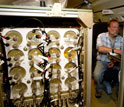
Air-sampling flasks used during HIPPO flights and researcher Andy Watt on the plane
Air-sampling flasks used during HIPPO flights; researcher Andy Watt tends them.
Credit and Larger Version
Geoscientist Ralph Keeling replaces used flasks filled with air samples
Geoscientist Ralph Keeling replaces used flasks filled with air samples, with new flasks.
Credit and Larger Version
The Gulfstream V taxis into Anchorage
The Gulfstream V taxis into Anchorage after a HIPPO flight to the North Pole.
Credit and Larger Version
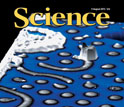
cover of Science magazine
The researchers' findings are described in the Aug. 9, 2013, issue of the journal Science.
Credit and Larger Version
 
The National Science Foundation (NSF)
Guillermo Gonzalo Sánchez Achutegui