Mostrando entradas con la etiqueta Africa. Mostrar todas las entradas

domingo, 19 de octubre de 2014

nsf.gov - National Science Foundation - Halting the spread of Ebola: Case of Nigeria a model for quick action, scientists find

Hola amigos: A VUELO DE UN QUINDE EL BLOG., la Fundación Nacional de Ciencia de Los Estados Unidos, nos informa sobre las investigaciones  que se están contra el Virus del Ébola en Nigeria...."Ebola. La palabra trae temor a un enemigo invisible y potencialmente letal. Pero hay formas de detener su propagación, dicen los científicos en enfermedades infecciosas.
Se requiere una intervención rápida, de acuerdo con los investigadores, quienes recientemente publicaron sus hallazgos en la revista Eurosurveillance.
Analizar casos de Ébola en Nigeria, un país con éxito en la contención de la enfermedad, los científicos estima que la tasa de mortalidad, la progresión de la transmisión, la proporción de trabajadores de la salud infectados, y el efecto de las intervenciones de control del tamaño de la epidemia......................
Rapid control measures critical to stopping the virus in its tracks
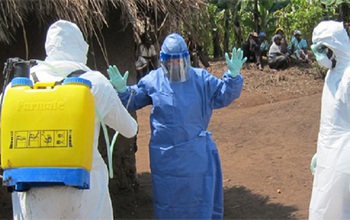
health workers in biohazard gear
Stopping Ebola in its tracks calls for rapid control measures in Africa and elsewhere.
Credit and Larger Version
October 16, 2014
The following is part ten in a series on the NSF-NIH-USDA Ecology and Evolution of Infectious Diseases (EEID) Program. See parts: one, two, three, four, five, six, seven, eight and nine.
Ebola. The word brings fear of an unseen and potentially lethal enemy. But there are ways to stop its spread, say infectious disease scientists.
Quick intervention is needed, according to the researchers, who recently published their findings in the journal Eurosurveillance.
Analyzing Ebola cases in Nigeria, a country with success in containing the disease, the scientists estimated the rate of fatality, transmission progression, proportion of health care workers infected, and the effect of control interventions on the size of the epidemic.
 
Rapid response needed
 
"Rapid control is necessary, as is demonstrated by the Nigerian success story," says Arizona State University (ASU) scientist Gerardo Chowell, senior author of the paper.
"This is critically important for countries in the West Africa region that are not yet affected by the Ebola epidemic, as well as for countries in other regions of the world that risk importation of the disease."
The research is funded by the U.S. National Science Foundation (NSF)-National Institutes of Health (NIH)-Department of Agriculture (USDA) Ecology and Evolution of Infectious Diseases (EEID) Program.
"Controlling a deadly disease like Ebola requires understanding how it's likely to spread, and knowing the ways of managing that spread that are most likely to be effective," says Sam Scheiner, NSF EEID program director.
"Being able to respond quickly needs a foundation of knowledge acquired over many years. The work of these scientists is testimony to long-term funding by the EEID program."
 
Control measures in Nigeria
 
The largest Ebola outbreak to date is ongoing in West Africa, with more than 8,000 reported cases and 4,000 deaths. However, just 20 Ebola cases have been reported in Nigeria, with no new cases since early September.
All the cases in Nigeria stem from a single traveler returning from Liberia in July.
The study used epidemic modeling and computer simulations to project the size of the outbreak in Nigeria if control interventions had been implemented during various time periods after the initial case, and estimated how many cases had been prevented by the actual early interventions.
"This timely work demonstrates how computational simulations, informed by data from health care officials and the complex social web of contacts and activities, can be used to develop both preparedness plans and response scenarios," says Sylvia Spengler, program director in NSF's Directorate for Computer and Information Science and Engineering, which also supported the research.
Control measures implemented in Nigeria included holding all people showing Ebola symptoms in an isolation ward if they had had contact with the initial case. If Ebola was confirmed through testing, people diagnosed with the disease were moved to a treatment center.
Asymptomatic individuals were separated from those showing symptoms; those who tested negative without symptoms were discharged.
Those who tested negative but showed symptoms--fever, vomiting, sore throat and diarrhea--were observed and discharged after 21 days if they were then free of symptoms, while being kept apart from people who had tested positive.
 
Brief window of opportunity
 
Ebola transmission is dramatically influenced by how rapidly control measures are put into place.
"Actions taken by health authorities to contain the spread of disease sometimes can, perversely, spread it," says NSF-funded scientist Charles Perrings, also of ASU.
"In the Nigeria case, people who tested negative but had some of the symptoms were not put alongside others who tested positive," says Perrings. "So they had no incentive to flee, and their isolation did nothing to increase infection rates. Elsewhere in the region isolation policies have had a different effect."
The researchers found that the projected effect of control interventions in Nigeria ranged from 15-106 cases when interventions are put in place on day 3; 20-178 cases when implemented on day 10; 23-282 cases on day 20; 60-666 cases on day 30; 39-1,599 cases on day 40; and 93-2,771 on day 50.
The person who was initially infected generated 12 secondary cases in the first generation of the disease; five secondary cases were generated from those 12 in the second generation; and two secondary cases in the third generation.
That leads to a rough estimate of the reproduction number according to disease generation declining from 12 during the first generation, to approximately 0.4 during the second and third disease generations.
A reproductive number above 1.0 indicates that the disease has the potential to spread.
Recent estimates of the reproduction number for the ongoing Ebola epidemic in Sierra Leone and Liberia range between 1.5 and 2 (two new cases for each single case), indicating that the outbreak has yet to be brought under control.
The effectiveness of the Nigerian response, scientists say, is illustrated by a dramatic decrease in the number of secondary cases over time.
The success story for Nigeria, they maintain, sets a hopeful example for other countries, including the United States.
Co-authors of the Eurosurveillance paper are Gerardo Chowell, Arizona State University; Folorunso Oludayo Fasina, University of Pretoria, South Africa; Aminu Shittu, Usmanu Danfodiyo University, Nigeria; David Lazarus, National Veterinary Research Institute, Plateau State, Nigeria; Oyewale Tomori, Nigerian Academy of Science, University of Lagos, Lagos, Nigeria; Lone Simonsen, George Washington University, Washington, D. C.; and Cecile Viboud, National Institutes of Health, Bethesda, Md.
-- Cheryl Dybas, NSF (703) 292-7734 cdybas@nsf.gov
-- Julie Newberg, ASU (480) 727-3116 julie.newberg@asu.edu
Related Programs Ecology and Evolution of Infectious Disease
Related WebsitesNSF Special Report: Ecology and Evolution of Infectious Diseases: http://www.nsf.gov/news/special_reports/ecoinf/
NSF Grant: US-UK Collab: Risks of Animal and Plant Infectious Diseases through Trade (RAPID Trade):
 http://www.nsf.gov/awardsearch/showAward?AWD_ID=1414374&HistoricalAwards=false
NSF Grant: III: Small: Data Management for Real-Time Data Driven Epidemic Spread Simulations: http://www.nsf.gov/awardsearch/showAward?AWD_ID=1318788&HistoricalAwards=false
NSF News: Outbreak: Ecology and Evolution of Infectious Disease grants support research on disease transmission:
 http://www.nsf.gov/news/news_summ.jsp?cntn_id=129280

Particles of the Ebola virus have found their way to several African countries--and beyond.
Credit and Larger Version

poster showing steps in global health security to stope ebola outbreak
Global health security depends on how fast an infection is recognized and brought under control.
Credit and Larger Version
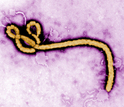
Ebola virus, as seen under a transmission electron microscope.
Ebola, as seen under a transmission electron microscope.
Credit and Larger Version
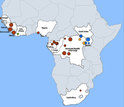
Outbreak distribution map of Ebola in Africa, since its first known incidence.
Credit and Larger Version
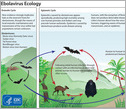
graphic showing the ebola virus ecology
How does Ebola begin? To find answers, look to the ecology of infectious diseases.
Credit and Larger Versión
The National Science Foundation (NSF)
Guillermo Gonzalo Sánchez Achutegui
ayabaca@gmail.com
ayabaca@hotmail.com
ayabaca@yahoo.com

domingo, 11 de agosto de 2013

NASA - Media Invited to NASA Google+ Hangout on Wildfire and Climate Change

Of stars and stripes: NASA satellites used to predict zebra migrations

Zebra in the Makgadikgadi grasslands.
Image Credit:
Hattie Bartlam-Brooks
Image Token:
One of the world's longest migrations of zebras occurs in the African nation of Botswana, but predicting when and where zebras will move has not been possible until now. Using NASA rain and vegetation data, researchers can track when and where arid lands begin to green, and for the first time anticipate if zebras will make the trek or, if the animals find poor conditions en route, understand why they will turn back.
Youtube Override:
Researchers used cues gleaned from GPS tracking of the zebras and satellite data to predict when the zebras will be on the move, a powerful tool for conservation.
Image Credit:  NASA
Image Token:
Covering an area of approximately 8,500 square miles (22,000 square kilometers), Botswana’s Okavango Delta is one end of the second-longest zebra migration on Earth, a 360-mile (580-kilometer) round trip to the Makgadikgadi Salt Pans—the largest salt pan system on the planet. Zebras walk an unmarked route that takes them to the next best place for grazing, while overhead thundering cloudbursts of late October rains drive new plant growth, filling pockmarks across this largest inland delta in the world. In a matter of weeks, the flooded landscape could yield ecosystems flush with forage for the muscled movers.
High above, Earth-orbiting satellites capture images of the zebras' movements on this epic trek, as well as the daily change in environmental conditions. Zebras don’t need data to know when it’s time to find better forage: The surge of rain-coaxed grasses greening is their prompt to depart. But now, researchers are able to take that data and predict when the zebras will move.
Pieter Beck, research associate with the Woods Hole Research Center in Falmouth, Mass., and three collaborators studied animal migration in a novel way, which they described in a paper published in the Journal of Geophysical Research--Biogeoscences, a publication of the American Geophysical Union. While tracking animal movement with satellites has been accomplished many times, Beck said, he and his team combined that information with in-depth use of environmental satellite data, using a series of images of vegetation growth and rainfall taken over days and weeks. This sheds unprecedented light on what drives animals to migrate, he said, what cues they use, and how animal migrations respond to environmental change.
Dr. Hattie Bartlam-Brooks collared a zebra with GPS to track their location along the migration route.
Image Credit:  Botswana Herbivore Research
Image Token:
The Zebra Migration Research Project began in 2008 after Hattie Bartlam-Brooks and her team discovered the migration during field work for Okavango Herbivore Research. Anecdotal evidence—unverified stories—prior to the 1970s described a zebra migration from the Okavango Delta to the Makgadikgadi Salt Pans at the start of the rainy season in September and continuing through April, but from 1968 to 2004, veterinary fences prevented zebras from making the migration. The veterinary fences—which had been built to keep wild buffalo from transferring diseases to cattle—were taken down in 2004. Within three years of the removal of the veterinary fences, zebra began making movements on the migration path toward the Makgadikgadi Salt Pans. These movements were recorded by GPS collars that were fitted to zebra mares, allowing researchers to accurately record their movements.
Zebras in the wild live for about 12 years, so the migration path could not have been learned from previous generations, said Bartlam-Brooks. She and her team in the field observed that the zebras began their migration at the onset of the rains so she joined forces with Beck to see how extensive the environment's influence is on the timing of the zebras' journey.
Beck combined this GPS movement data with satellite imagery taken over the months of the migration. This allowed the researchers to see how environmental conditions changed over time and across the landscape. To track the greening of leaves, the researchers relied on the Normalized Difference Vegetation Index data acquired by the Moderate Resolution Imaging Spectroradiometer on board NASA's Terra and Aqua satellites. The MODIS sensors capture growing conditions by measuring the reflectance of near-infrared light from plants. The team also used NASA’s Tropical Rainfall Measuring Mission data to map daily rainfall, which gave the researchers an idea of how much rain was falling in three-hour intervals. The scientists converted the rainfall measurements to daily rates, and cumulative weekly amounts, and checked the accuracy by comparing them with ground-based rain gauges.
Beck and his team learned that zebras do not follow an internal clock, nor do they migrate at a steady pace. By examining daily rainfall and weekly vegetation data from satellite images and entering the data into migration models, the researchers were amazed at how well they could predict when zebras started migrating and how fast they migrated.
: The Okavango Delta in Botswana.
The Okavango Delta in Botswana.
Image Credit:  Teo Gomez
Image Token:
“By comparing the results of the models, it was possible to determine which environmental variables are the most effective in predicting zebra movement, and then use this knowledge to try and infer as to how the zebra make their decisions,” said Gil Bohrer, assistant professor in the Department of Civil, Environmental, and Geodetic Engineering at The Ohio State University, who collaborated on the project. “It shows we can figure out very closely what ‘makes the zebra move.’”
Bill Fagan, professor of biology at the University of Maryland, finds hope in the team’s discoveries. “Their discussion," he said, "was particularly intriguing as a demonstration of how important the consistency and strength of the rainfall cues were for migration success." He said that it may be possible for species that have had their migration patterns disrupted to relearn them from "exploratory walks" driven by environmental cues. "With so many ungulate migrations declining worldwide, it is nice to have an optimistic result about migration for a change."
Satellite safari: Guiding light among the stars
Having access to NASA's free satellite images that shed light on the environmental conditions migratory animals face is something that Beck finds invaluable. The models provided the team with the means to think like a zebra, which has practical applications in management issues that concern humans.
“We’re getting close to the stage where for some organisms, we can use satellite data in management,” he said.
Satellite image of Botswana's Okavango Delta and Makgadikgadi Salt Pans.
Image Credit:  Terra MODIS/ NASA
Image Token:
He sees the capability of using the team’s research in the future to design models that will help game managers, conservation managers, farmers and tour operators predict animal migration, whether it’s zebras or other migratory animals. Understanding the mechanisms that drive migratory behavior is increasingly important, Beck said, in terms of climate change, as migrating animals rely on multiple habitats.
If migrating animals lose any of the habitats they rely on because the timing of their food—insect hatches, greening plants, for example—no longer coincides with their travel, this can have serious consequences for their continued survival. Under climate change, things are likely to accelerate, Beck said. Many of the major migrations on Earth, especially on land, have already been lost, he explains, and few landscapes are left on Earth where the migratory animals do not have to share land resources with agriculture and other human activities.
"We need to know what the fate of those migrations is under climate change," Beck said. "Understanding when animals might come through, what drives them, what they’re looking for sometimes. Being able to predict that into the future is very useful information to managing those landscapes so that migratory animals and humans can coexist." Helping zebras continue a journey—newly discovered by the animals and their observers—may allow them to cope with changes in their environment, an outcome that is not so black-and-white.
The environmental data sets from the Tropical Rainfall Measuring Mission and the MODIS sensors will continue into the next decade with data provided by their follow-on missions: the Global Precipitation Measurement mission to launch in early 2014, and the Visible Infrared Imaging Radiometer Suite on the Suomi National Polar-orbiting Partnership satellite currently in orbit.
Lisa-Natalie Anjozian
NASA's Goddard Space Flight Center
 
Media Invited to NASA Google+ Hangout on Wildfire and Climate Change
NASA will host a Google+ Hangout at 1 p.m. EDT Friday, Aug. 9, about wildfire research and what a changing climate could mean for future fire activity in the United States.
A decades-long record from ground surveys and NASA satellites shows the fire season in the western United States is starting earlier in the spring and producing larger and more intense fires throughout the summer. Is this a result of climate change, or are other factors involved? How do scientists anticipate a continued increase in global temperatures will influence the number and strength of wildfires?
Panelists for the Google+ Hangout are:
  • Doug Morton, research scientist, NASA's Goddard Space Flight Center, Greenbelt, Md.
  • Bill Patzert, research scientist, NASA's Jet Propulsion Laboratory, Pasadena, Calif.
  • Elizabeth Reinhardt, national program leader for fire research, research and development, Office of the Climate Change Advisor, U.S. Forest Service, Washington
The panelists will discuss the 2013 fire season so far, recent trends in U.S. and global wildfires, and what climate projections reveal about potential fire activity in the future.
Journalists who want to ask questions by phone during this Google+ Hangout must provide their media affiliation information to Aries Keck at 301-286-4435 or aries.keck@nasa.gov by 10 a.m. Aug. 9. The Hangout will be broadcast publicly via NASA Goddard’s YouTube and Google+ pages. The Hangout also will be carried live on NASA Television and the agency's website.
To join the Hangout, visit:
For NASA TV downlink, schedule and streaming video information, visit:
For more information about the NASA's Earth science mission, visit:
To view and post questions via Facebook, visit:
 
NASA
Guillermo Gonzalo Sánchez Achutegui

domingo, 12 de agosto de 2012

WWF Global: Ramsar Conference 2012.- Protecting water for people and nature

Hi My Friends: AL VUELO DE UN QUINDE EL BLOG., Healthy freshwater ecosystems sustain an amazing variety of plants and animals, and provide services that are essential to human well-being.
Gorillas need Ramsar's help in Virunga
"The Fusea project showed us all how fragile wetlands are. But we could also see how fast sand and gravel quarries can be rehabilitated if the appropriate measures are implemented."
 Andreia Petcu, Lafarge Romania Environment & Rehabilitation Manager.
Bardaca Wetland, Bosnia and Herzegovina. This Ramsar site in the Danube River Basin comprises exceptionally important habitats and is a rare example of a river with intact floodplains
© WWF Germany
Securing of natural freshwater systems of the Himalayas
© WWF-Canon / Steve Morgan
 Aerial sunset, with islets in front and misty mountains at the back, Cambodia.(Kampuchea)
© Adam Oswell / WWF Greater Mekong
Cambodia Greater Mekong

For a week in July, members of the Convention on Wetlands of International Importance will meet in Bucharest, Romania, to share knowledge and experience on the conservation of these vital places – known as Ramsar sites.

(Fun Fact: Ramsar is not another conservation acronym! It’s the city in Iran where the convention was signed in 1971.)

Pristine reefs in the Coral Triangle. Endangered gorilla habitat in the African Rift Valley. High altitude wetlands in the Himalayas. World's largest wetland, South America's Pantanal. These are among the 2,040 Ramsar sites that cover more than 193 million hectares.

Some Ramsar sites are in protected areas. But many are “working wetlands,” where people live, fish, grow food and transport goods. One of the key elements of Ramsar’s mission is to ensure the “wise use” of wetlands for sustainable development.

This will be a central theme of the meeting in Bucharest, under the theme "Wetlands: home and destination". A resolution encouraging integration of wetlands in sustainable tourism policies is up for approval by the member states.

Wise use in Virunga

Tourism could play an important role in the survival of Democratic Republic of Congo’s Virunga National Park – Africa’s oldest national park. Home to critically endangered mountain gorillas and some 200 other mammal species, the park is both a UNESCO World Heritage site and a Ramsar site.

Yet today, this pristine wilderness is under threat from oil companies. WWF is calling on oil companies SOCO, Total and Ophir Energy to obey Congolese law and cease oil exploration in Virunga. We are also reminding DCR and the companies’ home countries of UK, France and South Africa that, as members of Ramsar, they have agreed not to allow oil extraction from wetlands of international importance.

Partners for wetland conservation

Fortunately, many businesses are realizing that healthy freshwater ecosystems are essential to their long-term viability. Companies like Coca-Cola and Lafarge are working with WWF to protect spectacular Ramsar sites around the world.

Viet Nam’s Tram Chim National Park was once part of a vast wetland ecosystem called the Plain of Reeds. Today, the system is fragmented, and the great variety of fish and plants that once thrived here are found only in protected pockets like Tram Chim. Coca-Cola, WWF and park authorities have established Sustainable Resource User Groups, allowing communities to harvest firewood, fish, eels, grasses, vegetables and other products from within the park’s boundaries. Group members are now more aware of how conservation and the sustainable use of natural resources will help ensure that wetlands nourish their families for generations to come.

Lafarge in Romania and WWF developed a project to re-establish biodiversity in and around the Fusea-Mătăsaru aggregates quarry. The site is in the floodplain of the Arges River, a major tributary of the Danube. This project is helping nature recover its previous features and minimize the pools and banks left after the aggregates were extracted. Activities include planting 15,000 trees, controlling invasive plant species and creating an island habitat for swans, grey herons and egrets.

The Danube: “Europe’s Amazon”

This Ramsar Conference of Parties is being held in Romania, one of 19 nations touched by the Danube as it travels 2,800 kilometres from the Black Forest of Germany to the Black Sea.

The river and its Ramsar sites touch millions of lives – including those of WWF staff who are committed to restoring and maintaining the Danube’s diverse ecosystems.
WWF.
Guillermo Gonzalo Sánchez Achutegui
ayabaca@gmail.com
ayabaca@hotmail.com
ayabaca@yahoo.com