Mostrando entradas con la etiqueta Science. Mostrar todas las entradas

sábado, 11 de mayo de 2013

nsf.gov - National Science Foundation - Life on a Coral Reef: Insult Is (Sometimes) Added to Injury

Hola amigos: AL VUELO DE UN QUINDE EL BLOG., hemos recibido  información del National Science Foundation NSF, sobre la vida en un pequeño arrecife de Coral y como las esponjas de coral son sometidas a un predator que es  un pes llamado: the "yuk factor." en la Pequeña Isla Caymán.
Les invito a lEer la versión original en inglés del National Science Foundation NSF

Giant barrel sponges off Little Cayman Island in the Caribbean next to a researcher.
Giant barrel sponges off Little Cayman Island in the Caribbean dwarf researchers.
Credit: Joe Pawlik, UNCW
Download the high-resolution JPG version of the image. (4.5 MB)


Scientists research chemical defenses in tube sponges off Little Cayman Island.
Credit: Joe Pawlik, UNCW
Download the high-resolution JPG version of the image. (4.1 MB)

Close up of an orange sponge
Predatory fish prevent orange sponges from smothering corals.
Credit: Joe Pawlik, UNCW
Download the high-resolution JPG version of the image. (2.9 MB)
Sponge growth experiment underway on Conch Reef, Key Largo, Florida.
Credit: Joe Pawlik, UNCW
Download the high-resolution JPG version of the image. (6.1 MB)

Diver surveys a gray tube sponge with "bite marks" from angelfish
Gray tube sponge with "bite marks" from angelfish off Grand Cayman Island.
Credit: Joe Pawlik, UNCW
Download the high-resolution JPG version of the image. (3.8 MB)


Reef-building corals overgrown by orange sponges on an overfished reef off Martinique.
Credit: Joe Pawlik, UNCW
Download the high-resolution JPG version of the image. (5.5 MB)

When is insult added to injury for a Caribbean coral reef?
When overfishing removes predatory fish that feed on sponges, according to results reported this week in the journal PLOS ONE.
Using the undersea habitat Aquarius--moored on Conch Reef off Key Largo, Florida--marine scientist Joseph Pawlik of the University of North Carolina Wilmington (UNCW) and colleagues found that these predator-fish are the same brightly colored angelfish and parrotfish that attract scuba divers and glass-bottom boat tourists.
Pawlik is first author of the PLOS ONE paper; co-authors, all from UNCW, are Tse-Lynn Loh, Steven McMurray and Christopher Finelli.
Chemical warfare beneath the waves
The fish prey on sponges without chemical defenses--sponges missing what might be called the "yuk factor."
"Sponges that manufacture metabolites that are distasteful to fish are largely left alone," says Pawlik.
"That being said, when overfishing by humans removes these predatory fish, reefs shift toward faster-growing sponges that can out-compete reef corals for space.
"That further hinders corals' chances of recovery."
Coral cover on Caribbean reefs is at historic lows due to disease, heat stress from warming waters and waves from storms.
Undersea garden of sponges
"Coral reefs, especially in the Caribbean, have undergone many changes in the past few decades," says David Garrison, program director in the National Science Foundation's (NSF) Division of Ocean Sciences, which funded the research.
"With the decline of reef-building corals, sponges are becoming the main organisms on many reefs. These findings provide important information about interactions between sponges and predatory fish in coral reef communities."
Previous research showed that Caribbean sponge communities were primarily structured by the availability of plankton, or tiny floating plants and animals, rather than by predators.
But sponge growth experiments performed by Pawlik and colleagues--research that used cages to exclude predators--show the opposite.
"Overfished reefs that lack spongivores [sponge-eating fish] soon become dominated by faster-growing, chemically undefended sponge species, which better compete for space with reef-building corals," says Pawlik.
Endangered corals: threatened by 'new game in town'?
That has implications for fisheries management throughout the Caribbean.
"Some coral species are listed as critically endangered on the IUCN [International Union for Conservation of Nature] Red List, with four reef-building corals on the top ten list for risk of extinction."
Sponges are already overrunning certain coral reefs.
"As the effects of climate change and ocean acidification disrupt marine communities," says Pawlik, "it's likely that reef-building corals will suffer greater harm than sponges, which don't form at-risk limestone skeletons [as corals do]."
Hence, he believes, Caribbean reefs of the future are likely to be made up increasingly of sponges.
Scuba divers and glass-bottom boat tourists may visit not to view coral reefs, but to see the new game in town: the sponges.
--  Cheryl Dybas, NSF (703) 292-7734 cdybas@nsf.gov
Related Websites
NSF Discovery Article: Trouble in Paradise: Ocean Acidification This Way Comes: http://www.nsf.gov/discoveries/disc_summ.jsp?cntn_id=122642&org=NSF
 
Guillermo Gonzalo Sánchez Achutegui
ayabaca@gmail.com
ayabaca@hotmail.com
ayabaca@yahoo.com 

martes, 15 de enero de 2013

NASA - NASA Mars Rover Preparing to Drill Into First Martian Rock


http://photojournal.jpl.nasa.gov/jpegMod/PIA16567_modest.jpg

Full-Res TIFF: PIA16567.tif (27.71 MB)
Full-Res JPEG: PIA16567.jpg (1.787 MB)  

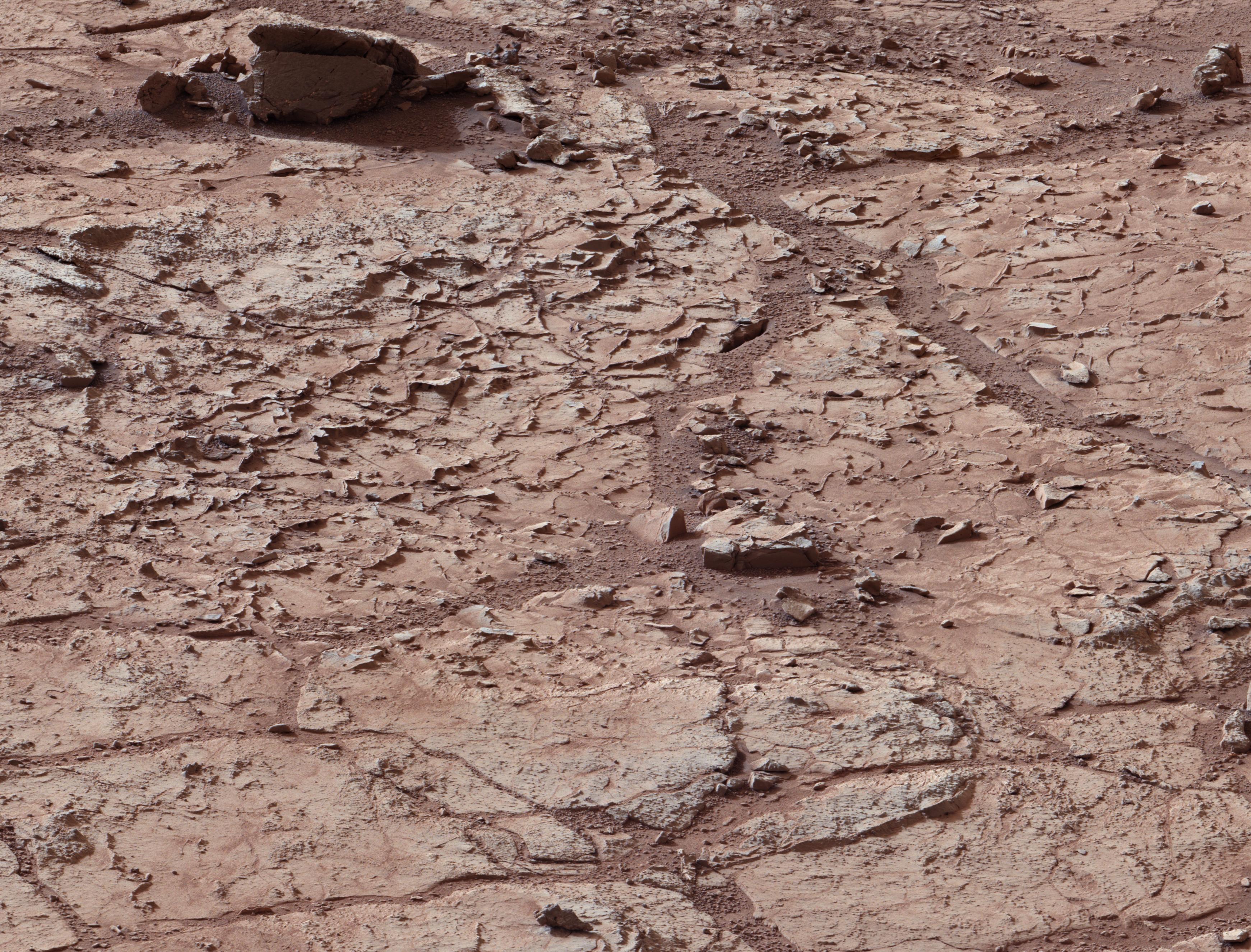
NASA Mars Rover Preparing to Drill Into First Martian Rock 
PASADENA, Calif. -- NASA's Mars rover Curiosity is driving toward a flat rock with pale veins that may hold clues to a wet history on the Red Planet. If the rock meets rover engineers' approval when Curiosity rolls up to it in coming days, it will become the first to be drilled for a sample during the Mars Science Laboratory mission.

The size of a car, Curiosity is inside Mars' Gale Crater investigating whether the planet ever offered an environment favorable for microbial life. Curiosity landed in the crater five months ago to begin its two-year prime mission.

"Drilling into a rock to collect a sample will be this mission's most challenging activity since the landing. It has never been done on Mars," said Mars Science Laboratory project manager Richard Cook of NASA's Jet Propulsion Laboratory (JPL) in Pasadena, Calif. "The drill hardware interacts energetically wiGale Craterth Martian material we don't control. We won't be surprised if some steps in the process don't go exactly as planned the first time through."

Curiosity first will gather powdered samples from inside the rock and use those to scrub the drill. Then the rover will drill and ingest more samples from this rock, which it will analyze for information about its mineral and chemical composition.

The chosen rock is in an area where Curiosity's Mast Camera (Mastcam) and other cameras have revealed diverse unexpected features, including veins, nodules, cross-bedded layering, a lustrous pebble embedded in sandstone, and possibly some holes in the ground.
The rock chosen for drilling is called "John Klein" in tribute to former Mars Science Laboratory deputy project manager John W. Klein, who died in 2011.

"John's leadership skill played a crucial role in making Curiosity a reality," said Cook.

The target is on flat-lying bedrock within a shallow depression called "Yellowknife Bay." The terrain in this area differs from that of the landing site, a dry streambed about a third of a mile (about 500 meters) to the west. Curiosity's science team decided to look there for a first drilling target because orbital observations showed fractured ground that cools more slowly each night than nearby terrain types do.

"The orbital signal drew us here, but what we found when we arrived has been a great surprise," said Mars Science Laboratory project scientist John Grotzinger, of the California Institute of Technology in Pasadena. "This area had a different type of wet environment than the streambed where we landed, maybe a few different types of wet environments."

One line of evidence comes from inspection of light-toned veins with Curiosity's laser-pulsing Chemistry and Camera (ChemCam) instrument, which found elevated levels of calcium, sulfur and hydrogen.

"These veins are likely composed of hydrated calcium sulfate, such as bassinite or gypsum," said ChemCam team member Nicolas Mangold of the Laboratoire de Planetologie et Geodynamique de Nantes in France. "On Earth, forming veins like these requires water circulating in fractures."

Researchers have used the rover's Mars Hand Lens Imager (MAHLI) to examine sedimentary rocks in the area. Some are sandstone, with grains up to about peppercorn size. One grain has an interesting gleam and bud-like shape that have brought it Internet buzz as a "Martian flower." Other rocks nearby are siltstone, with grains finer than powdered sugar. These differ significantly from pebbly conglomerate rocks in the landing area.

"All of these are sedimentary rocks, telling us Mars had environments actively depositing material here," said MAHLI deputy principal investigator Aileen Yingst of the Planetary Science Institute in Tucson, Ariz. "The different grain sizes tell us about different transport conditions."

JPL manages the Mars Science Laboratory Project for NASA's Science Mission Directorate in Washington.
To see an image of the rock, visit:

For more information about the mission, visit:

Follow the mission on Facebook and Twitter at:
NASA
ayabaca@gmail.com
ayabaca@hotmail.com
ayabaca@yagoo.com

nsf.gov - National Science Foundation - Exploring the Brain's Relationship to Habits

Research may impact development of treatments for movement disorders such as Parkinson's and Huntington's diseases, as well as conditions such as autism
photo of Ann Graybiel
Researcher Ann Graybiel studies how the human brain adapts to habits.
Credit: Bachrach Studios
Download the high-resolution JPG version of the image. (92 KB)
photo of a section from a human brain
Photomicrograph of section from human brain, stained for acetylcholinesterase, an enzyme that degrades neurotransmitter acetylcholine. This staining procedure revealed pockets of low enzyme activity, which appear dark in this light-dark reversed image. These are the histochemically identified striosomes.
Credit: Ann Graybiel
Download the high-resolution JPG version of the image. (445 KB)

The basal ganglia, structures deep in the forebrain already known to control voluntary movements, also may play a critical role in how people form habits, both bad and good, and in influencing mood and feelings.
"This system is not just a motor system," says Ann Graybiel."We think it also strongly affects the emotional part of the brain."
Graybiel, an investigator at the McGovern Institute of the Massachusetts Institute of Technology and professor in MIT's department of brain and cognitive sciences, believes that a core function of the basal ganglia is to help humans develop habits that eventually become automatic, including habits of thought and emotion.
"Many everyday movements become habitual through repetition, but we also develop habits of thought and emotion," she says."If cognitive and emotional habits are also controlled by the basal ganglia, this may explain why damage to these structures can lead not only to movement disorders, but also to repetitive and intrusive thoughts, emotions and desires."           
Graybiel's research focuses on the brain's relationship to habits--how we make or break them--and the neurobiology of the habit system. She and her team have identified and traced neural loops that run from the outer layer of the brain--"the thinking cap," as she calls it--to a region called the striatum, which is part of the basal ganglia, and back again. These loops, in fact, connect sensory signals to habitual behaviors.
Her work ultimately could have an impact not just on such classic movement disorders as Parkinson's and Huntington's diseases, but in other conditions where repetitive movements commonly occur, such as Tourette Syndrome, autism, or obsessive-compulsive disorder, the latter when sufferers experience unwanted and repeated thoughts, feelings, ideas, sensations or behaviors that make them feel driven to do something, for example, repeatedly washing their hands.
Moreover, the research could have an immediate value for trying to understand "what happens in the brain as addiction occurs, as bad habits form, not just good habits," she says. "There are many psychiatric and neurologic conditions in which these same brain regions are disordered.
"These conditions may in part be influenced by the very system we are working on," Graybiel adds. "We are working with models of anxiety and depression, stress and some of these movement disorders."
It turns out that the emotional circuits of the brain have strong ties to the striatum, she says. Graybiel's research suggests that activity in the striatum strongly affects the emotional decisions that people make: whether to accept a good outcome or a potentially bad one, for example, and that there are circuits favoring good outcomes, and, surprisingly, other circuits that favor bad ones.
"This work ties into new research suggesting that there are  brain systems for ‘good' and brain systems for ‘bad,'" she says. "What is intriguing is that we may have  identified the circuits that decide between the two."
Recently, Graybiel, an early National Science Foundation grantee, won the prestigious Kavli Prize in neuroscience (along with Cornelia Isabella Bargmann of Rockefeller University and Winfried Denk of the Max Planck Institute for Medical Research) for their groundbreaking research "elucidating basic neuronal mechanisms underlying perception and decision." 
These prizes recognize scientists for their seminal advances in astrophysics, nanoscience and neuroscience, and include a cash award of $1 million in each field.
Graybiel's lab was the first to discover more than three decades ago that neurotransmitters in the striatum had a precise and unique organization--compartments similar to layers--a finding that surprised most scientists at the time. 
"We couldn't see this organization in regular old anatomy, but we found this with chemical markers, by using stains," she says.  "Imagine if you look at a desert and everything looks plain and uniform, just all sand. Then you put on special glasses, and all of a sudden, you could see the chemical composition of the sands. The whole landscape looks totally different, and that's what happened when we did this stain.
"We now know that all over the brain, these molecules are highly ordered," she adds. "They are communication lines, and connections from a to b and b to c, and these connections all work because of these chemical communication molecules. We happened to find that the deep brain, which looked so primitive, wasn't as primitive as people thought. We found that if we looked at the chemicals and then at the inputs and the outputs, everything was organized with respect to these chemical compartments."
She and her team also determined that communication molecules known to be related to human disorders, such as dopamine, a key neurotransmitter, were prominently organized in this way.  Dopamine dysfunction is associated with the development of Parkinson's disease.
"As we looked more and more, we found that we could trace connections from the neocortex to the striatum," she says. "They were all organized in compartments either in the compartments we called striosomes or in the compartments that surrounded them.''
The striosomes are one of two complementary chemical compartments within the striatum. The second compartment is known as the matrix.
Following upon this, "the next thing we found was that the whole thing looked like a learning machine because of the way it all was organized," she says. "We decided to study learning. In order to do that, we had to learn to record the neural activity. It turns out that the system is tremendously active as we learn habits. That's how we began."
Graybiel uses electrical recordings, behavioral tests and gene-based approaches to study these issues, and has seen remarkable changes in neural activity within the striatum as animals learned new habits.
"The activity in this part of the brain changed as the animals learned, and they were highly correlated with the learning," she says. "We take the animals to ‘school' every day, and give them practice. They do learn habits-to run to the right, or do something when a click occurs, until it's habitual. As they learn, there are all these changes in the neural activity."
She and her lab also found that these changes are coordinated with activity patterns in the hippocampus, a brain structure involved with memory of facts and events.  Currently, she and her lab are studying new methods to influence the activity in the striatum, and genes found in the brain region thought to be involved in the brain's response to abusive drugs, as well as to therapeutic drugs, such as those to treat Parkinson's.
Their work suggests a new view of how the core brain structures involved in Parkinson's disease are affected by dopamine depletion, and how this key neurotransmitter might influence the ability to maintain movement and thought.
"Hopefully, our basic science work can lead to new therapeutic approaches to these disorders, not only in drug treatments but also other novel treatments that affect the on-going activity of neurons in the basal ganglia," she says. "There is nothing I would rather do than to help in the search for new therapies to treat the range of disorders related to the system we study, from Parkinson's disease to OCD to addiction, and maybe, just maybe, to help the rest of us unlearn bad habits."
--  Marlene Cimons, National Science Foundation
Investigators Ann Graybiel
Related Institutions/Organizations Massachusetts Institute of Technology

The National Science Foundation(NSF)
Guillermo Gonzalo Sánchez Achutegui
ayabaca@gmail.com
ayabaca@hotmail.com
ayabaca@yahoo.com

martes, 18 de diciembre de 2012

nsf.gov - National Science Foundation:Climate Warming Unlikely to Cause Near-Term Extinction of Amazon Tree Species


Climate Warming Unlikely to Cause Near-Term Extinction of Amazon Tree Species
New genetic analyses of common Amazon trees show that many have survived past warming
Fragment of mature Amazon forest within an agricultural area near Manaus, Brazil.
Credit and Larger Version
December 13, 2012
New genetic analyses show that some common Amazon tree species are more than 8 million years old.
The analysis also reveals that these surprisingly old species have endured past periods of significant climate warming. It therefore appears unlikely that human-caused temperature increases alone will cause mass extinctions of the trees in the coming century.
Results of a study by evolutionary biologist Christopher Dick of the University of Michigan and colleagues show that some trees in the Amazon rainforest have survived warm periods similar to the global warming scenarios forecast for the year 2100.
"In the absence of other major environmental changes, near-term high-temperature-induced mass species extinction is unlikely" in the Amazon forest, Dick and colleagues conclude in a paper published online today in the journal Ecology and Evolution.
"The rapidly changing climate of our planet has the potential to put great stresses on plants and animals," said Sam Scheiner, program director in the National Science Foundation's (NSF) Division of Environmental Biology, which funded the research.
"To prepare for these changes, we need to know how species have adapted to past climate change," Scheiner said. "Much more is left to be learned about the effects of climate change."
The new results are at odds with earlier findings based on ecological niche-modeling scenarios that predict tree species extinctions in response to relatively small increases in global average air temperatures.
Dick used a molecular clock approach to determine the ages of 12 widespread Amazon tree species.
Then he and other scientists looked at climate events that have occurred since those tree species emerged. In general, the older the tree species, the warmer the climate it has previously survived.
The researchers determined that nine of the tree species have been around for at least 2.6 million years, seven have been present for at least 5.6 million years and three have existed in the Amazon for more than eight million years.
"These are surprisingly old ages," Dick said. "Previous studies have suggested that a majority of Amazon tree species may have originated during the Quaternary Period, from 2.6 million years ago to the present."
"The most lasting finding of our study may be the discovery of ancient geographic variation within widespread species, indicating that many rainforest tree species were widely distributed before the major uplift of the northern Andes," said paper co-author Eldredge Bermingham of the Smithsonian Tropical Research Institute.
Air temperatures across Amazonia in the early Pliocene Epoch--3.6 million to 5 million years ago--were similar to Intergovernmental Panel on Climate Change (IPCC) projections for the region in 2100 using moderate carbon-emission scenarios.
Air temperatures 5.3 to 11.5 million years ago in the late Miocene Epoch were about the same as IPCC projections for the region in 2100 using the highest carbon-emission scenarios.
"Our results provide evidence that common Neotropical tree species endured climates warmer than the present, implying they can tolerate near-term future warming under climate change," said Dick.
Paper co-author Simon Lewis of University College London and the University of Leeds cautioned that the good news for Amazon trees is not a panacea.
"The past cannot be compared directly with the future," he said.
"While tree species seem likely to tolerate higher air temperatures than today, the Amazon forest is being converted for agriculture and mining, and what remains is being fragmented by roads and fields.
"Species will not move as freely in the Amazon as they did in previous warm periods, when there was no human influence. Today's climate change is extremely fast, making comparisons with the past difficult."
The 12 tree species used in the study are broadly representative of the Amazon tree flora.
Primary forest collection sites were in central Panama, western Ecuador and Amazonian Ecuador. Additional collections were in Brazil, Peru, French Guiana and Bolivia.
Other plant samples were obtained from herbarium specimens.
To determine the age of each tree species, the researchers extracted and sequenced DNA from plant samples, then looked at the number of genetic mutations contained in those sequences.
Using a molecular clock approach and population genetic models, they estimated how long it would take for each of the tree populations to accumulate the observed number of mutations, which provided a minimum age for each species.
Tropical rainforests have existed in South America for at least 55 million years.
The future of the contemporary Amazon forest is uncertain, however, as the region is entering conditions with no past analog, combining rapidly increasing air temperatures, high atmospheric carbon dioxide concentrations, possible extreme droughts and extensive removal and modification of the forest by humans.
The findings imply that droughts, direct human effects and their interactions "may be more immediate threats to the integrity of Amazon rainforests, and should remain a focus of conservation policy," the authors conclude.
"An important caveat is that because we've been in a cold period over the past 2 million years--basically the whole Quaternary Period--some of the trees' adaptations to warmth tolerance may have been lost," Dick said.
In addition to Dick, Bermingham and Lewis, Mark Maslin of University College London is a co-author of the paper.
Additional support for the research was provided by the Smithsonian Tropical Research Institute, the University of Michigan and the Royal Society.
-NSF-
Media Contacts Cheryl Dybas, NSF (703) 292-7734 cdybas@nsf.gov
Jim Erickson, University of Michigan (734) 647-1842 ericksn@umich.edu
The National Science Foundation (NSF) is an independent federal agency that supports fundamental research and education across all fields of science and engineering. In fiscal year (FY) 2012, its budget is $7.0 billion. NSF funds reach all 50 states through grants to nearly 2,000 colleges, universities and other institutions. Each year, NSF receives over 50,000 competitive requests for funding, and makes about 11,000 new funding awards. NSF also awards nearly $420 million in professional and service contracts yearly.
Useful NSF Web Sites:
NSF Home Page: http://www.nsf.gov
NSF News: http://www.nsf.gov/news/
For the News Media: http://www.nsf.gov/news/newsroom.jsp
Science and Engineering Statistics: http://www.nsf.gov/statistics/
Awards Searches: http://www.nsf.gov/awardsearch/

  Close up of scarlet flower of Symphonia globulifera in the Amazon.
The scarlet flowers of Symphonia globulifera trees have existed in the Amazon for 15 million years.
Credit and Larger Version
Amazon rainforest tree in a pasture at sunset.
Isolated Amazon rainforest tree in a pasture at sunset.
Credit and Larger Version
Giant kapok tree near the Amazon River.
Giant kapok tree near the Amazon River; this species was the youngest in the study.
Credit and Larger Version
Close-up of a kapok tree in the Amazon.
Close-up of a kapok tree; in the Amazon, the species is less than one million years old.
Credit and Larger Version
Mahogany tree that fallen down in the Amazon forest.
The felling of a mahogany tree is indicative of the challenges facing Amazon forests.
Credit and Larger Version

the National Science Foundation's (NSF)

Guillermo Gonzalo Sánchez Achutegui
ayabaca@gmail.com
ayabaca@hotmail.com
ayabaca@yahoo.com

martes, 27 de noviembre de 2012

ESA - Space Science - Do missing Jupiters mean massive comet belts?


http://www.esa.int/images/GJ581_H3.jpg
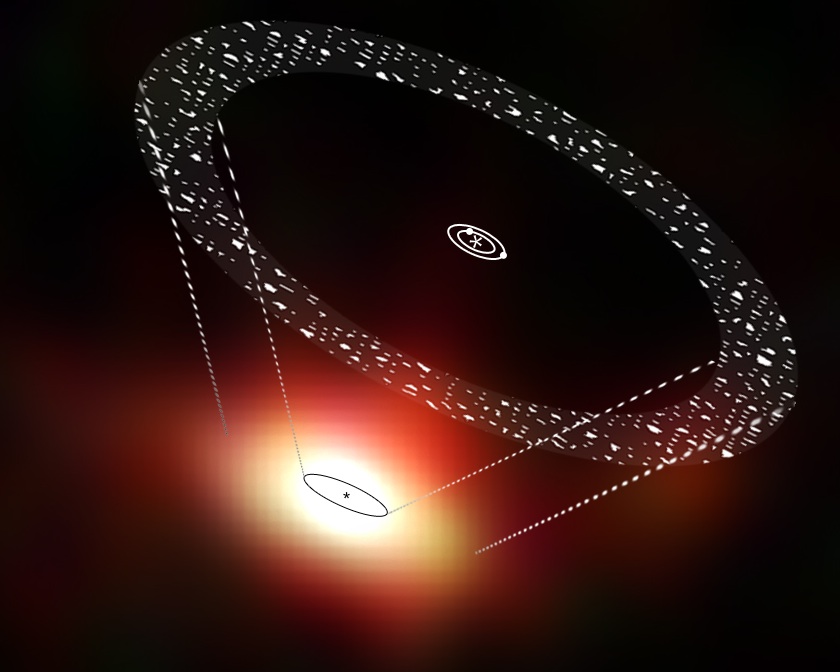
Debris disc around GJ 581
Download:
 Artist impression of the debris disc and planets around the star known as Gliese 581, superimposed on Herschel PACS images at 70, 100 and 160 micrometre wavelengths.
The line drawing superimposed on the Herschel image gives a schematic representation of the location and orientation of the star, planets and disc, albeit not to scale.
The black oval outline sketched onto the Herschel data represents the innermost boundary of the debris disc; the approximate location of the outermost boundary is represented by the outer set of dashed lines. It is not possible to identify the central star due to smearing of the Herschel data.
GJ 581’s planets have masses between 2 and 15 Earth masses and are all located within 0.22 Astronomical Units (AU, where 1 AU is the distance between Earth and our Sun) of the central star. A vast debris disc extends from approximately 25 AU to 60 AU.
Background galaxies are also visible in the Herschel field-of-view. 
Credits: ESA/AOES

Using ESA’s Herschel space observatory, astronomers have discovered vast comet belts surrounding two nearby planetary systems known to host only Earth-to-Neptune-mass worlds. The comet reservoirs could have delivered life-giving oceans to the innermost planets.

In a previous Herschel study, scientists found that the dusty belt surrounding nearby star Fomalhaut must be maintained by collisions between comets.
In the new Herschel study, two more nearby planetary systems – GJ 581 and 61 Vir – have been found to host vast amounts of cometary debris.
Herschel detected the signatures of cold dust at 200ºC below freezing, in quantities that mean these systems must have at least 10 times more comets than in our own Solar System’s Kuiper Belt.
GJ 581, or Gliese 581, is a low-mass M dwarf star, the most common type of star in the Galaxy. Earlier studies have shown that it hosts at least four planets, including one that resides in the ‘Goldilocks Zone’ – the distance from the central sun where liquid surface water could exist.
Two planets are confirmed around G-type star 61 Vir, which is just a little less massive than our Sun.
The planets in both systems are known as ‘super-Earths’, covering a range of masses between 2 and 18 times that of Earth.
Interestingly, however, there is no evidence for giant Jupiter- or Saturn-mass planets in either system. 
http://www.esa.int/images/61VIR_H3.jpg
 Debris disc around 61 Vir
Download:
 Artist’s impression of the debris disc and planets around the star 61 Vir, superimposed on Herschel PACS images at 70, 100 and 160 micrometre wavelengths.
The line drawing superimposed on the Herschel image gives a schematic representation of the location and orientation of the star, planets and disc, albeit not to scale.
The black oval outline sketched onto the Herschel data represents the innermost boundary of the debris disc; the approximate location of the outermost boundary is represented by the outer set of dashed lines. It is not possible to identify the central star due to smearing of the Herschel data.
The two planets around 61 Vir have masses between 5 and 18 Earth masses and are both located within 0.22 Astronomical Units (AU, where 1 AU is the distance between Earth and our Sun) of the central star. A vast debris disc extends from approximately 30 AU to 100 AU. 
Credits: ESA/AOES

The gravitational interplay between Jupiter and Saturn in our own Solar System is thought to have been responsible for disrupting a once highly populated Kuiper Belt, sending a deluge of comets towards the inner planets in a cataclysmic event that lasted several million years.
“The new observations are giving us a clue: they’re saying that in the Solar System we have giant planets and a relatively sparse Kuiper Belt, but systems with only low-mass planets often have much denser Kuiper belts,” says Dr Mark Wyatt from the University of Cambridge, lead author of the paper focusing on the debris disc around 61 Vir.
“We think that may be because the absence of a Jupiter in the low-mass planet systems allows them to avoid a dramatic heavy bombardment event, and instead experience a gradual rain of comets over billions of years.”
“For an older star like GJ 581, which is at least two billion years old, enough time has elapsed for such a gradual rain of comets to deliver a sizable amount of water to the innermost planets, which is of particular importance for the planet residing in the star’s habitable zone,” adds Dr Jean-Francois Lestrade of the Observatoire de Paris who led the work on GJ 581.
However, in order to produce the vast amount of dust seen by Herschel, collisions between the comets are needed, which could be triggered by a Neptune-sized planet residing close to the disc.
“Simulations show us that the known close-in planets in each of these systems cannot do the job, but a similarly-sized planet located much further from the star – currently beyond the reach of current detection campaigns – would be able to stir the disc to make it dusty and observable,” says Dr Lestrade.
“Herschel is finding a correlation between the presence of massive debris discs and planetary systems with no Jupiter-class planets, which offers a clue to our understanding of how planetary systems form and evolve,” says Göran Pilbratt, ESA’s Herschel project scientist.
 Notes for Editors
 ESA
Guillermo Gonzalo Sánchez Achutegui
ayabaca@gmail.com
ayabaca@hotmail.com
ayabaca@yahoo.com

domingo, 18 de noviembre de 2012

ESA - Space Science - Snap the stars to see your photo on ESA portal


Transit of Venus as seen from Canberra, Australia
Download:
Transit of Venus as seen from Canberra, Australia, 2012. 
Credits: Manuel Castillo-Fraile and Miguel Sánchez-Portal

Have you taken an interesting astronomical photo this year? From planets and moons to the Sun, stars and galaxies, we’d like you to send us your images to feature as our Space Science Image of the Week on 31 December.

The ESA Space Science team’s favourite image will take the slot of our weekly image during the week beginning 31 December 2012 as a celebration of the astronomical events of the year gone by. The best of the rest will feature in our dedicated ESA Space Science images Flickr gallery. During 2012, the sky has staged a series of astronomical theatrics to provide plenty of inspiration for your entry. Perhaps you were lucky enough to observe a solar eclipse, or even the transit of Venus. Maybe you snapped a meteor streaking through the sky, or perhaps you found beauty in the constellations this year. Images of galaxies and nebulae are also welcomed. 
 

Totality
Download:
The total solar eclipse of 13/14 November 2012. The clouds cleared in time for observers at Palm Cove, Australia, to experience totality as the Moon totally obscured the Sun for around two minutes, revealing the Sun's bright corona. 
Credits: Anik De Groof

If you would like to participate but have yet to capture the perfect image, here are some upcoming events to spark some ideas:
17/18 November: Leonids meteor shower – watch ‘shooting stars’ rain from the constellation of Leo this weekend as Earth bumps into debris from Comet Tempel-Tuttle.
27 November: conjunction between Venus and the ringed planet Saturn – the two planets meet to within 1º before sunrise for European observers. With an unobstructed horizon, you may also glimpse Mercury.
28 November: penumbral lunar eclipse – watch the Moon enter Earth’s faint outer shadow (beginning 12:14 GMT and ending 16:51 GMT)
3 December: Jupiter at opposition – the gas giant will be at its closest approach to Earth with its face fully illuminated by the Sun, providing ideal conditions to view and photograph the planet with its four Galilean moons.
 We invite you to photograph these events – or review your images taken during 2012 – and submit your best shot to scicom@esa.int by Monday 10 December. Images will be judged mainly on their aesthetic value.
Amateur photographers and astronomers from around the world are encouraged to participate.
Please include your name, contact email address, your geographical location, the date you took the image, the camera/telescope you used, and any imaging/processing details that you would like to share.
The image must have been taken in 2012 and only one entry per person, please.
ESA
Guillermo Gonzalo Sánchez Achutegui
ayabaca@gmail.com
ayabaca@hotmail.com
ayabaca@yahoo.com

domingo, 8 de julio de 2012

Physic: Peter Ware Higgs and that elusive boson

Hi My Friends: AL VUELO DE UN QUINDE EL BLOG., Higgs has been awarded a number of awards in recognition of his work, including the Dirac Medal and Prize for outstanding contributions to theoretical physics from the Institute of Physics, the 1997 High Energy and Particle Physics Prize by the European Physical Society, and the 2004 Wolf Prize in Physics.

Peter Higgs

Peter Ware Higgs (born May 29, 1929), FRSE, FRS, is an emeritus professor at the University of Edinburgh. Higgs is best known for his 1960s proposal of broken symmetry in electroweak theory, explaining the origin of mass of elementary particles in general and of the W and Z bosons in particular. This so-called Higgs mechanism, which had several inventors besides Higgs, predicts the existence of a new particle, the Higgs boson. Although this particle has not turned up in accelerator experiments so far, the Higgs mechanism is generally accepted as an important ingredient in the Standard Model of particle physics. Higgs conceived of the mechanism in 1964 while walking the Cairngorms, and returned to his lab declaring he had his "one big idea".

Higgs has been awarded a number of awards in recognition of his work, including the Dirac Medal and Prize for outstanding contributions to theoretical physics from the Institute of Physics, the 1997 High Energy and Particle Physics Prize by the European Physical Society, and the 2004 Wolf Prize in Physics.

Higgs was born in Newcastle upon Tyne. His father was a sound engineer with the BBC, and as a result of childhood asthma, together with the family moving around because of his father's job, and later the Second World War, Higgs missed some early schooling and was taught at home. When his father relocated to Bedford, Higgs stayed behind with his mother in Bristol, and was largely raised there. He attended that city's Cotham Grammar School, where he was inspired by the work of one of the school's alumni, Paul Dirac, who founded the field of quantum mechanics.

At the age of 17, Higgs moved to City of London School, where he specialized in mathematics, then to King's College London, and in his 30s, to Edinburgh University. It was at Edinburgh that he first became interested in mass, developing the idea that particles were weightless when the universe began, acquiring mass a fraction of a second later, as a result of interacting with a theoretical field now known as the Higgs field. Higgs postulated that this field permeates space, giving all elementary subatomic particles that interact with it their mass. While the Higgs field is postulated to confer mass on quarks and leptons, it represents only a tiny portion of the masses of other subatomic particles, such as protons and neutrons. In these, gluons that bind quarks together confer most of the particle mass.
Large Hadron Collider could unlock secrets of the Big Bang
Richard Gray 06/04/2008
Image from http://www.gridpp.ac.uk/cubes/

The world's largest and most expensive science experiment, the new particle accelerator buried 300ft beneath the Alpine foothills along the Swiss French border is 17 miles long and up to 12 stories high. It is designed to generate temperatures of more than a trillion degrees centigrade. The £4.4 billion machine - the Large Hadron Collider - is aiming to unlock the secrets of how the universe began. Scientists will use it to try to recreate the conditions that existed just a fraction of a second after the Big Bang, the birth of the universe, by smashing pieces of atoms together at high speed.

The Sunday Telegraph joined the scientist Peter Higgs, a professor of particle physics at Edinburgh University, whose 40-year-old theories about an elusive particle known as the Higgs boson may finally be proved as part of the huge experiment, as he toured the site for the first time. This weekend will be the last time visitors will be given access to the tunnel that houses the accelerator ring.  From tomorrow, it will be completely closed off while technicians make the final preparations before it is turned on in July when, it is hoped, it will begin revealing what the matter and energy that created the universe was really like. What happens afterwards could change our understanding of the world. Most experts believe the explosions created when the particles hit each other will reveal the basic building blocks of everything around us. There are some, however, who fear it could destroy the planet.

A lawsuit filed last week by environmentalists in Hawaii is seeking a restraining order preventing the European Nuclear Research Centre from switching it on for fear it could create a black hole that will suck up all life on Earth. "The Large Hadron Collider is like a time machine that is going to take us further back towards the Big Bang than we have ever been before by recreating the conditions that existed there. "We are going to see new types of matter we haven't been able to see before," said Professor Frank Close, a particle physicist at Oxford University. "The idea that it could cause the end of the world is ridiculous."

Housed in a subterranean lair that would provide a suitable home for a Hollywood super-villain, it is hardly surprising there are conspiracy theories surrounding the work being carried out on the collider. The tunnel is large enough to drive a train through and so long that the curve is barely noticeable. To reach it requires a two-minute lift journey from ground level. Down below the scene is a mass of cables, tubes, electronics and metal panels.

Atomic particles will spiral though a series of rings, lined with powerful magnets that will accelerate the particles till they reach close to the speed of light. Each particle will race around the 17-mile route 11,245 times every second before being smashed headlong into each other, breaking them into their component parts, releasing huge amounts of energy and debris. The temperatures produced by these collisions will be 100,000 times hotter than the centre of the sun and scientists believe this will be powerful enough to reveal the first particles that existed in the moments immediately after the birth of the universe.

This massive experiment will create more than 15 million gigabytes of data every year - the equivalent of 21.4 million CDs. The scientists have had to design a new form of the internet to cope with the data. Six separate detectors have been positioned around the collider ring to allow scientists to examine what happens. Among the particles they will hunt for is the Higgs boson, a cornerstone of modern physics that is thought to be responsible for giving every other particle its mass, or weight.

Immediately after the Big Bang all particles are thought to have had no mass. As the temperature cooled, the Higgs boson "stuck" to them, making them heavy. Some particles are more "sticky" than others and so gain more weight. A massive detector known as Atlas is among those that will be hunting for the Higgs boson. As big as Canterbury Cathedral and weighing more than 100 747 jumbo jet aircraft, it is one of the most impressive parts of the collider.

Professor Jonathan Butterworth, a physicist at University College London who is among the UK scientists involved in the Atlas experiment, said: "If we find the Higgs boson then it will prove our standard model of particle physics. "If we don't find it then nature may have another way of giving particles mass and that is going to turn science on its head."

Two elevator rides and a 10-minute car journey away on the other side of the giant accelerator, another part of the experiment, dubbed Alice, will recreate the superheated gas, or plasma, that existed when the universe was formed. The collider may also reveal more exotic phenomena such as anti-matter, the opposite of ordinary matter, mini black holes and even extra dimensions.

"At the level of energy we will be creating normal matter doesn't exist. I expect we will see some things that are entirely new and could turn our current understanding of physics on its head," said Dr David Evans, a physicist from Birmingham University who has been working on the Alice project.

"Answering these new questions will be more exciting than proving theories that already exist."
Information of: Frost's Medidations
Guillermo Gonzalo Sánchez Achutegui
ayabaca@gmail.com
ayabaca@hotmail.com
ayabaca@yahoo.com

jueves, 14 de junio de 2012

Science:First Flight Instrument Delivered For James Webb Space Telescope

Hi My Friends: AL VUELO DE UN QUINDE EL BLOG.,

First Flight Instrument Delivered For James Webb Space Telescope
 
 
WASHINGTON -- The first of four instruments to fly aboard NASA's James Webb Space Telescope (Webb) has been delivered to NASA. The Mid-Infrared Instrument (MIRI) will allow scientists to study cold and distant objects in greater detail than ever before.

MIRI arrived at NASA's Goddard Space Flight Center in Greenbelt, Md., May 29. It has been undergoing inspection before being integrated into Webb’s science instrument payload known as the Integrated Science Instrument Module (ISIM).

Assembled at and shipped from the Science and Technology Facilities Council's Rutherford Appleton Laboratory in the United Kingdom, MIRI was developed by a consortium of 10 European institutions and NASA's Jet Propulsion Laboratory (JPL) in Pasadena, Calif., after having been handed over to the European Space Agency.

MIRI will observe light with wavelengths in the mid-infrared range of 5 microns to 28 microns, which is a longer wavelength than human eyes can detect. It is the only instrument of the four with this particular ability to observe the physical processes occurring in the cosmos.
"MIRI will enable Webb to distinguish the oldest galaxies from more evolved objects that have undergone several cycles of star birth and death," said Matt Greenhouse, ISIM project scientist at Goddard. "MIRI also will provide a unique window into the birth places of stars which are typically enshrouded by dust that shorter wavelength light cannot penetrate."

MIRI's sensitive detectors will allow it to observe light, cool stars in very distant galaxies; unveil newly forming stars within our Milky Way; find signatures of the formation of planets around stars other than our own; and take imagery and spectroscopy of planets, comets and the outermost bits of debris in our solar system. MIRI's images will enable scientists to study an object’s shape and structure.

The most powerful space telescope ever built, Webb is the successor to NASA's Hubble Space Telescope. Webb’s four instruments will reveal how the universe evolved from the Big Bang to the formation of our solar system. Webb is a joint project of NASA, the European Space Agency and the Canadian Space Agency.
What is the James Webb Space Telescope?
The James Webb Space Telescope, also called Webb or JWST, is a large, space-based observatory, optimized for infrared wavelengths, which will complement and extend the discoveries of the Hubble Space Telescope. It will have longer wavelength coverage and greatly improved sensitivity. The longer wavelengths enable Webb to look further back in time to find the first galaxies that formed in the early Universe, and to peer inside dust clouds where stars and planetary systems are forming today.

To view two "Behind the Webb" videos about MIRI, visit:


For more information about the mid- and near-infrared spectrum, visit:
 

For more information about NASA's James Webb Space Telescope, visit:

 
- end -


NASA
Guillermo Gonzalo Sánchez Achutegui
ayabaca@gmail.com 
ayabaca@hotmail.com 
ayabaca@yahoo.com 

domingo, 29 de abril de 2012

Frog: Blood Samples Show Deadly Frog Fungus at Work in the Wild

 Hi My Friends:: AL VUELO DE UN QUINDE EL BLOG., The fungal infection that killed a record number of amphibians worldwide leads to deadly dehydration in frogs in the wild, according to results of a new study.
Mountain yellow-legged frog: Disease has left it high and dry in its aquatic habitat.
Credit and Larger Version

The mountain yellow-legged frog is an amphibian species affected by the chytrid fungus.
Credit and Larger Version
Research site: the Sixty Lakes Basin of Kings Canyon National Park in the Sierra Nevada.
Credit and Larger Version
Scientist Vance Vredenburg is shown with one of the frogs he and his colleagues study.
Credit and Larger Version
An adult female mountain yellow-legged frog with a radio belt for tracking.
Credit and Larger Version

Press Release 12-075
Blood Samples Show Deadly Frog Fungus at Work in the Wild

Pathogen leads to dehydration, other ill effects
The fungal infection that killed a record number of amphibians worldwide leads to deadly dehydration in frogs in the wild, according to results of a new study.
High levels of an aquatic, chytrid fungus called Batrachochytrium dendrobatidis (Bd) disrupt fluid and electrolyte balance in wild frogs, the scientists say, severely depleting the frogs' sodium and potassium levels and causing cardiac arrest and death.
Their findings confirm what researchers have seen in carefully controlled lab experiments with the fungus, but San Francisco State University biologist Vance Vredenburg said the data from wild frogs provide a much better idea of how the disease progresses.
"The mode of death discovered in the lab seems to be what's actually happening in the field," he said, "and it's that understanding that is key to doing something about it in the future."
Results of the study are published today in the journal PLoS ONE.
"Wildlife diseases can be just as devastating to our health and economy as agricultural and human diseases," said Sam Scheiner, NSF program officer for the joint National Science Foundation-National Institutes of Health Ecology and Evolution of Infectious Diseases program, which funded the research.
At NSF, the Directorates for Biological Sciences and Geosciences support the program.
"Bd has been decimating frog and salamander species worldwide, which may fundamentally disrupt natural systems," said Scheiner. "This study is an important advance in our understanding of the disease--a first step in finding a way to reduce its effects."
At the heart of the new study are blood samples drawn from mountain yellow-legged frogs by Vredenburg and colleagues in 2004, as the chytrid epidemic swept through California's Sierra Nevada mountains.
"It's really rare to be able to study physiology in the wild like this, at the exact moment of a disease outbreak," said University of California, Berkeley ecologist Jamie Voyles, the lead author of the paper.
Unfortunately, it is a study that can't be duplicated--at least not in the Sierra Nevada.
Frog populations there have been devastated by chytrid, declining by 95 percent after the fungus was first detected in 2004.
"It's been really sad to walk around the basins and think, 'wow, they're really all gone,'" Vredenburg said.
The chytrid fungus attacks an amphibian's skin, causing it to become up to 40 times thicker in some instances.
Since frogs depend on their skin to absorb water and essential electrolytes like sodium from their environment, Voyles and her colleagues knew that the fungus would disrupt fluid balances in the infected amphibians.
But they were surprised to find that electrolyte levels were much lower than anticipated. "It's clear that this fungus has a profound effect in the wild," Voyles said.
Scientists want to learn as much as they can about how the fungus affects wild amphibians, with the hope that these findings will lead to better treatments for the infection.
"The chytrid fungus is causing these frogs to become severely dehydrated, even though they are literally surrounded by water," said Cheryl Briggs, a University of California, Santa Barbara biologist and co-author of the paper.
The new study suggests that individual frogs being treated for the infection might benefit from having electrolyte supplementation in the advanced stages of the disease.
Researchers like Vredenburg already are experimenting with different ways of treating individual frogs, such as applying antifungal therapies or inoculating the frogs with "probiotic" bacteria that produce a compound that kills the fungus.
"The disease is not very hard to treat in the lab with antifungals," Vredenburg said. "But in nature, the disease is still a moving target."
It is still unclear exactly how chytrid spreads across a region, and which frogs might be susceptible to re-infection after treatment.
Earlier this year, Vredenburg and colleagues showed that a common North American frog might be an important carrier of the infection.
The chytrid fungus has killed off more than 200 amphibian species across the globe, but Voyles said the research offers "a glimmer of hope that it might be possible to do something to mitigate the loss."
Other co-authors of the paper are Tate Tunstall and Erica Bree Rosenblum of UC Berkeley, and John Parker of University of California, San Francisco.
-NSF-
Guillermo Gonzalo Sánchez Achutegui

jueves, 23 de febrero de 2012

Science: Evolution of Earliest Horses Driven by Climate Change

Hi My Friends: AL VUELO DE UN QUINDE EL BLOG., When Sifrhippus sandae, the earliest known horse, first appeared in the forests of North America more than 50 million years ago, it would not have been mistaken for a Clydesdale. An artist's reconstruction of a modern horse compared with Sifrhippus.
Credit: Danielle Byerley, UFL

Teeth of Sifrhippus at its larger size with teeth from the same species after its size shrank.
Credit: Kristen Grace, UFL


When Sifrhippus sandae, the earliest known horse, first appeared in the forests of North America more than 50 million years ago, it would not have been mistaken for a Clydesdale.

It weighed in at around 12 pounds--and it was destined to get much smaller over the ensuing millennia.

Sifrhippus lived during the Paleocene-Eocene Thermal Maximum (PETM), a 175,000-year interval of time some 56 million years ago in which average global temperatures rose by about 10 degrees Fahrenheit.

The change was caused by the release of vast amounts of carbon into the atmosphere and oceans.

About a third of mammal species responded with a significant reduction in size during the PETM, some by as much as one-half.

Sifrhippus shrank by about 30 percent, to the size of a small house cat--about 8.5 pounds--in the PETM's first 130,000 years, then rebounded to about 15 pounds in the final 45,000 years of the PETM.

Scientists have assumed that rising temperatures or high concentrations of carbon dioxide primarily caused the "dwarfing" phenomenon in mammals during this period.

New research led by Ross Secord of the University of Nebraska-Lincoln and Jonathan Bloch of the Florida Museum of Natural History at the University of Florida offers evidence of the cause-and-effect relationship between temperature and body size.

Their findings also provide clues to what might happen to animals in the near future from global warming.

In a paper published in this week's issue of the journal Science, Secord, Bloch and colleagues used measurements and geochemical composition of fossil mammal teeth to document a progressive decrease in Sifrhippus' body size that correlates very closely to temperature change over a 130,000-year span.

"The reduction in available oxygen some 50 million years ago led to a reduction in the body size of animal life," says H. Richard Lane, program director in the National Science Foundation's (NSF) Division of Earth Sciences, which funded the research. "What does that say about the future for Earth's animals?"

Bloch said that multiple trails led to the discovery.

One was the fossils themselves, recovered from the Cabin Fork area of the southern Bighorn Basin near Worland, Wyo.

Stephen Chester at Yale, a paper co-author, had the task of measuring the horses' teeth.

What he found when he plotted them through time caught Bloch and Secord by surprise.

"He pointed out that the first horses in the section were much larger than those later on," Bloch says. "I thought something had to be wrong, but he was right and the pattern became more robust as we collected more fossils."

Secord performed the geochemical analysis of the teeth. What he found was an even bigger surprise.

"It was absolutely startling when Ross pulled up the data," Bloch said. "We realized that it was exactly the same pattern that we were seeing with the horse body.

"For the first time, going back into deep time--tens of millions of years--we were able to show that indeed temperature was causing essentially a one-to-one shift in body size in this lineage of horse.

"Because it's over a long enough time, you can argue very strongly that what you're looking at is natural selection and evolution that it's actually corresponding to the shift in temperature and driving the evolution of these horses."

Secord says that the finding raises important questions about how plants and animals will respond to rapid change in the not-too-distant future.

"This has implications for what we might expect to see over the next century or two with climate models that are predicting warming of as much as 4 degrees Centigrade over the next 100 years," he says, which is 7 degrees Fahrenheit.

Those predictions are based largely on the 40 percent increase of atmospheric carbon dioxide levels, from 280 to 392 parts per million, since the start of the Industrial Revolution in the mid-19th century.

Ornithologists, Secord says, have already started to notice that there may be a decrease in body size among birds.

"One of the issues is that warming during the PETM happened much more slowly, over 10,000 to 20,000 years to increase by 10 degrees, whereas now we're expecting it to happen over a century or two."

"So there's a big difference in scale. One of the questions is, 'Are we going to see the same kind of response?' Are animals going to be able to keep up and readjust their body sizes over the next couple of centuries?"

Increased temperatures are not the only change to which animals may have to adapt.

Experiments show that increased atmospheric carbon dioxide lowers the nutritional content of plants, which could have been a secondary driver of dwarfism during the PETM.

Other co-authors of the paper are Doug Boyer of Brooklyn College, Aaron Wood of the Florida Museum of Natural History, Scott Wing of the Smithsonian National Museum of Natural History, Mary Kraus of the University of Colorado-Boulder, Francesca McInerny of Northwestern University and John Krigbaum of the University of Florida.

The research was also funded by University of Nebraska-Lincoln.
-NSF-
Guillermo Gonzalo Sánchez Achutegui
ayabaca@gmail.com
ayabaca@hotmail.com
ayabaca@yahoo.com

Science: A Biodiversity Discovery That Was Waiting in the Wings--Wasp Wings, That Is

Hi My Friends: AL VUELO DE UN QUINDE EL BLOG., Study of wing sizes of two wasp species helps explain huge diversity of shapes and sizes of organisms in nature Two species of tiny Nasonia wasps used to analyze different species wing sizes.
Credit and Larger Version


From spaghetti-like sea anemones to blobby jellyfish to filigreed oak trees, each species in nature is characterized by a unique size and shape. But the evolutionary changes that produce the seemingly limitless diversity of shapes and sizes of organisms on Earth largely remains a mystery. Nevertheless, a better understanding of how cells grow and enable organisms to assume their characteristic sizes and shapes could shed light on diseases that involve cell growth, including cancer and diabetes.

Providing new information about the evolution of the diversity of sizes and shapes in nature is a study identifying genetic differences between two closely related species of Nasonia wasps. These differences give males of one of the Nasonia species small flightless wings and the males of the other Nasonia species flight-worthy wings that are twice as large.

Jack Werren and David Loehlin at the University of Rochester led the research. (Loehlin is now a post-doc at the University of Wisconsin-Madison). Funded by the National Science Foundation (NSF), this week's issue of Science covers the research.

The research team identified the chromosomal location of the gene responsible for wing size in each of the two Nasonia species, the differences between the DNA sequences of these genes, as well as regulatory controls that determine when, where and how long each species' growth gene is turned on.

These genetic differences alter both the locations of growth centers in the wings and the timing of growth during Nasonia development--factors that give each species its distinct wing size. As evidence that the identified genes control wing size, the researchers nearly doubled the wing size of the small-winged species by cross-breeding into it the gene from the big-winged species.

Interestingly, Loehlin says the team's results indicate multiple genetic changes caused the differences in Nasonia wing size-changes, and these changes may have occurred incrementally. "It is possible that the diversity of size and shape differences between other animal species have similar origins in regulator DNA. And the gene we identified is thought to control growth in many other animals, including people."

The researchers suspect that the small winged Nasonia species evolved from the big-winged species, but it is also possible that the two species evolved in the opposite order.

"Understanding the types of changes in DNA that are responsible for evolution is critical to unraveling the causes of life's diversity," says Samuel Scheiner, a program director at NSF. "The recent explosion of new tools for DNA sequencing is now allowing this understanding. This study demonstrates that changes in gene regulation can be important for such evolution."

The two studied species of Nasonia wasps were chosen for this research because their close genetic relationship coupled with the large difference in their wing sizes makes genetic comparisons between them particularly easy. Nasonia wasps have become a model system for studying evolution because their genetics and breeding system simplify the identification of genetic changes behind complex traits.
-NSF-
Guillermo Gonzalo Sánchez Achutegui
ayabaca@gmail.com


viernes, 17 de febrero de 2012

Science: The Depths of Winter: How Much Snow Is In Fact On the Ground?

Hi My Friends: AL VUELO DE UN QUINDE EL BLOG., Transportation crews, water managers and others who make vital safety decisions need precise measurements of how snow depth varies across wide areas.
Stellar dendrites are tree-like snow crystals that have branches upon branches.
Credit: Kenneth Libbrecht, Caltech

Stellar plate snow crystals have ridges that point to corners between adjacent prism facets.

Credit: Kenneth Libbrecht, Caltech Plate-like snowflakes form when it's near -2 degrees C (or 28 F), or near -15 C (5 F).

Credit: Kenneth Libbrecht, Caltech


Equipped with specialized lasers and GPS technology, scientists are working to address a critical wintertime weather challenge: how to accurately measure the amount of snow on the ground.
Transportation crews, water managers and others who make vital safety decisions need precise measurements of how snow depth varies across wide areas.
But traditional measuring devices such as snow gauges and yardsticks are often inadequate for capturing snow totals that may vary even within a single field or neighborhood.
Now scientists at the National Center for Atmospheric Research (NCAR) in Boulder, Colo., and at other institutions are finding that prototype devices that use light pulses, satellite signals and other technologies offer the potential to almost instantly measure large areas of snow.
In time, such devices might provide a global picture of snow depth.
"We've been measuring rain accurately for centuries, but snow is much harder because of the way it's affected by wind and sun and other factors," says NCAR researcher Ethan Gutmann.
"It looks like new technology, however, will finally give us the ability to say exactly how much snow is on the ground."
NCAR is conducting the effort with several collaborating organizations, including the National Oceanic and Atmospheric Administration (NOAA) and the University of Colorado Boulder.
The work is supported by NCAR's sponsor, the National Science Foundation (NSF).
"Snow represents both a hazard and a water resource in the western states," says Thomas Torgersen, NSF program director for hydrologic sciences. "Both require detailed assessments of snow amounts and depth. This technology will provide new and important guidance."
Emergency managers rely on snowfall measurements when mobilizing snow plows or deciding whether to shut down highways and airports during major storms.
They also use snow totals when determining whether a region qualifies for disaster assistance.
In mountainous areas, officials need accurate reports of snowpack depth to assess the threat of avalanches or floods, and to anticipate the amount of water available from spring and summer runoff.
But traditional approaches to measuring snow can greatly underreport or overreport snow totals, especially in severe conditions.
Snow gauges may miss almost a third of the snow in a windy storm, even when they are protected by specialized fencing designed to cut down on the wind's effects.
Snow probes or yardsticks can reveal snow depth within limited areas. But such tools require numerous in-person measurements at different locations, a method that may not keep up with totals during heavy snowfalls.
Weather experts also sometimes monitor the amount of snow that collects on flat, white pieces of wood known as snow boards, but this is a time-intensive approach that requires people to check the boards and clear them off every few hours.
The nation's two largest volunteer efforts--the National Weather Service's Cooperative Observer Program, and the Community Collaborative Rain, Hail, and Snow Network (CoCoRaHS)--each involve thousands of participants nationwide using snow boards, but their reports are usually filed just once a day.
More recently, ultrasonic devices have been deployed in some of the world's most wintry regions.
Much like radar, these devices measure the length of time needed for a pulse of ultrasonic energy to bounce off the surface of the snow and return to the transmitter.
However, the signal may be affected by shifting atmospheric conditions, including temperature, humidity and winds.
The specialized laser instruments under development at NCAR can correct for such problems.
Once set up at a location, they can automatically measure snow depth across large areas. Unlike ultrasonic instruments, lasers rely on light pulses that are not affected by atmospheric conditions.
New tests by Gutmann indicate that a laser instrument installed high above treeline in the Rocky Mountains west of Boulder can measure 10 feet or more of snow with an accuracy as fine as half an inch or better.
In a little more than an hour, the instrument measures snow at more than 1,000 points across an area almost the size of a football field to produce a three-dimensional image of the snowpack and its variations in depth.
Gutmann's next step will be to build and test a laser instrument that can measure snow over several square miles. Tracking such a large area would require a new instrument capable of taking more than 12,000 measurements per second.
"If we're successful, these types of instruments will reveal a continually-updated picture of snow across an entire basin," he says.
One limitation for the lasers, however, is that light pulses cannot penetrate through objects such as trees and buildings.
This could require development of networks of low-cost laser installations that would each record snow depths within a confined area.
Alternatively, future satellites equipped with such lasers might be capable of mapping the entire world from above.
Gutmann and Kristine Larson, a scientist at the University of Colorado, are also exploring how to use GPS sensors for snowfall measurements.
GPS sensors record satellite signals that reach them directly and signals that bounce off the ground.
When there is snow on the ground, the GPS signal bounces off the snow with a different frequency than when it bounces off bare soil, enabling scientists to determine how high the surface of the snow is above the ground.
Such units could be a cost-effective way of measuring snow totals; meteorologists could tap into the existing global network of ground-based GPS receivers.
However, researchers are seeking to fully understand how the density of the snow and the roughness of its surface alter GPS signals.
"Our hope is to develop a set of high-tech tools that will enable officials to continually monitor snow depth, even during an intense storm," Larson says.
"While we still have our work cut out for us, the technology is very promising."
-NSF-
Media Contacts

Cheryl Dybas, NSF (703) 292-7734 cdybas@nsf.gov

David Hosansky, NCAR (303) 497-8611 hosansky@ucar.edu

Guillermo Gonzalo Sínchez Achutegui