Mostrando entradas con la etiqueta Space. Mostrar todas las entradas

domingo, 2 de junio de 2013

ESA - Image of the week: Crete


EARTH FROM SPACE: CRETE
31 May 2013
This image shows northwestern Crete, the largest and most populous of the Greek islands, some 250 km long and 40 km wide.
Crete, which separates the Aegean and Libyan Seas in the eastern Mediterranean, is home to numerous beaches, fertile plateaus, caves and high mountains.
The island’s economy is predominantly based on agriculture, with significant vineyards, olive groves and citrus crops. Dairy is also very important, with a variety of sheep and goat cheeses available.
In the lower-right, the bright cluster of radar reflections on the northern coast is the city of Chania, the island’s second largest city after Heraklion (not pictured).
At the centre of the image is the Rodopou Peninsula. It is about 8 km long and 5 km wide. While the southern part of the peninsula is dotted with small villages, the northern part is practically uninhabited barring the shepherds.
Off the coast of the other peninsula to the left there are two small islands: Imeri Gramvousa to the south and Agria Gramvousa due north. Both are uninhabited, but the southern island hosts ruins of a Venetian fort and structures of Cretan insurgents in the 1820s – who resorted to piracy to survive.
This image is a compilation of three radar images from Japan’s ALOS satellite acquired on 28 August 2010, 13 October 2010 and the third band created by combining the other two.
This image is featured on the Earth from Space video programme.
ESA
Guillermo Gonzalo Sánchez Achutegui
ayabaca@gmail.com
ayabaca@hotamil.com
ayabaca@yahoo.com

miércoles, 22 de mayo de 2013

NASA - Herschel Space Observatory Finds Mega Merger of Galaxies

Herschel Space Observatory Finds Galaxy Mega Merger

 This simulation shows the merging of two massive galaxies, sped up to cover 1.5 billion years of time. The merging galaxies are split into two views: a visible-light view is on the left, in which blue shows young stars and red indicates older stars and dust. The view at right shows emission from dust, which is what infrared telescopes like the Herschel Space Observatory see. When the galaxies finally merge, the strong burst of star formation can be seen best in infrared views.    

The making of a giant galaxy 
Several telescopes have teamed up to discover a rare and massive merging of two galaxies that took place when the universe was just 3 billion years old (its current age is about 14 billion years). Image credit: ESA/NASA/JPL-Caltech/UC Irvine/STScI/Keck/NRAO/SAO
› Full image and caption

PASADENA, Calif. - A massive and rare merging of two galaxies has been spotted in images taken by the Herschel space observatory, a European Space Agency mission with important NASA participation.
Follow-up studies by several telescopes on the ground and in space, including NASA's Hubble Space Telescope and Spitzer Space Telescope, tell a tale of two faraway galaxies intertwined and furiously making stars. Eventually, the duo will settle down to form one super-giant elliptical galaxy.
The findings help explain a mystery in astronomy. Back when our universe was 3 billion to 4 billion years old, it was populated with large reddish elliptical-shaped galaxies made up of old stars. Scientists have wondered whether those galaxies built up slowly over time through the acquisitions of smaller galaxies, or formed more rapidly through powerful collisions between two large galaxies.
The new findings suggest massive mergers are responsible for the giant elliptical galaxies.
"We're looking at a younger phase in the life of these galaxies -- an adolescent burst of activity that won't last very long," said Hai Fu of the University of California at Irvine, who is lead author of a new study describing the results. The study is published in the May 22 online issue of Nature.
"These merging galaxies are bursting with new stars and completely hidden by dust," said co-author Asantha Cooray, also of the University of California at Irvine. "Without Herschel's far-infrared detectors, we wouldn't have been able to see through the dust to the action taking place behind."
Herschel, which operated for almost four years, was designed to see the longest-wavelength infrared light. As expected, it recently ran out of the liquid coolant needed to chill its delicate infrared instruments. While its mission in space is over, astronomers still are scrutinizing the data, and further discoveries are expected.
In the new study, Herschel was used to spot the colliding galaxies, called HXMM01, located about 11 billion light-years from Earth, during a time when our universe was about 3 billion years old. At first, astronomers thought the two galaxies were just warped, mirror images of one galaxy. Such lensed galaxies are fairly common in astronomy and occur when the gravity from a foreground galaxy bends the light from a more distant object. After a thorough investigation, the team realized they were actually looking at a massive galaxy merger.
Follow-up characterization revealed the merging galaxies are churning out the equivalent of 2,000 stars a year. By comparison, our Milky Way hatches about two to three stars a year. The total number of stars in both colliding galaxies averages out to about 400 billion.
Mergers are fairly common in the cosmos, but this particular event is unusual because of the prolific amounts of gas and star formation, and the sheer size of the merger at such a distant epoch.
The results go against the more popular model explaining how the biggest galaxies arise: through minor acquisitions of small galaxies. Instead, mega smash-ups may be doing the job.
NASA's Herschel Project Office is based at the agency's Jet Propulsion Laboratory in Pasadena, Calif., which contributed mission-enabling technology for two of Herschel's three science instruments. JPL is a division of the California Institute of Technology, Pasadena.
For more information about Herschel, 
 NASA
Guillermo Gonzalo Sánchez Achutegui
ayabaca@gmail.com
ayabaca@hotmail.com
ayabaca@yahoo.com

domingo, 18 de noviembre de 2012

ESA - Space Science - Snap the stars to see your photo on ESA portal


Transit of Venus as seen from Canberra, Australia
Download:
Transit of Venus as seen from Canberra, Australia, 2012. 
Credits: Manuel Castillo-Fraile and Miguel Sánchez-Portal

Have you taken an interesting astronomical photo this year? From planets and moons to the Sun, stars and galaxies, we’d like you to send us your images to feature as our Space Science Image of the Week on 31 December.

The ESA Space Science team’s favourite image will take the slot of our weekly image during the week beginning 31 December 2012 as a celebration of the astronomical events of the year gone by. The best of the rest will feature in our dedicated ESA Space Science images Flickr gallery. During 2012, the sky has staged a series of astronomical theatrics to provide plenty of inspiration for your entry. Perhaps you were lucky enough to observe a solar eclipse, or even the transit of Venus. Maybe you snapped a meteor streaking through the sky, or perhaps you found beauty in the constellations this year. Images of galaxies and nebulae are also welcomed. 
 

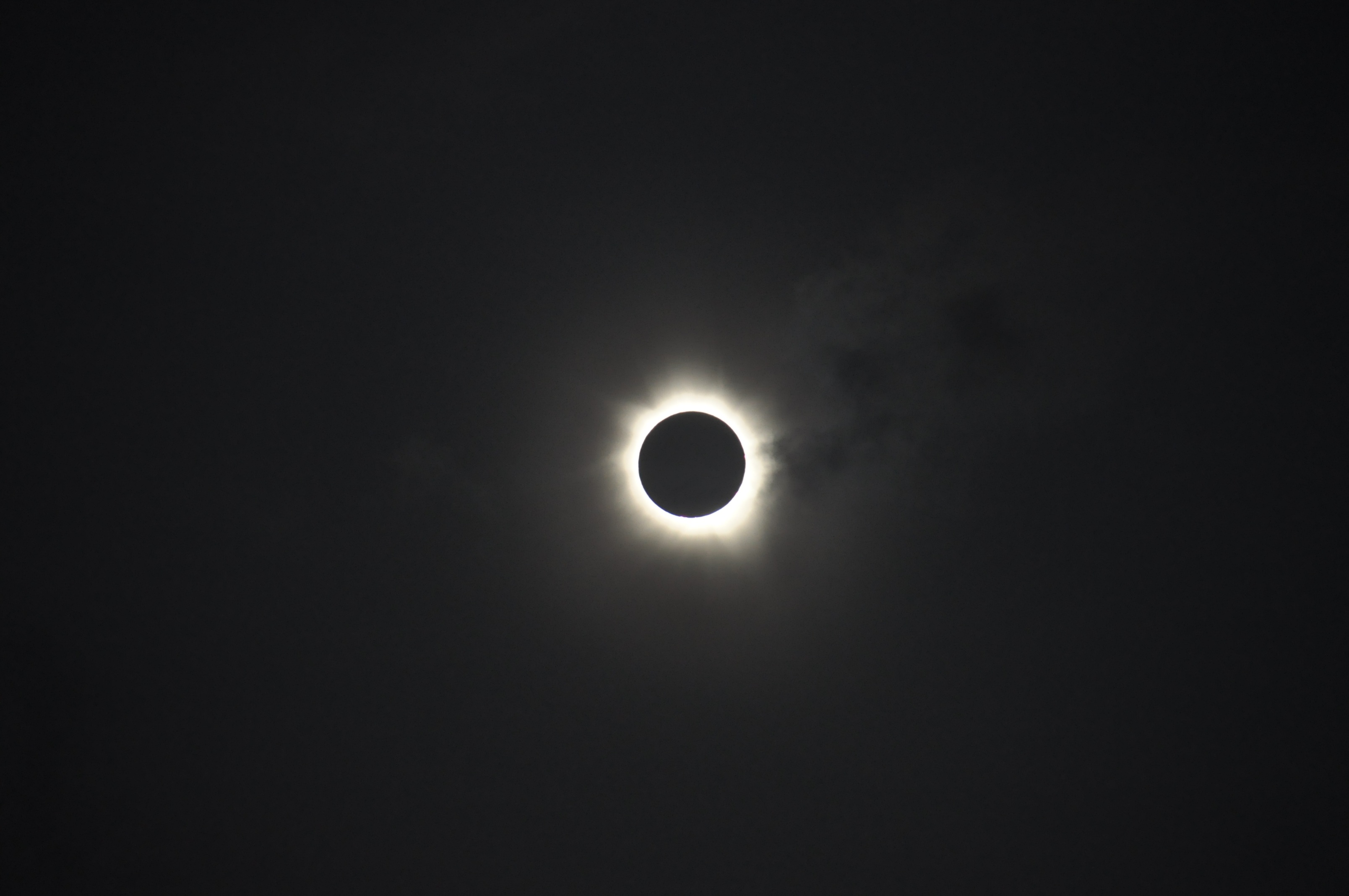
Totality
Download:
The total solar eclipse of 13/14 November 2012. The clouds cleared in time for observers at Palm Cove, Australia, to experience totality as the Moon totally obscured the Sun for around two minutes, revealing the Sun's bright corona. 
Credits: Anik De Groof

If you would like to participate but have yet to capture the perfect image, here are some upcoming events to spark some ideas:
17/18 November: Leonids meteor shower – watch ‘shooting stars’ rain from the constellation of Leo this weekend as Earth bumps into debris from Comet Tempel-Tuttle.
27 November: conjunction between Venus and the ringed planet Saturn – the two planets meet to within 1º before sunrise for European observers. With an unobstructed horizon, you may also glimpse Mercury.
28 November: penumbral lunar eclipse – watch the Moon enter Earth’s faint outer shadow (beginning 12:14 GMT and ending 16:51 GMT)
3 December: Jupiter at opposition – the gas giant will be at its closest approach to Earth with its face fully illuminated by the Sun, providing ideal conditions to view and photograph the planet with its four Galilean moons.
 We invite you to photograph these events – or review your images taken during 2012 – and submit your best shot to scicom@esa.int by Monday 10 December. Images will be judged mainly on their aesthetic value.
Amateur photographers and astronomers from around the world are encouraged to participate.
Please include your name, contact email address, your geographical location, the date you took the image, the camera/telescope you used, and any imaging/processing details that you would like to share.
The image must have been taken in 2012 and only one entry per person, please.
ESA
Guillermo Gonzalo Sánchez Achutegui
ayabaca@gmail.com
ayabaca@hotmail.com
ayabaca@yahoo.com