Mostrando entradas con la etiqueta Canberra. Mostrar todas las entradas

jueves, 13 de marzo de 2014

NASA - Space Communications Antenna Supported Early NASA Missions


Space Communications Antenna Supported Early NASA Missions
This 26 meter (85 foot) antenna operated in Woomera (Island Lagoon), Australia at Deep Space Station (DSS) 41, established in August 1960. The Island Lagoon site was the first deep space station to be established outside the United States and the first Australian antenna NASA built. The station was operated by the Australian Department of Supply and helped support the Ranger and early Mariner missions, as well as communications from the Deep Space Network (DSN) complex in Goldstone, California via a moon bounce. Woomera’s antenna ceased operations in 1972.
Today, the Deep Space Network -- consisting of three sites in Goldstone, California; Madrid, Spain; and Canberra, Australia -- supports space communications for NASA and non-NASA missions that explore the furthest points of our solar system. Each complex currently has a 70 meter (230 foot) antenna, one 34 meter (111 foot) High Efficiency (HEF) antenna, and one or more 34 meter Beam Wave Guide (BWG) antenna. The Deep Space Network is operated 24 hours a day, seven days a week, 365 days per year. To support future mission needs, construction is currently underway in Canberra, Australia to add two new 34 meter BWG antennas, Deep Space Station 35 (DSS-35) and DSS-36 by 2018.
Image Credit: NASA
NASA
Guillermo Gonzalo Sánchez Achutegui
ayabaca@gmail.com
ayabaca@hotmail.com
ayabaca@yahoo.com

domingo, 18 de noviembre de 2012

ESA - Space Science - Snap the stars to see your photo on ESA portal


Transit of Venus as seen from Canberra, Australia
Download:
Transit of Venus as seen from Canberra, Australia, 2012. 
Credits: Manuel Castillo-Fraile and Miguel Sánchez-Portal

Have you taken an interesting astronomical photo this year? From planets and moons to the Sun, stars and galaxies, we’d like you to send us your images to feature as our Space Science Image of the Week on 31 December.

The ESA Space Science team’s favourite image will take the slot of our weekly image during the week beginning 31 December 2012 as a celebration of the astronomical events of the year gone by. The best of the rest will feature in our dedicated ESA Space Science images Flickr gallery. During 2012, the sky has staged a series of astronomical theatrics to provide plenty of inspiration for your entry. Perhaps you were lucky enough to observe a solar eclipse, or even the transit of Venus. Maybe you snapped a meteor streaking through the sky, or perhaps you found beauty in the constellations this year. Images of galaxies and nebulae are also welcomed. 
 

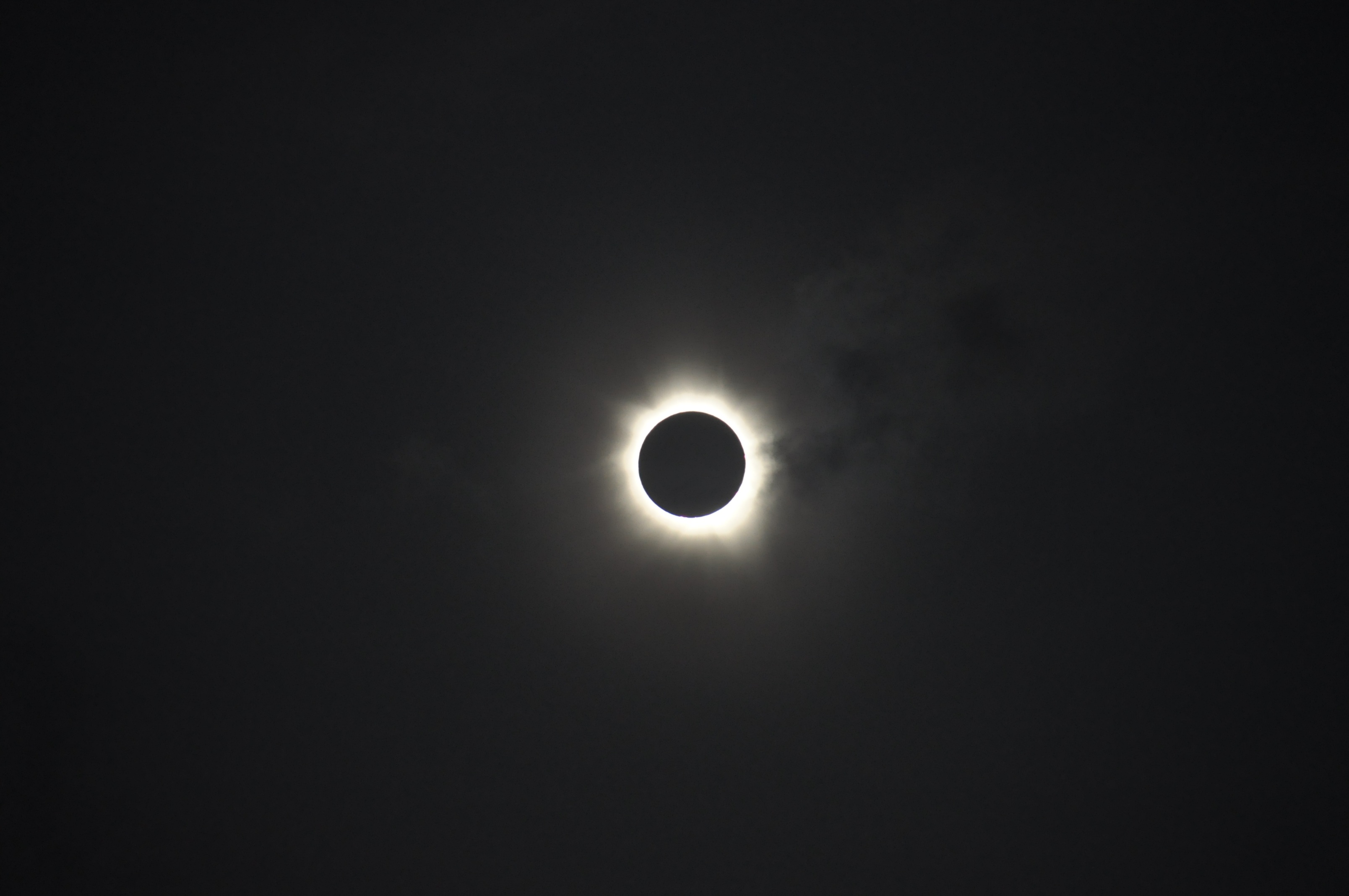
Totality
Download:
The total solar eclipse of 13/14 November 2012. The clouds cleared in time for observers at Palm Cove, Australia, to experience totality as the Moon totally obscured the Sun for around two minutes, revealing the Sun's bright corona. 
Credits: Anik De Groof

If you would like to participate but have yet to capture the perfect image, here are some upcoming events to spark some ideas:
17/18 November: Leonids meteor shower – watch ‘shooting stars’ rain from the constellation of Leo this weekend as Earth bumps into debris from Comet Tempel-Tuttle.
27 November: conjunction between Venus and the ringed planet Saturn – the two planets meet to within 1º before sunrise for European observers. With an unobstructed horizon, you may also glimpse Mercury.
28 November: penumbral lunar eclipse – watch the Moon enter Earth’s faint outer shadow (beginning 12:14 GMT and ending 16:51 GMT)
3 December: Jupiter at opposition – the gas giant will be at its closest approach to Earth with its face fully illuminated by the Sun, providing ideal conditions to view and photograph the planet with its four Galilean moons.
 We invite you to photograph these events – or review your images taken during 2012 – and submit your best shot to scicom@esa.int by Monday 10 December. Images will be judged mainly on their aesthetic value.
Amateur photographers and astronomers from around the world are encouraged to participate.
Please include your name, contact email address, your geographical location, the date you took the image, the camera/telescope you used, and any imaging/processing details that you would like to share.
The image must have been taken in 2012 and only one entry per person, please.
ESA
Guillermo Gonzalo Sánchez Achutegui
ayabaca@gmail.com
ayabaca@hotmail.com
ayabaca@yahoo.com