Abu Dabi, 17 mar (EFEVERDE).- La mayor planta termosolar
del mundo fue inaugurada hoy en Abu Dabi, en un proyecto con un coste
de 2.200 millones de dirhams (unos 600 millones de dólares), en el que
participa la compañía española Abengoa.
La planta, bautizada como Shams 1 (sol 1), fue inaugurada por
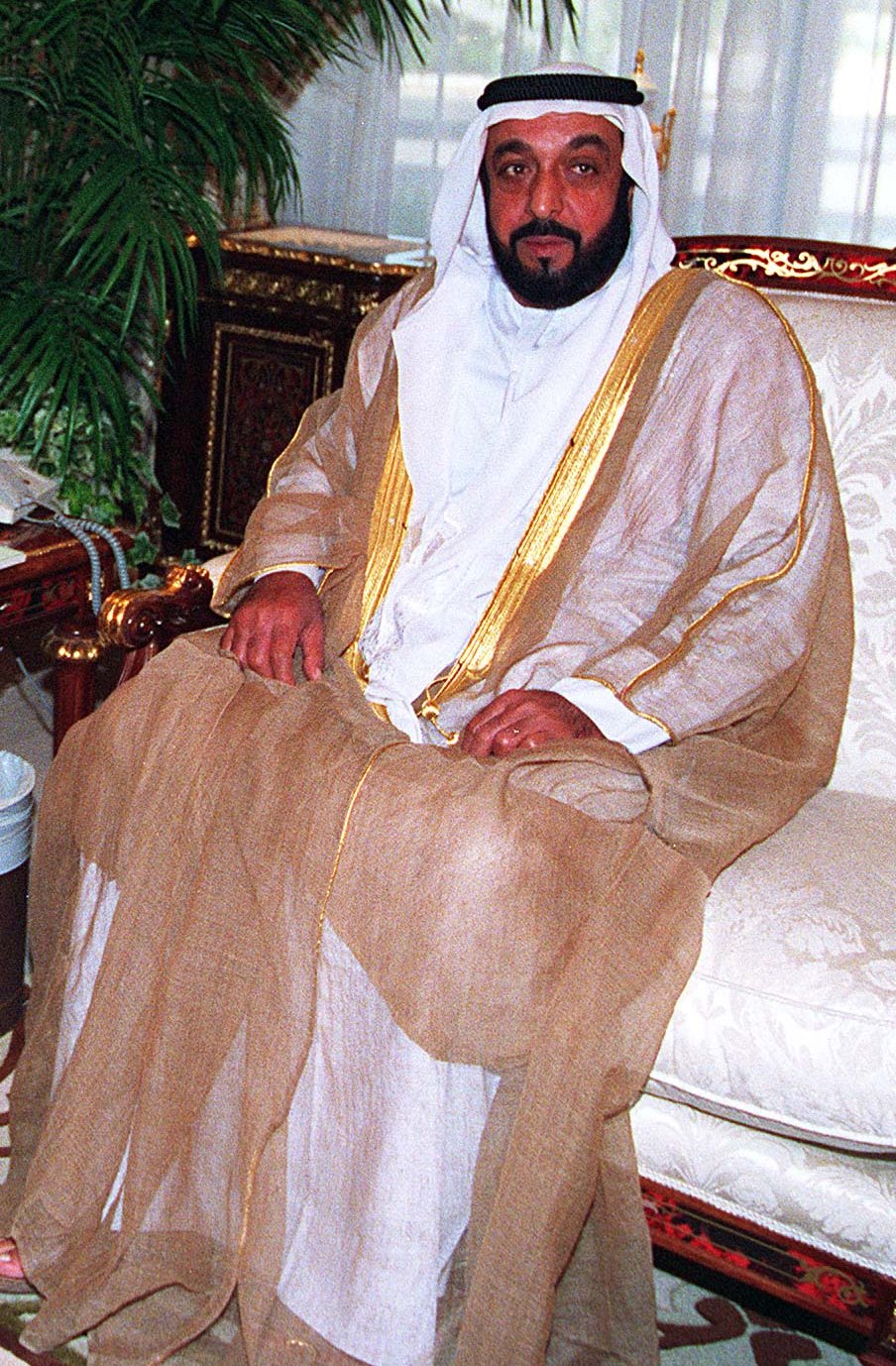
el presidente emiratí, jeque Jalifa bin Zayed al Nahyan, en una zona
desértica en el oeste del emirato (uno de los siete que componen los
Emiratos Árabes Unidos), cerca de la localidad Medinat Zayed, según un
comunicado.
Nahyan afirmó durante el acto que la planta Shams 1
"representa un paso importante en el camino de Emiratos hacia una
economía diversificada y una energía segura a largo plazo".
La
planta ha sido construida durante tres años por un consorcio
internacional, integrado por la emiratí Masdar (60 %), la francesa Total
(20 %) y la española Abengoa (20 %). Esta "joint venture" se encargará
de operar el centro y de su mantenimiento.
El presidente de
Abengoa Solar, Santiago Seage, afirmó que "Oriente Medio posee casi la
mitad del potencial mundial de energías renovables", según el
comunicado.
"La abundancia de energía solar ofrece la oportunidad
de integrar fuentes de energías limpias y sostenibles que aumentan la
seguridad energética y ayudan a luchar contra el cambio climático. La
región necesita más proyectos como Shams, y nosotros esperamos
contribuir a desarrollar estar energías en el futuro", agregó.
La
planta se extiende por una superficie de 2,5 kilómetros cuadrados y con
768 colectores cilindroparabólicos, tiene capacidad de producir 100
megavatios de energía limpia.
Se espera que la planta sea capaz de
suplir las necesidades de unos 20.000 hogares, en un intento de los EAU
de diversificar sus fuentes de energía. EFEverde
| Masdar City | 2010.06.12 |
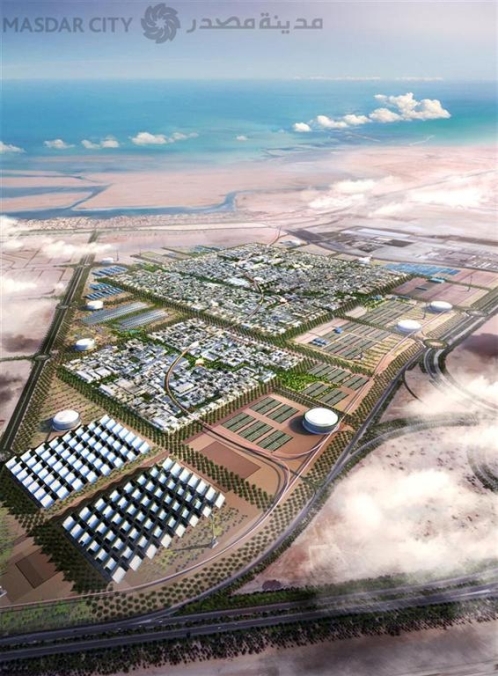
Masdar
City is an emerging global clean-technology cluster located in what aims
to be one of the world's most sustainable urban developments powered by
renewable energy. This US$22 billion free zone located about 17km from
downtown Abu Dhabi will eventually be home to companies, researchers,
and academics from across the globe, creating an international hub for
companies and organisations focused on renewable energy and clean
technologies.
 |
|
MASDAR City Concept
Photo: MASDAR |
|
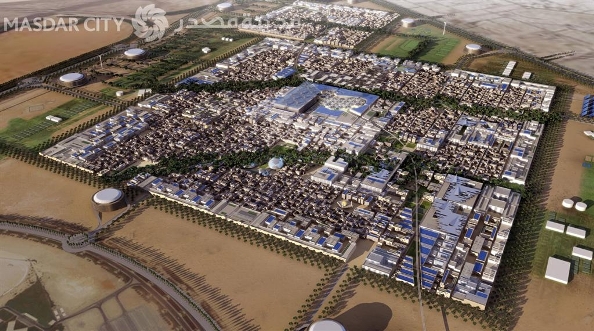
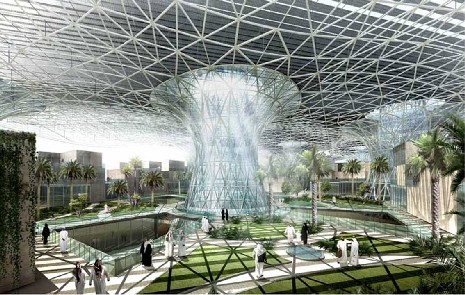
Masdar City is an emerging global clean-technology
cluster located in what aims to be one of the world’s most sustainable
urban development’s powered by renewable energy.
This US$22 billion free zone located about 17km from downtown Abu Dhabi will eventually be home to companies, researchers, and academics from across the globe, creating an international hub for companies and organisations focused on renewable energy and clean technologies.
It is a city where current and future technologies will be funded, researched, developed, tested and commercialised.
This US$22 billion free zone located about 17km from downtown Abu Dhabi will eventually be home to companies, researchers, and academics from across the globe, creating an international hub for companies and organisations focused on renewable energy and clean technologies.
It is a city where current and future technologies will be funded, researched, developed, tested and commercialised.
 |
|
MASDAR City Concept
Photo: MASDAR |
|
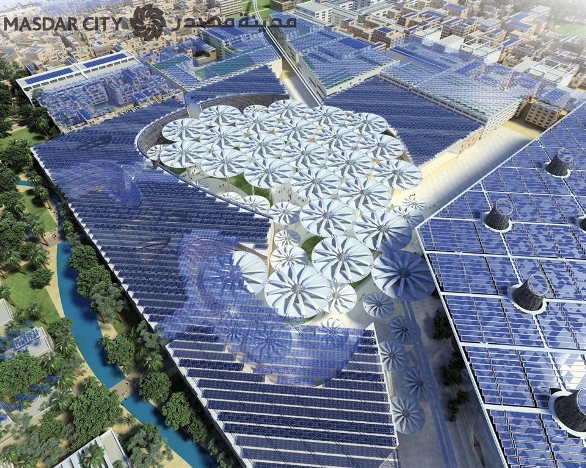
Leading multinational companies in the cleantech sector, as well as small- and medium-sized enterprises and entrepreneurial start-ups will locate sales and marketing offices, demonstration centres, research and development labs and headquarters in the city.
The city is anchored by the Masdar Institute of Science and Technology – a graduate-level, research-driven institution that is collaborating with the Massachusetts Institute of Technology (MIT) to develop and offer courses focused on education and research in advanced energy solution, sustainable technologies and policy.
The city is anchored by the Masdar Institute of Science and Technology – a graduate-level, research-driven institution that is collaborating with the Massachusetts Institute of Technology (MIT) to develop and offer courses focused on education and research in advanced energy solution, sustainable technologies and policy.
 |
|
| MASDAR City Concept Photo: MASDAR |
|
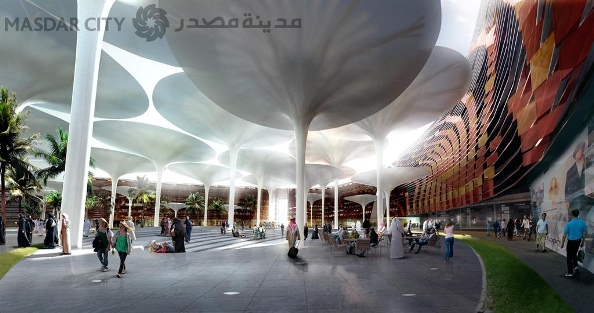
A great place in which to live, Masdar City will
be home to residents and commuters who will live the technological
innovations being developed in the city’s labs, research centres and
demonstration showcases.
A test bed for new approaches to the planning, design, engineering, construction and operational challenges involved in creating environmentally sustainable cities, Masdar City itself will be helping test and solve these problems, thereby making it easier and cheaper to develop sustainable cities in the future.
A test bed for new approaches to the planning, design, engineering, construction and operational challenges involved in creating environmentally sustainable cities, Masdar City itself will be helping test and solve these problems, thereby making it easier and cheaper to develop sustainable cities in the future.
 |
|
| MASDAR City Concept Photo: MASDAR |
|
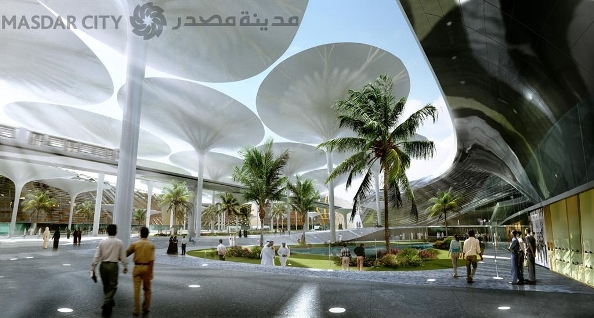
It is an extraordinary endeavour that will attract the highest
levels of international expertise, academics, commerce and residents –
creating an unmatched commercial platform for sales, marketing and
demonstration, as well as an environment ripe for innovation.
 |
|
| MASDAR City Concept Photo: MASDAR |
|
By bringing together such resources, Masdar City
will set a benchmark that will ultimately support sustainable
development throughout Abu Dhabi and the region, as well as provide a
functioning blueprint for sustainable living around the world.
 |
|
| MASDAR City Concept Photo: MASDAR |
|
The city will be home to international corporations and leading minds in the field of sustainability and renewable energy.
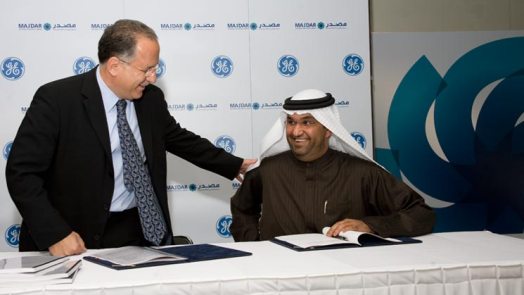
General Electric is a strategic partner in Masdar City and will build its first Ecomagination Centre in the city.
The centre will focus on promoting sustainable business solutions that will support the development and deployment of new and innovative technologies.
 |
|
| Dr.
Sultan Ahmed Al Jaber, CEO of Masdar (right). General Electric is a
strategic partner in Masdar City and will build its first Ecomagination
Centre in the city. Photo: MASDAR |
|
The overarching Masdar-General Electric agreement focuses on sustainable business solutions and forming a broader R&D relationship
that will support the development and deployment of new and innovative
technologies and the overarching function of the city as a cleantech
cluster.
 |
|
| MASDAR City Concept Photo: MASDAR |
|
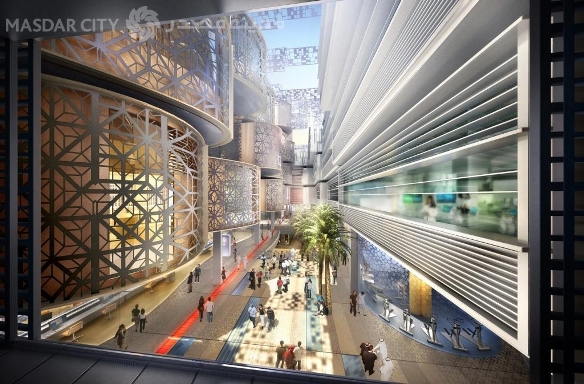
Businesses are able to take advantage of a home-grown research and development centre, the Masdar Institute, the first graduate-level academic institution dedicated to the research of alternative energy, environmental technologies and sustainability.
 |
|
| MASDAR City Concept Photo: MASDAR |
|
While clean technology is the driving force behind the cluster, Masdar City caters to a range of technology companies contributing to the field.
The city provides its commercial population with a unique business environment that fosters innovation and provides a convenient gateway to enter the growing Gulf market, wider Middle East and nearby Asia.
Masdar City, designed by renowned planning and architecture firm Foster + Partners, will be built on six square kilometres near to Abu Dhabi International Airport and not far from Saadiyat and Yas islands.
The city provides its commercial population with a unique business environment that fosters innovation and provides a convenient gateway to enter the growing Gulf market, wider Middle East and nearby Asia.
Masdar City, designed by renowned planning and architecture firm Foster + Partners, will be built on six square kilometres near to Abu Dhabi International Airport and not far from Saadiyat and Yas islands.
http://www.masdar.ae/en/Menu/index.aspx?MenuID=48&CatID=60&mnu=Cat
Masdar Carbon
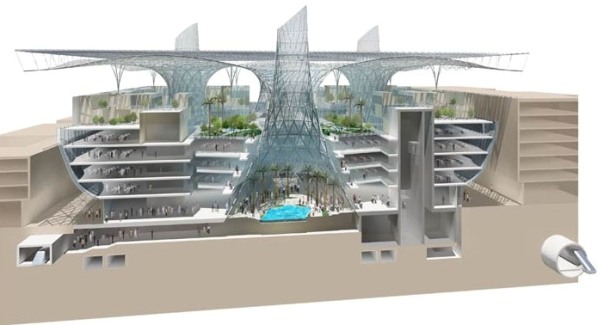
The unit creates value for Masdar by monetizing greenhouse gas emission reductions under the provisions of the United Nations-led CDM framework of the Kyoto Protocol.
 |
|
| MASDAR City Concept Photo: MASDAR |
|
The unit then buys a share of the credits it helps generate at a discount.
Both the Masdar City 10MW photovoltaic plant and the SHAMS I concentrated solar power plant in the Western Region of Abu Dhabi are registered CDM projects handled by Masdar Carbon.
 |
|
| MASDAR City Concept Photo: MASDAR |
|
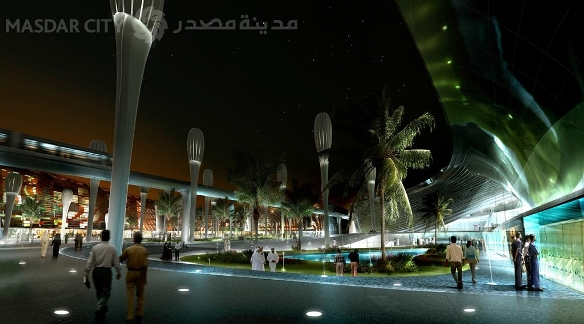
On a parallel track, Masdar Carbon is developing a multi-billion-dollar national carbon capture network capable of creating a significant reduction in Abu Dhabi’s carbon footprint.
 |
|
| MASDAR City Concept Photo: MASDAR |
|
The first phase of the network, one of the world’s first commercial- scale CCS projects, will sequester around 6.5 million tons of CO2 from power plants and industrial facilities in Abu Dhabi by 2013.
The captured CO2 will be transported and injected into oil reservoirs to enhance oil recovery.
http://www.masdar.ae/en/Menu/index.aspx?MenuID=48&CatID=59&mnu=Cat
The captured CO2 will be transported and injected into oil reservoirs to enhance oil recovery.
http://www.masdar.ae/en/Menu/index.aspx?MenuID=48&CatID=59&mnu=Cat
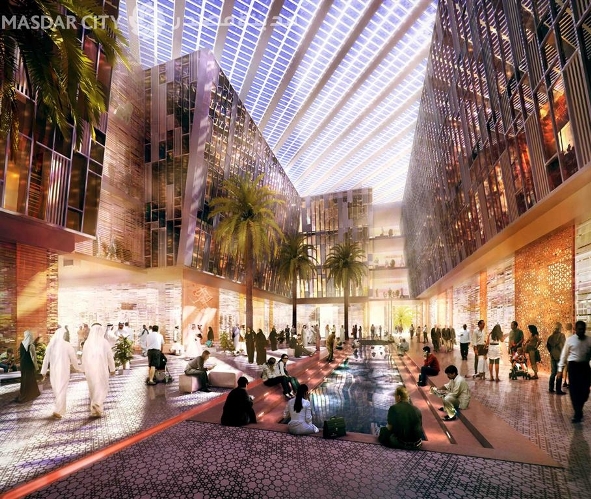
The Masdar Institute of Science and Technology
is the nucleus of the and will play a major role in building the city.The Masdar Institute of Science and TechnologyR&D activities in Masdar City
 |
|
| MASDAR City Concept Photo: MASDAR |
|
First opened to students in September 2009, by 2011 the institute will offer 10 MSc programmes and its first PhD programmes
in renewable energies and sustainable technologies and will encourage
an environment to foster the next generation of scientific discoveries.
 |
|
| MASDAR City Concept Photo: MASDAR |
|
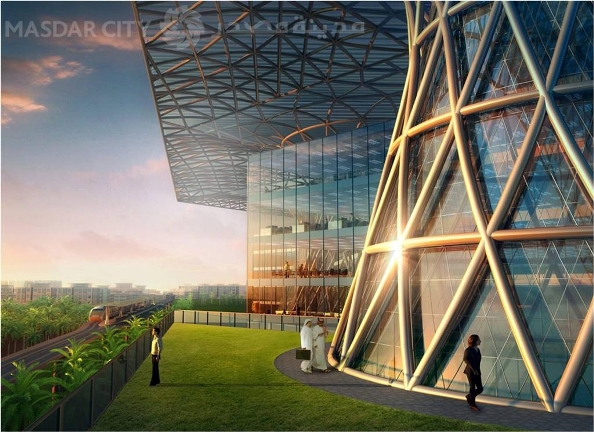
Developed in cooperation with the Massachusetts Institute of Technology (MIT), the Masdar Institute of Science and Technology
is a post-graduate university focused on the science and engineering of
advanced renewable energy, environmental technologies and
sustainability.
Masdar Institute will be at the heart of the home-grown research and development community at Masdar City and will eventually host up to 600 master’s and PhD students and more than 100 faculty.
Masdar Institute will be at the heart of the home-grown research and development community at Masdar City and will eventually host up to 600 master’s and PhD students and more than 100 faculty.
 |
|
| MASDAR City Concept Photo: MASDAR |
|
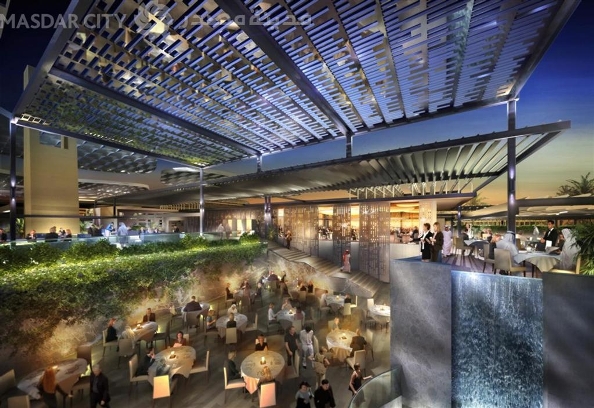
Through established links with leading public and private
research institutes around the globe, its researchers will collaborate
on cutting edge technology solutions to the world’s renewable energy and
sustainability challenges.
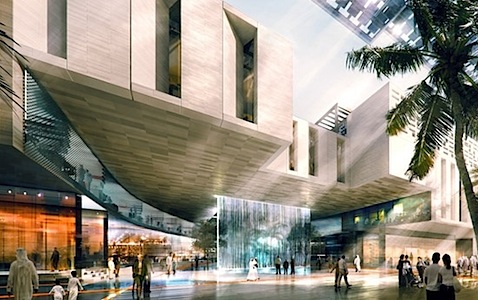
Designed by Fosters + Partners, the Masdar Institute building will be the first completed building at Masdar City and a model of sustainability.
Designed by Fosters + Partners, the Masdar Institute building will be the first completed building at Masdar City and a model of sustainability.
 |
|
| MASDAR City Concept Photo: MASDAR |
|
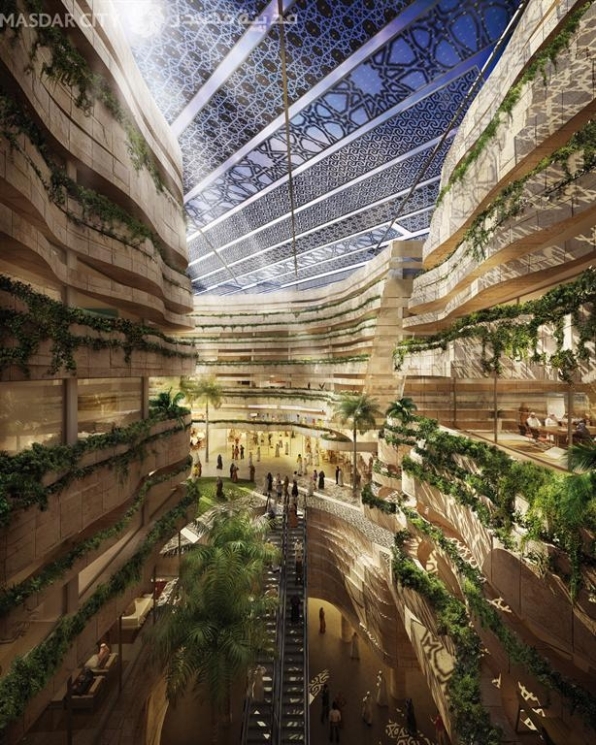
It uses at least 70% less electricity and potable water than
conventional buildings of its size and is wired throughout with an
energy metering system that monitors energy consumption and produces
data that is easily accessible to students and faculty for use as a
research tool.
 |
|
| MASDAR City Concept Photo: MASDAR |
|
The building incorporates a wide range of emerging green building
technologies that will be evaluated, with the building itself serving
as a test bed for technologies that will help Masdar City achieve its zero carbon, zero waste, clean-power goals.
http://www.masdar.ae/en/Menu/index.aspx?MenuID=48&CatID=62&mnu=Cat
http://www.masdar.ae/en/Menu/index.aspx?MenuID=48&CatID=62&mnu=Cat
Masdar Power
invests both in renewable energy power projects and in companies with proven cleantech technologies – within the Through this two-pronged investment strategy, the unit helps power companies add renewable energy to their generation mix and provides cleantech companies with expertise and capital for growth. As a renewable energy power project developer, adds renewable energy to the electricity generation mix on a world wide scale.Masdar PowerUAE and internationally.
Masdar Power
 |
|
| MASDAR City Concept Photo: MASDAR |
|
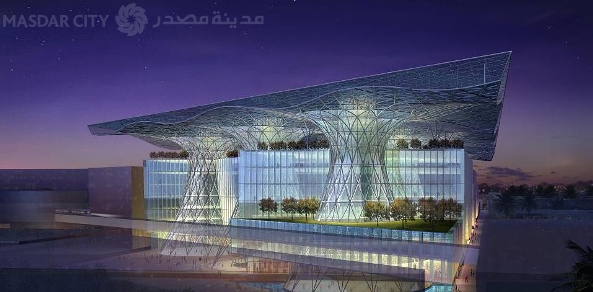
The unit makes direct investments in individual utility scale
projects in all areas of renewable energy and sustainability, with a
focus on concentrated solar power (CSP), Photovoltaic solar energy and on- and off shore wind energy.
Masdar Power is developing a 100MW CSP plant in the Western Region of Abu Dhabi Emirate, called SHAMS 1.
International projects include the 1GW London.
Masdar Power is developing a 100MW CSP plant in the Western Region of Abu Dhabi Emirate, called SHAMS 1.
International projects include the 1GW London.
 |
|
| MASDAR City Concept Photo: MASDAR |
|
Array off shore wind farm and a wind farm in the Seychelles that will provide 25% of the island’s energy needs.
The unit also is developing a 500MW hydrogen-fired power plant in Abu Dhabi that uses advanced technologies to make hydrogen power commercially viable today by feeding the CO2 into the CCS network to be developed by Masdar Carbon.
Concentrated solar power (CSP) systems use mirrors or lenses and tracking systems to focus large amounts of sunlight on water, salts or oils.
The heated water directly drives steam generators, while the salts and oils heat water, which in turn runs the steam generators.
The unit also is developing a 500MW hydrogen-fired power plant in Abu Dhabi that uses advanced technologies to make hydrogen power commercially viable today by feeding the CO2 into the CCS network to be developed by Masdar Carbon.
Concentrated solar power (CSP) systems use mirrors or lenses and tracking systems to focus large amounts of sunlight on water, salts or oils.
The heated water directly drives steam generators, while the salts and oils heat water, which in turn runs the steam generators.
 |
|
| MASDAR City Concept Photo: MASDAR |
|
Photovoltaics (PV) cells produce electricity as a result of a chemical reaction that occurs when sunlight hits the PV cells.
This reaction is harnessed by the PV cells, which are constructed of two thin layers of semi-conducting materials, usually silicon, that have been treated with chemical substances.
When sunlight hits the PV cells, it creates an electric field across the two layers.
http://www.masdar.ae/en/Menu/index.aspx?MenuID=48&CatID=62&mnu=Cat
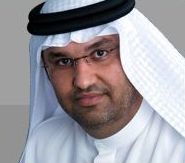
Dr. Sultan Ahmed Al Jaber
Managing Director and Chief Executive Officer of Masdar
This reaction is harnessed by the PV cells, which are constructed of two thin layers of semi-conducting materials, usually silicon, that have been treated with chemical substances.
When sunlight hits the PV cells, it creates an electric field across the two layers.
http://www.masdar.ae/en/Menu/index.aspx?MenuID=48&CatID=62&mnu=Cat
Dr. Sultan Ahmed Al Jaber
Managing Director and Chief Executive Officer of Masdar
 |
|
| Dr. Sultan Ahmed Al Jaber Photo: MASDAR |
|
Dr. Sultan Ahmed Al Jaber is the Managing Director and Chief
Executive Officer of Masdar, a landmark renewable energy initiative
established by the Government of Abu Dhabi in 2006.
Masdar, a wholly owned subsidiary of the Mubadala Development Company, is a multi-faceted renewable energy company dedicated to developing and deploying sustainable energy solutions in markets around the world.
Dr. Al Jaber holds a number of advisory positions where he provides counsel on global issues such as sustainability, climate change, and energy challenges.
Most recently, Dr. Al Jaber led Masdar’s participation in the UAE’s successful bid to host the headquarters of the International Renewable Energy Agency (IRENA) in Masdar City.
He is now the Director General of the IRENA UAE Liaison office and is actively engaged in the establishment of the agency’s core functions and work plans. In addition, in 2009, UN Secretary General Ban Ki-Moon elected Dr. Al Jaber to join the UN’s Advisory Group on Energy and Climate Change.
Dr. Al Jaber is also a Senior Advisor to the Mubadala Development Company where he holds broad based responsibilities that include direct project origination and execution in the energy, industry and utilities sectors as well as relationship management with key multinational companies and government institutions.
He is the Chairman of the Board of the Abu Dhabi Ports Company.
He also serves on the boards of ALDAR Properties, Advanced Technology Investment Company (ATIC) and the Young Arab Leaders Organization.
Dr. Al Jaber is a frequent commentator and speaker on energy, sustainability and climate change, having appeared in Time Magazine, The Financial Times, Le Monde, The Guardian, The Sunday Times, CNN, Sky News, CNBC, and the BBC.
He holds a PhD in Economics and an MBA and a BSc in Chemical Engineering from the United States.
http://www.masdar.ae/en/BoardofDir/index.aspx
Ahmed Ali Al Sayegh
Chairman of ALDAR properties PJSC in Abu Dhabi
Ahmed Ali Al Sayegh is the Chairman of ALDAR properties PJSC, a leading real estate developer in Abu Dhabi.
He is also the Chief Executive Officer of Dolphin Energy Limited, a
unique strategic energy initiative involves the production and
processing of natural gas from Qatar’s North Field, and transportation
of the refined gas by subsea pipeline across joint UAE-Qatari waters to
the UAE.
Al Sayegh is also a board member of numerous influential private &
governmental associations including the Mubadala Development Company
(MDC), Offsets Program Bureau (OPB), Abu Dhabi Water and Electricity
Authority (ADWEA), Etihad Airways and First Gulf Bank.
In addition, Al Sayegh is the Chairman of Abu Dhabi Future Energy
Company (MASDAR), he has worked throughout his career to support many
environmental initiatives in the Emirate of Abu Dhabi.
He is also the Managing Director of the Emirates Foundation, a leading
philanthropy for social educational, artistic and environmental
development in the UAE.
With a degree in Economics from the United States, Al Sayegh started his
career many years ago at the Abu Dhabi National Oil Company (ADNOC),
the national oil company in Abu Dhabi.
He has also worked in senior positions at other leading Abu Dhabi
government organisations, including the Abu Dhabi Investment Company
(ADIC).
Masdar, a wholly owned subsidiary of the Mubadala Development Company, is a multi-faceted renewable energy company dedicated to developing and deploying sustainable energy solutions in markets around the world.
Dr. Al Jaber holds a number of advisory positions where he provides counsel on global issues such as sustainability, climate change, and energy challenges.
Most recently, Dr. Al Jaber led Masdar’s participation in the UAE’s successful bid to host the headquarters of the International Renewable Energy Agency (IRENA) in Masdar City.
He is now the Director General of the IRENA UAE Liaison office and is actively engaged in the establishment of the agency’s core functions and work plans. In addition, in 2009, UN Secretary General Ban Ki-Moon elected Dr. Al Jaber to join the UN’s Advisory Group on Energy and Climate Change.
Dr. Al Jaber is also a Senior Advisor to the Mubadala Development Company where he holds broad based responsibilities that include direct project origination and execution in the energy, industry and utilities sectors as well as relationship management with key multinational companies and government institutions.
He is the Chairman of the Board of the Abu Dhabi Ports Company.
He also serves on the boards of ALDAR Properties, Advanced Technology Investment Company (ATIC) and the Young Arab Leaders Organization.
Dr. Al Jaber is a frequent commentator and speaker on energy, sustainability and climate change, having appeared in Time Magazine, The Financial Times, Le Monde, The Guardian, The Sunday Times, CNN, Sky News, CNBC, and the BBC.
He holds a PhD in Economics and an MBA and a BSc in Chemical Engineering from the United States.
http://www.masdar.ae/en/BoardofDir/index.aspx
Ahmed Ali Al Sayegh
Chairman of ALDAR properties PJSC in Abu Dhabi
 |
|
Ahmed Ali Al Sayegh
|
Photo: MASDAR
|
|
ASTROMAN magazine
 |
wydrukuj ten artykuł |
Información de : ASTROMAN.Co.Ltd.
Guillermo Gonzalo Sánchez Achutegui
ayabaca@gmail.com
ayabaca@hotmail.com
ayabaca@yahoo.com